Paniya Tribal Women Experience Democracy Firsthand at Tamil Nadu Assembly
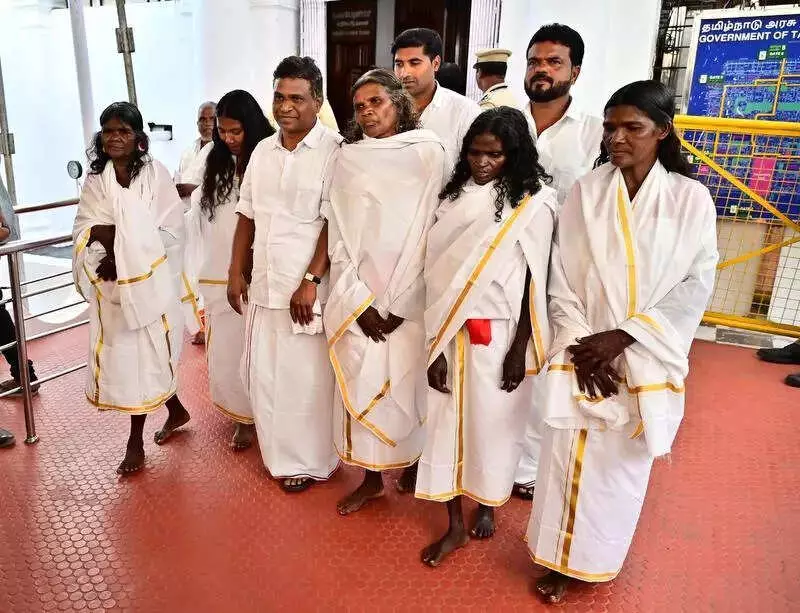
In a significant moment bridging grassroots communities with democratic institutions, five women from the Paniya tribe made a historic visit to the Tamil Nadu Legislative Assembly in Chennai on Thursday. Hailing from the remote Koundankollai hamlet in Devarcholai panchayat of the Nilgiris district, these tribal representatives witnessed the state's legislative process in action, dressed in their distinctive traditional attire.
A Rare Glimpse into Democratic Functioning
The tribal visitors observed the assembly proceedings for approximately one hour, gaining firsthand insight into how laws and policies are debated and formulated. This educational exposure was facilitated by Gudalur constituency MLA Pon Jayaseelan, who personally arranged and accompanied the group to the state capital. The MLA emphasized the importance of such initiatives in promoting civic awareness among marginalized communities.
"These women rarely venture beyond their immediate hamlet or undertake long-distance travel," explained Jayaseelan. "My intention was to bring more members from various tribal communities to witness the assembly's functioning, but initially only five agreed to make the journey." He expressed hope that this pioneering visit would encourage greater participation in future democratic engagement programs.

Formal Recognition and Advocacy for Tribal Welfare
MLA Pon Jayaseelan extended formal gratitude to the assembly speaker for granting special permission for this unique visit, acknowledging the institutional cooperation that made this experience possible. Beyond facilitating the educational tour, the legislator seized the opportunity to highlight pressing issues affecting tribal populations across Tamil Nadu.
During discussions surrounding the visit, Jayaseelan presented a compelling case for enhancing financial support for tribal housing schemes. He specifically urged the state government to substantially increase housing assistance for tribal families from the current allocation of 5.25 lakh rupees to a more realistic 7.5 lakh rupees per unit.
"The logistical complexities and elevated costs associated with constructing homes in remote tribal areas necessitate this revised financial framework," the MLA asserted, drawing attention to the geographical and infrastructural challenges that often impede development projects in tribal regions.
Broader Implications for Tribal Inclusion
This visit represents more than a symbolic gesture—it underscores ongoing efforts to integrate indigenous communities into mainstream democratic processes. The Paniya tribe, recognized as a Particularly Vulnerable Tribal Group (PVTG) in Tamil Nadu, has historically faced multiple socioeconomic barriers that limit their participation in civic life.
By witnessing legislative proceedings firsthand, these tribal women gained valuable exposure to governance mechanisms that directly impact their communities. Such initiatives align with broader objectives of inclusive development and political empowerment for India's diverse tribal populations.
The successful execution of this visit demonstrates how elected representatives can serve as bridges between marginalized communities and democratic institutions, potentially inspiring similar outreach efforts across other tribal regions in Tamil Nadu and beyond.