NDA Launches Strong Defense of Bihar's Liquor Prohibition Policy
The ruling National Democratic Alliance (NDA) in Bihar issued a sharp rebuttal on Monday to allegations from Rashtriya Janata Dal (RJD) leader Tejashwi Prasad Yadav that the state's liquor prohibition policy has been a complete failure. The political confrontation centers on a policy that has been both celebrated and criticized since its implementation in 2016.
RJD Leader's Scathing Critique of Prohibition Enforcement
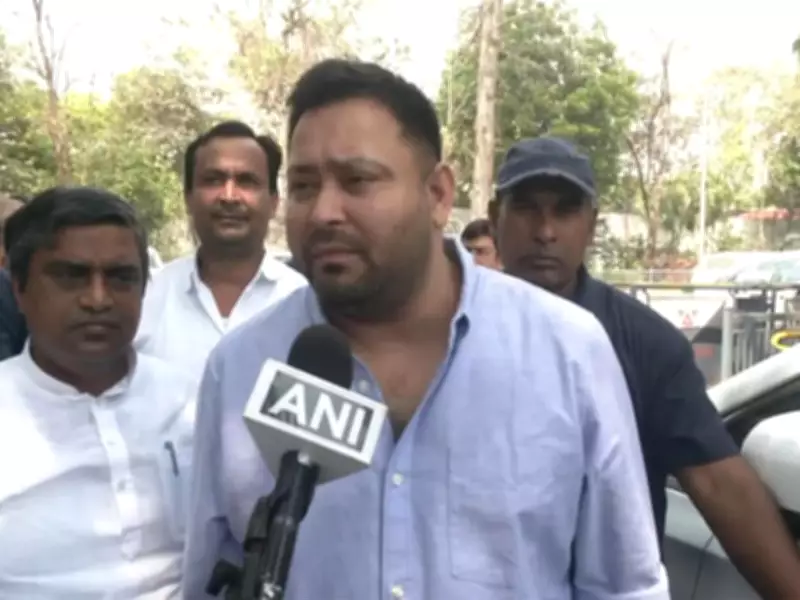
Tejashwi Yadav, serving as the Leader of Opposition in the Bihar Legislative Assembly, took to social media platform X to launch a comprehensive attack on the prohibition regime. He asserted that the policy has spawned an illegal parallel economy worth an astonishing Rs 40,000 crore since its inception eight years ago.
The RJD leader posed pointed questions about enforcement disparities: "Despite the arrest of 16 lakh individuals, predominantly from economically disadvantaged backgrounds, why have major suppliers and smugglers largely escaped apprehension? Furthermore, why has no disciplinary action been taken against senior police officials allegedly complicit in undermining the liquor ban through corrupt practices?"

His criticism gained additional urgency following a tragic incident in East Champaran district last week, where nine individuals reportedly lost their lives after consuming illicit spurious liquor.
NDA's Forceful Counter-Argument and Historical Context
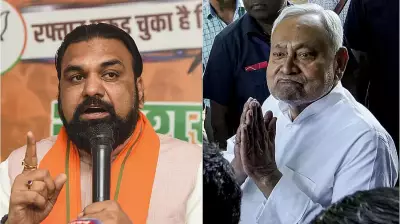
BJP spokesperson Niraj Kumar delivered a vigorous defense, framing the liquor prohibition as "the collective voice of Bihar's mothers and sisters." He emphasized: "A decade after implementation, the RJD has inexplicably aligned itself with liquor mafia interests by declaring this socially transformative policy a failure."
Kumar provided historical perspective: "During previous RJD-Janata Dal administrations, the number of liquor outlets in rural areas exploded from approximately 500 to over 6,000 establishments. Chief Minister Nitish Kumar decisively halted this proliferation at the insistence of women across Bihar, who consistently report that peace has returned to their households."
JD(U) spokesperson Neeraj Kumar introduced a financial dimension to the debate, alleging: "Tejashwi Yadav's opposition to prohibition appears predictable given that his political party received electoral bond contributions exceeding Rs 46 crore from prominent liquor barons."
Enforcement Statistics and Broader Social Impact Claims
Addressing enforcement metrics, BJP's Niraj Kumar interpreted the substantial arrest figures and liquor seizures as evidence of rigorous police action. "The 18% increase in confiscations recorded in 2026 demonstrates enhanced vigilance mechanisms," he stated. "Fundamentally, prohibition has successfully reduced average liquor consumption across the state."
The BJP spokesperson elaborated on perceived social benefits: "Families liberated from addiction are redirecting financial resources toward children's education and welfare. Women particularly report increased feelings of safety and security. The administration remains committed to targeting major supply networks alongside routine enforcement."
Addressing Concerns About Alternative Substance Abuse
Countering Tejashwi's additional allegation that consumption of dry narcotics and other intoxicants has surged by 40% since prohibition, Niraj Kumar characterized this as a nationwide challenge rather than a Bihar-specific issue. "The state government has initiated dedicated campaigns to combat drug abuse," he explained. "Historically, during RJD governance periods, Bihar unfortunately gained notoriety as a distribution hub for ganja (cannabis) and brown sugar."
Policy Characterized as Social Revolution with Ongoing Refinements
Niraj Kumar ultimately framed prohibition as a profound social transformation: "The liquor ban represents nothing less than a social revolution in Bihar. While acknowledging certain implementation challenges, the government maintains its commitment to continuous policy refinement and improvement."

He concluded with a political contrast: "Chief Minister Nitish Kumar has honorably fulfilled his pledge to the women of Bihar, whereas the RJD has chosen to stand alongside liquor mafia elements." This exchange occurs against the backdrop of Tejashwi Yadav's claim that over 11 lakh legal cases have been registered under prohibition legislation, highlighting the policy's extensive judicial footprint.