Nagpur Ram Navami Arch Collapse Injures Two, Revives Safety Concerns
Festive celebrations in Nagpur took a dangerous turn on Friday when a massive Ram Navami welcome arch collapsed at Agyaram Devi Chowk, injuring two motorists and causing significant traffic chaos during peak hours. The incident has reignited serious concerns about public safety and the enforcement of court orders banning such structures on public roads.
Chaos at Busy Junction
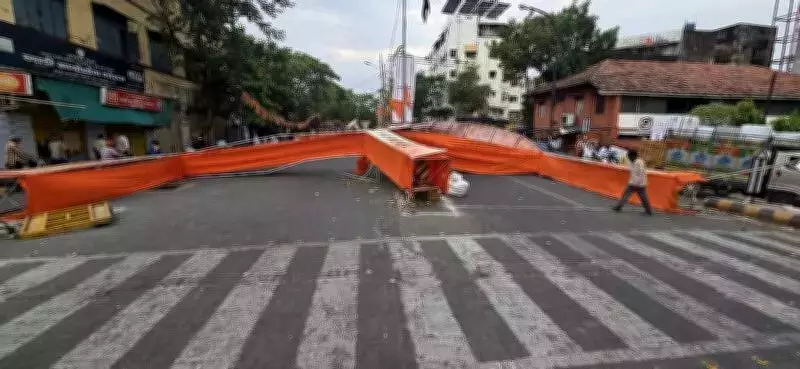
The large structure, draped in saffron cloth and erected across the road, came crashing down following strong winds while traffic was moving through the intersection. Two-wheelers and auto-rickshaws were forced to brake abruptly as the arch fell across the crossing. Two individuals reportedly sustained minor injuries and were promptly rushed to a nearby hospital for treatment.
Traffic remained severely disrupted for some time as the collapsed arch blocked all directions of movement at the busy junction. Photographs from the scene showed the massive structure lying across the road, completely obstructing vehicle flow and raising urgent questions about why such dangerous installations continue to appear despite known risks.

Safety Regulations Ignored
The incident has revived critical questions about the implementation of the Bombay High Court's standing ban on welcome arches, banners, and hoardings across roads. The court had previously termed such structures dangerous obstructions that compromise public safety. Civic sources admitted that the arch had been erected in full public view at a prominent junction, yet no preventive action was taken by either the Nagpur Municipal Corporation's Dhantoli zone office or the traffic police before the accident occurred.
Motorists using the roads expressed frustration, noting that such arches not only narrow available road space but also obstruct visibility, particularly at busy crossings like Agyaram Devi Chowk. The incident forced authorities to divert traffic, compelling motorists to take lengthy detours around the affected area.
Official Response and Aftermath
Assistant Commissioner Pramod Wankhede confirmed that the welcome gate had been erected without proper permission. He acknowledged that similar arches had been installed across the city during the festival period, highlighting a pattern of regulatory non-compliance.
Wankhede reported that the fire brigade was immediately alerted after the collapse, and the structure was removed within minutes, eventually restoring normal traffic movement. He maintained that no motorists sustained serious injuries in the incident, though the psychological impact and disruption to daily commutes were substantial.
This incident serves as a stark reminder of the ongoing tension between festive traditions and public safety regulations. As Nagpur continues to grow and traffic volumes increase, the need for stricter enforcement of safety standards and court orders becomes increasingly urgent to prevent similar accidents in the future.