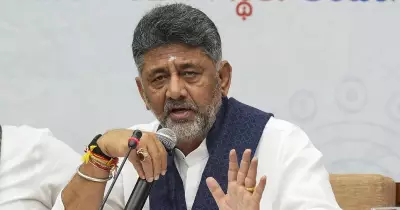
Karnataka Minister Challenges Opposition Claims on Ballari Violence in Assembly
In a significant development within the Karnataka Legislative Assembly, Minister Nagendra has strongly countered allegations made by former minister and opposition leader Janardhana Reddy regarding recent incidents of violence in the Ballari district. The exchange highlighted ongoing political tensions in the state, with Nagendra accusing Reddy of presenting misleading information to the legislative body.
Clarification on Deputy Chief Minister's Security Statement
Addressing remarks that have been circulating in political circles and media reports, Nagendra provided crucial clarification regarding statements attributed to Deputy Chief Minister DK Shivakumar concerning security arrangements. The minister stated unequivocally, "The deputy chief minister only stated that Z-category security can be granted only by the Centre. He never made the comments being circulated."
This clarification comes amid discussions about security protocols and political protection measures in Karnataka. Nagendra emphasized that the authority to provide Z-category security rests exclusively with the central government, a point he claims was accurately conveyed by Deputy CM Shivakumar but has been misinterpreted in subsequent reports.

Political Context and Implications
The confrontation between Nagendra and Janardhana Reddy represents more than just a parliamentary exchange—it reflects deeper political divisions within Karnataka's political landscape. Key aspects of this development include:
- Ballari District Significance: The region has historically been a political flashpoint, with this latest controversy adding to existing tensions
- Security Protocol Clarification: The distinction between state and central government responsibilities in providing security cover
- Political Accountability: Questions about accurate information sharing within legislative proceedings
- Media Circulation Concerns: The challenge of misinformation spreading through various communication channels
Nagendra's intervention in the Assembly serves multiple purposes—correcting what he perceives as factual inaccuracies, defending his colleague Deputy CM Shivakumar, and reinforcing the government's position on security matters. The minister's statements underscore the importance of precise communication in political discourse, particularly when addressing sensitive issues like public safety and violence.
Broader Political Dynamics
This exchange occurs against the backdrop of ongoing political maneuvering in Karnataka, where the ruling party faces consistent opposition scrutiny. The Ballari violence allegations represent just one facet of broader political challenges, with security protocols becoming a point of contention between state and central authorities.
The clarification regarding Z-category security procedures highlights the complex relationship between state and central governments in matters of protection and law enforcement. Nagendra's firm rebuttal suggests the government is taking a proactive stance against what it views as misinformation, particularly when such information reaches the formal platform of the Legislative Assembly.
As political observers analyze this development, several questions emerge about how such exchanges might influence future parliamentary proceedings and public perception of government accountability. The incident also raises considerations about verification processes for information presented in legislative bodies and the mechanisms for correcting potentially misleading statements.
The political discourse in Karnataka continues to evolve, with this Assembly exchange adding another layer to ongoing debates about governance, security, and political responsibility in the state.