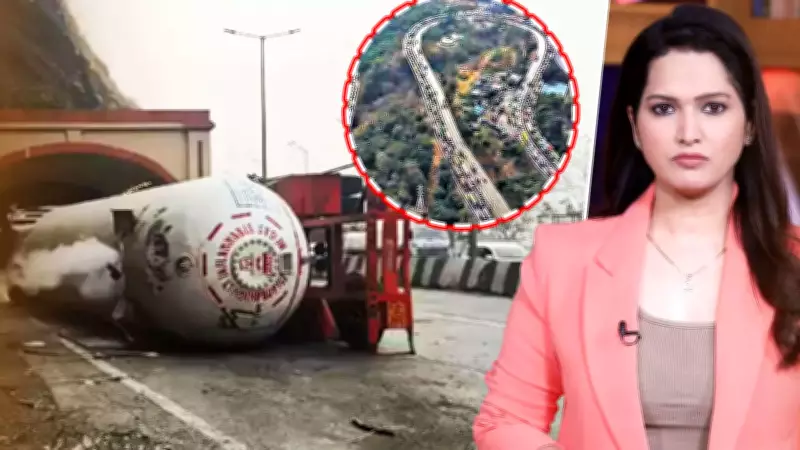
Mumbai-Pune Expressway Nightmare: 32-Hour Gridlock Exposes Critical Emergency Response Gaps
What began as a routine road accident rapidly transformed into a prolonged humanitarian crisis on the vital Mumbai–Pune Expressway, lasting an excruciating thirty-two hours. The incident has starkly revealed significant deficiencies in emergency preparedness and response mechanisms along one of India's most crucial transport corridors.
Hazardous Tanker Overturn Triggers Widespread Chaos
The crisis unfolded when a tanker carrying hazardous materials overturned near the challenging Borghat stretch. This immediately led to a dangerous gas leak, creating a severe explosion risk that forced authorities to implement a complete traffic halt. The situation quickly escalated beyond a simple accident scene into a major public safety emergency.
Thousands Trapped in Dire Conditions
As the hours stretched into an entire day and night, thousands of commuters found themselves trapped in a stationary nightmare. Many were left without access to basic necessities like food and water, while patients missed critical medical appointments and families were forced to spend the night inside their vehicles. The human toll of the gridlock extended far beyond mere inconvenience.

Rescue Efforts Hampered by Technical Challenges
While rescue teams did arrive at the scene, technical challenges significantly delayed the resolution of the hazardous situation. This delay has sparked serious concerns about the overall preparedness for accidents involving dangerous cargo. The incident raises urgent questions about whether emergency protocols are adequately equipped to handle such complex scenarios.
Official Response and Accountability Issues
State officials have openly flagged delays in the emergency response, acknowledging systemic shortcomings. Meanwhile, police have registered a formal case against the tanker driver, though this does little to address the broader infrastructure and planning failures that exacerbated the crisis.
Widespread Transportation Disruption
The massive traffic jam created ripple effects throughout the regional transportation network:
- Bus services were completely disrupted along the expressway corridor
- Local trains became dangerously overcrowded as commuters sought alternatives
- Many were forced to take risky detours through less safe routes
Urgent Questions About Safety Planning
This extended crisis has raised pressing concerns about multiple aspects of transportation safety:
- Emergency Communication Systems: Were adequate warning systems in place to alert commuters?
- Hazardous Cargo Protocols: Are current safety measures sufficient for dangerous material transport?
- Accountability Mechanisms: Who bears responsibility for such prolonged gridlocks?
- Alternative Route Planning: Were sufficient detour options available and communicated?
The Mumbai-Pune Expressway serves as a critical economic artery connecting two of Maharashtra's most important cities. This thirty-two-hour ordeal has exposed vulnerabilities that demand immediate attention from transportation authorities, emergency services, and policy makers to prevent similar crises in the future.