Madhya Pradesh Assembly's Deputy Speaker Post Vacant for Six Years, Breaking Bipartisan Tradition
The Madhya Pradesh legislative assembly has been operating without a deputy speaker for an unprecedented six-year period, effectively dismantling a longstanding bipartisan tradition that was initially disrupted by the Congress party and has since been perpetuated under the current BJP administration. This significant vacancy represents a major departure from established parliamentary norms in the state.
The Historical Bipartisan Convention
Since the 1990s, the Madhya Pradesh assembly maintained an unwritten convention where the speaker's position was reserved for the ruling party while the deputy speaker's role was traditionally offered to the opposition. This arrangement fostered a spirit of cooperation and ensured balanced representation within the legislative body's leadership structure.
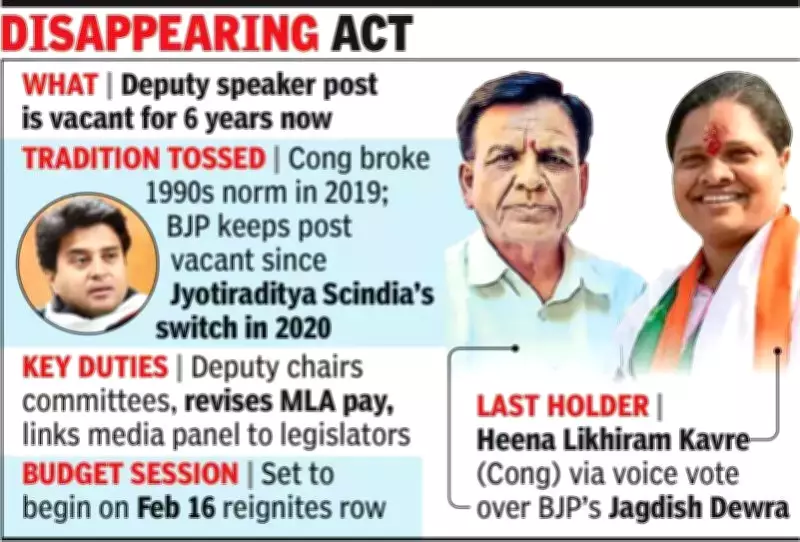
Following the November 2018 state elections, the Congress party secured both positions despite this convention. After claiming the speaker's chair through their majority, Congress proceeded to elect their own MLA, Heena Likhiram Kavre, as deputy speaker in January 2019 through a voice vote procedure.

The Breaking Point and Continuing Vacancy
This decisive action by Congress shattered the nearly three-decade-old practice of offering the deputy speaker position to the opposition. The BJP, then in the minority with 109 seats, had actively pushed for their candidate Jagdish Dewra—who currently serves as the state's deputy chief minister—and sought an election to demonstrate their political influence within the assembly.
Congress maintained power until March 2020 when Jyotiraditya Scindia defected to the BJP along with supporting legislators, ultimately toppling the government. The BJP has governed the state since that transition, most recently securing a commanding majority of 163 out of 230 seats in the November 2023 elections.
Despite this political dominance, the deputy speaker position has remained conspicuously vacant throughout the BJP's tenure—potentially representing the longest such gap in Madhya Pradesh's legislative history according to secretariat officials familiar with assembly records.
Constitutional Functions and Current Status
The deputy speaker's role extends far beyond merely presiding over assembly sessions in the speaker's absence. This constitutional position carries significant responsibilities including:
- Chairing crucial legislative committees that oversee various aspects of governance
- Coordinating the media gallery advisory panel in collaboration with fellow legislators
- Leading revisions to lawmakers' salaries, allowances, and other parliamentary benefits
While the speaker possesses the authority to delegate these duties to senior MLAs when necessary, the absence of a formally appointed deputy speaker represents a departure from established parliamentary procedure.
Budget Session Implications and Future Outlook
The issue has regained prominence with the upcoming budget session scheduled to commence on February 16. Government sources indicate the BJP may maintain the current status quo, potentially opting against filling the position or yielding it to opposition parties as per historical precedent.
This prolonged vacancy raises important questions about parliamentary traditions, opposition representation, and the functioning of legislative institutions in India's second-largest state by area. As Madhya Pradesh prepares for its next legislative session, the absence of a deputy speaker continues to highlight evolving political dynamics within the state assembly.