Karnataka MLA's Dramatic Display of Discolored Water Ignites Assembly Debate on KC Valley Project
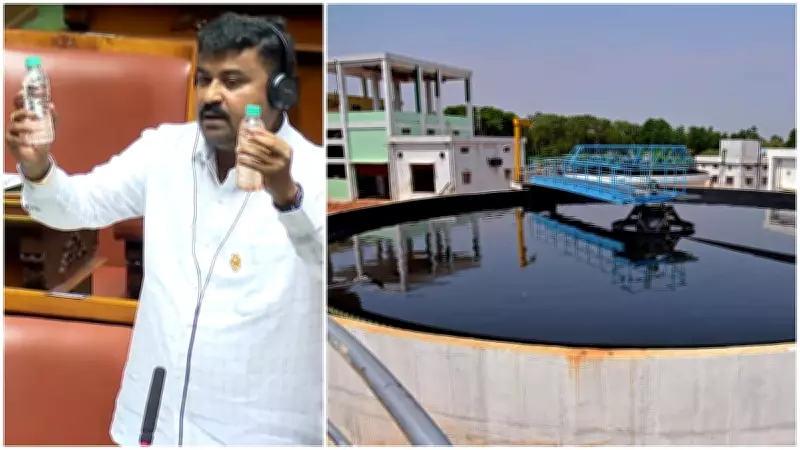
A dramatic scene unfolded in the Karnataka Legislative Assembly when a Janata Dal (Secular) MLA brandished a bottle of discolored water, triggering a heated political debate over the safety and efficacy of the controversial KC Valley project. The legislator's stark visual demonstration, accompanied by the emotional accusation of "poisoning our children," immediately shifted the legislative focus to urgent public health concerns regarding water quality in the region.
Revenue Minister Defends Project, Cites Scientific Oversight
Revenue Minister Krishna Byre Gowda swiftly intervened to counter the allegations, presenting a robust defense of the KC Valley initiative. The minister emphasized that all scientific parameters for water quality are being rigorously met and maintained. "The Indian Institute of Science conducts comprehensive tests on the water every three months to ensure compliance with safety standards," Gowda stated authoritatively during the assembly session.
Gowda further criticized what he characterized as politically motivated propaganda, asserting that such actions ultimately undermine public interest rather than serving it. His remarks highlighted the ongoing tension between political narratives and technical assessments in environmental governance, particularly concerning large-scale infrastructure projects that impact community health.
Background of the KC Valley Water Project Controversy
The KC Valley project represents a significant water management initiative designed to address irrigation and drinking water needs in drought-prone areas of Karnataka. The project involves the treatment and distribution of water from sewage treatment plants, with treated water being supplied for agricultural and potentially domestic use after meeting stringent purification standards.
However, the project has faced persistent criticism from various quarters regarding its implementation and water quality assurances. Environmental activists and opposition politicians have repeatedly raised concerns about potential contamination and inadequate treatment processes, creating an atmosphere of public skepticism that the recent assembly incident has dramatically amplified.
Scientific Monitoring Versus Political Theater
The confrontation in the assembly pits regular scientific monitoring by prestigious institutions like IISc against compelling visual evidence presented by elected representatives. While the minister points to quarterly test results as proof of water safety, the MLA's discolored water bottle serves as a powerful symbolic challenge to those official assurances.
This incident underscores the complex challenge of communicating technical water quality data to a concerned public, especially when dramatic visual evidence suggests potential problems that scientific reports might not immediately capture or address. The debate raises fundamental questions about transparency, accountability, and public trust in government-managed water infrastructure projects.
Broader Implications for Water Governance in Karnataka
The assembly confrontation has broader implications for water governance policy in Karnataka and potentially other Indian states facing similar challenges. It highlights the need for:
- Enhanced transparency in water quality monitoring and reporting mechanisms
- Independent verification of water safety claims by multiple stakeholders
- Improved communication between technical experts, government officials, and the public
- Robust grievance redressal systems for citizens concerned about water quality
As the debate continues beyond the assembly walls, both government officials and opposition representatives face increasing pressure to provide concrete evidence supporting their respective positions. The health implications for communities relying on KC Valley water supplies remain at the center of this politically charged environmental controversy.