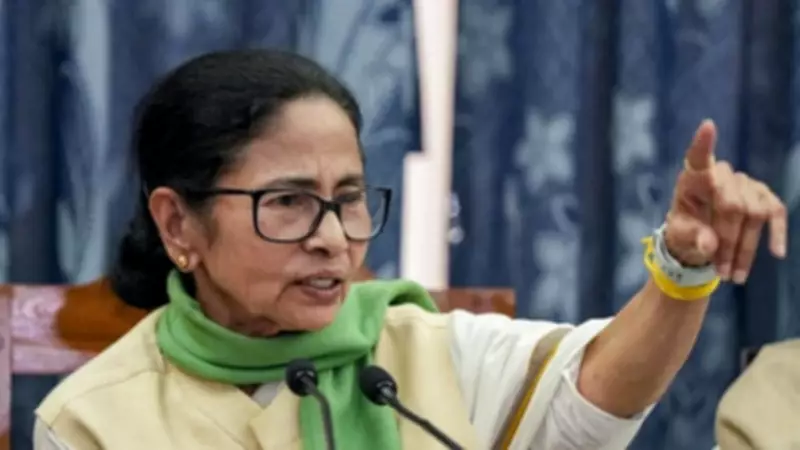
West Bengal Chief Minister Mamata Banerjee has delivered a pointed critique of the Union Budget while simultaneously championing her state's interim financial plan as a model of pro-people governance and fiscal responsibility. In a statement that underscores the ongoing tensions between the state and the Centre, Banerjee positioned Bengal's budgetary approach in stark contrast to what she described as a directionless national fiscal strategy.
Allegations of Financial Neglect and State Resilience
At the heart of Banerjee's remarks was a serious allegation against the central government. She asserted that West Bengal has been systematically denied its legitimate financial dues by the Centre. This claim points to a long-standing grievance regarding the distribution of funds and resources, a common flashpoint in India's federal structure.
Despite this alleged financial shortfall, Banerjee emphasized that the West Bengal government has made concerted efforts to ensure that critical development initiatives and essential welfare schemes remain uncompromised. This narrative frames the state administration as resilient and resourceful in the face of perceived central neglect, prioritizing public welfare despite fiscal constraints.

Praise for Bengal's Interim Budget: A Pro-People Blueprint
Banerjee lauded the recently presented interim budget of West Bengal, characterizing it as distinctly pro-people. This description suggests a budgetary focus on social welfare, public services, and schemes aimed directly at improving the lives of the state's citizens. The interim budget, typically a stop-gap financial plan presented before elections or a full budget, has been portrayed by the Chief Minister as a document reflecting the state's commitment to its populace.
Furthermore, she highlighted the element of fiscal discipline within the state's budget. This claim is significant, as it counters any potential criticism of fiscal mismanagement and positions West Bengal as a responsible economic actor. It implies prudent financial management, controlled expenditure, and a strategic allocation of resources, even under pressure.
Critique of the Union Budget: Labeled as Directionless
In a direct and sharp contrast, Mamata Banerjee labeled the Union Budget as directionless. This critique implies a lack of clear vision, strategic planning, or coherent economic roadmap in the central government's fiscal policy. Such a characterization is a strong political statement, suggesting that the national budget fails to provide adequate guidance for economic growth, social welfare, or addressing the needs of states like West Bengal.
The timing of these comments, following the presentation of both budgets, sets up a clear political and ideological divide. Banerjee's statements reinforce her position as a vocal critic of the central government's policies while bolstering the image of her state's administration as a capable and people-centric alternative.
The broader implications touch on key issues in Indian federalism:
- Centre-State Financial Relations: The allegation of denied dues highlights the perennial debate over resource sharing and fiscal autonomy.
- Political Narratives: The praise for the state budget versus the criticism of the Union Budget fits into larger political narratives ahead of significant electoral cycles.
- Governance Models: It presents two contrasting models of governance—one portrayed as disciplined and people-focused at the state level, and another criticized as unfocused at the national level.
As the political discourse continues, these budgetary assessments by a prominent chief minister are likely to fuel further debate on economic policy, federal rights, and the allocation of national resources.