The winter session of the Maharashtra Legislature in Nagpur has undergone a dramatic transformation over six decades, shifting from a marathon month-long affair to a tightly packed, high-intensity week. An analysis of historical data reveals a steady decline in the number of sitting days, compensated by a significant increase in daily working hours, fundamentally changing how legislative business is conducted in the state's second capital.
From Extended Debates to Compressed Schedules
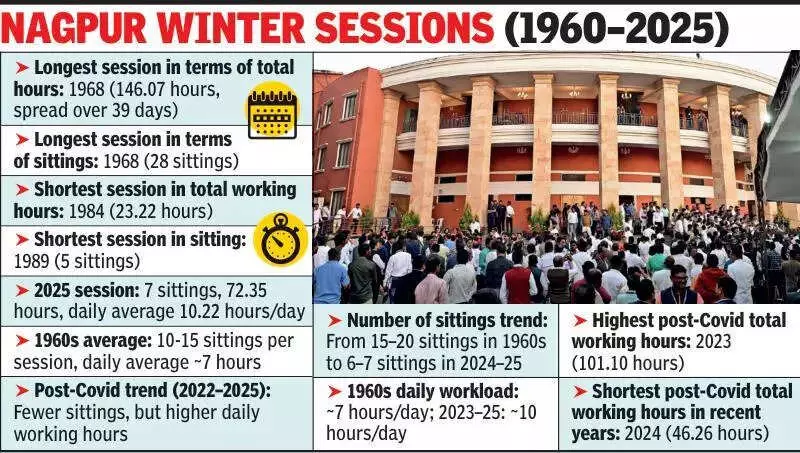
In the 1960s, the Nagpur winter session was conceived as an extensive legislative exercise. The very first session in the city in 1960 spanned 36 days with 27 sittings, totalling 136.50 working hours. This pattern of lengthy sessions continued for decades. The record was set in 1968, when the session stretched over 39 days with 28 sittings, clocking a staggering 146.07 working hours – the highest ever recorded. Throughout the 1970s and 1980s, sessions routinely lasted three to four weeks, allowing for gradual unfolding of debates and legislative business.
A gradual shift began in the post-2000 era. The number of sitting days started to decline noticeably. For instance, the 2003 winter session had 12 sittings, the 2010 session had 11, and the 2015 session had just 10. This was a sharp drop from the typical 15-20 sittings common in earlier decades. Concurrently, the daily duration of Assembly proceedings began to rise steadily, often exceeding 8-9 hours per day.
The Post-Pandemic Acceleration
The trend of shorter, denser sessions became more pronounced after the Covid-19 pandemic. No sessions were held in Nagpur in 2020 and 2021 due to restrictions. When proceedings resumed in 2022, the Assembly met for 10 sittings, logging 84.10 working hours. The subsequent sessions reflected even tighter scheduling.
In 2023, the Assembly packed 101.10 working hours across 10 sittings, pushing the daily average above 10.5 hours – one of the highest in recent decades. The 2024 winter session saw a further reduction to just six sittings with 46.26 working hours. This year, in 2025, the number of sittings rose marginally to seven, but the total working hours jumped to 72.35, maintaining a daily average of over 10 hours.
Another factor contributing to the increased intensity is the sharp reduction in time lost to adjournments. In recent years, especially in 2023, 2024, and 2025, adjournment time has dropped to negligible levels, ensuring that each minute of the session is packed with activity.
Calls for Longer Sessions from Vidarbha Supporters
This compression of the legislative calendar has drawn criticism from Pro-Vidarbha statehood supporters. They argue that while the Nagpur Pact designates the city as the venue for the winter session, the region deserves longer and more substantive sittings to ensure it receives adequate attention and developmental focus.
Their stance is clear: ideally, sessions should run for at least three to six weeks. This would allow lawmakers sufficient time for detailed discussions and effective decision-making, rather than compressing work into a few high-intensity days which they claim may not yield much productivity. The shift from a session longer in days to one denser in hours is seen by some as undermining the original intent of holding the session in Nagpur – to address regional issues thoroughly.
The evolution of the Nagpur winter session tells a story of changing political and administrative priorities. It highlights a move towards efficiency and compressed timelines, but also raises questions about the depth of legislative scrutiny and the fulfilment of regional commitments envisioned decades ago.