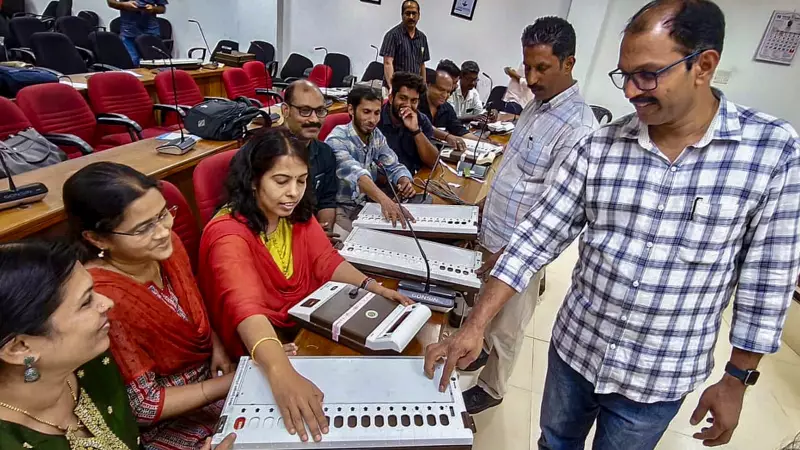
The first phase of the crucial Maharashtra local body elections commenced on Tuesday, December 2, 2025, with voters across the state heading to polling stations from 8 am. This electoral exercise covers a significant number of local governance bodies, setting the stage for political dynamics at the grassroots level.
Polling Details and Last-Minute Suspensions
Citizens are casting their votes for representatives in 246 municipal councils (Nagar Parishads) and 42 municipal panchayats (Nagar Panchayats). The counting of votes is scheduled for December 3, 2025, when the results will be officially declared.
In a significant pre-poll development, the Maharashtra State Election Commission (SEC) intervened just a day before voting. It ordered the immediate suspension and revision of elections in at least 20 local bodies. This decision, citing procedural irregularities and pending court cases, affects several councils and panchayats. Notably, the elections in these areas, including Deputy Chief Minister Ajit Pawar's home turf of Baramati, have been postponed and will now be held on December 20, 2025.
Unconventional Political Alliances Shape Contest
The political landscape for these local polls is marked by unusual coalition formations, diverging from the state-level rivalries. In a striking move, the Eknath Shinde-led Shiv Sena and the Uddhav Thackeray-led Shiv Sena (UBT) are contesting the elections as allies, temporarily setting aside their bitter factional feud.
Furthermore, the Shinde Sena has also entered into alliances with the Congress party and both factions of the Nationalist Congress Party (NCP)—the one led by Deputy CM Ajit Pawar and the other headed by Sharad Pawar (NCP(SP)). This collaborative strategy is particularly evident in regions where these parties aim to counter the influence of the Bharatiya Janata Party (BJP) or strong local political fronts. Conversely, various other parties have also united in an effort to challenge and push back against the growing dominance of the Shinde Sena in the local political arena.
Significance and Road Ahead
These local body elections are a critical barometer of public sentiment and political organization at the district and tehsil levels. The outcomes will influence the control over urban and semi-urban local governance, impacting civic administration and development projects. The formation of unexpected alliances highlights the pragmatic, seat-specific strategies adopted by parties, often prioritizing local electoral success over broader ideological stances. All eyes are now on the voter turnout and the final results, which will be announced after the counting on December 3, shaping the political narrative in Maharashtra ahead of other major elections.