Maharashtra Assembly Erupts Over Temple Funding for Rape-Accused Astrologer
The Maharashtra state assembly witnessed heated exchanges on Wednesday as legislators raised strong objections to the government's 2018 decision to allocate Rs 1.05 crore for development works at Shree Ishaneshwar temple in Mirgaon village, Sinnar taluka of Nashik district. The controversy centers on the temple's founder, astrologer Ashok Kharat (67), who faces serious criminal allegations including rape charges.
MLA's Scathing Criticism in the House
NCP (SP) MLA Jitendra Awhad brought the matter to the assembly floor, highlighting Kharat's controversial background. "His name surfaced in a Nashik-based reporter's murder case in 2007," Awhad stated emphatically. "A news series was published on his acts. We cannot claim Kharat was unknown to people or reporters. If we provide funds to establishments of such individuals, it will be tantamount to giving government approval to wrong practices such as black magic."
The MLA's remarks underscored growing concerns about public funds being directed toward institutions associated with individuals facing serious criminal accusations.

Government's Funding Justification and Details
According to a 2018 Government Resolution (GR), the funds were specifically earmarked for constructing facilities for devotees at Kharat's Shree Ishaneshwar temple, which operates under the banner of Sri Shivnika Sansthan. Responding to queries about the controversial allocation, Minister of State for Home Yogesh Kadam clarified that the funds were sanctioned exclusively for "visitors' facilities" rather than "individual benefit."
The tourism and cultural affairs department's GR revealed detailed financial breakdowns:
- Total sanctioned amount: Rs 1.05 crore (Rs 105.83 lakh)
- Amount disbursed: Rs 25 lakh
- Utilized for: Assembly hall construction, public toilets, changing rooms
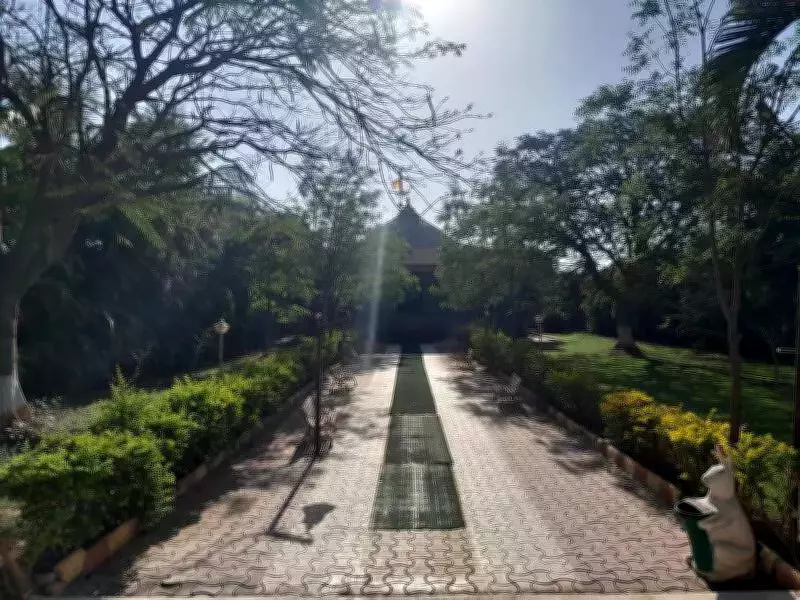
- Additional work: Landscaping, gardening, and installation of paver blocks on temple premises
The state government follows a phased disbursement system for developing religious and tourist sites, with this temple project falling under that policy framework.
Growing Demands for Investigation and Accountability
Right to Information (RTI) activist Vijay Kumbhar has demanded a high-level inquiry by the state government and called for the arrest of all officials involved in the fund allocation process for Kharat's temple. "An investigation must uncover how the proposal for funding construction at this site reached the government," Kumbhar insisted. "Those responsible for drafting and executing it should be behind bars."
The activist's demands reflect broader public concerns about transparency and due diligence in government fund allocation, particularly when recipients have questionable backgrounds.
Recent Developments and Government Response
Shree Ishaneshwar temple came under renewed scrutiny after Nashik-based astrologer Ashok Kharat was arrested on March 18 in a rape case. In response to growing public outrage, Water Resources Minister Radhakrishna Vikhe Patil ordered an immediate review and cancellation of a 2020 order granting bulk water supply to Shri Shivanika Sansthan on March 21, following Kharat's arrest.
This swift government action indicates recognition of the sensitivity surrounding associations with individuals facing serious criminal charges, though questions remain about why earlier due diligence failed to prevent the initial fund allocation.
The controversy has sparked broader discussions about:
- Government vetting processes for fund recipients
- Accountability mechanisms for public fund allocation
- Ethical considerations in supporting religious institutions
- Transparency in development project approvals
As the assembly debate continues, stakeholders await further government clarification on how such allocations receive approval despite red flags about associated individuals. The case has become a litmus test for Maharashtra's commitment to responsible governance and ethical fund distribution practices.