Karnataka Chief Minister Dismisses Kumaraswamy's 'Caste for Chair' Comment as a Joke
In a recent political development that has stirred controversy in Karnataka, Chief Minister Siddaramaiah has labeled a remark made by former Chief Minister and Janata Dal (Secular) leader H.D. Kumaraswamy as nothing more than a joke. The comment in question, where Kumaraswamy allegedly stated that caste considerations were a factor in securing a political position, has ignited a heated debate across the state's political landscape.
The Controversial Statement and Its Immediate Fallout
H.D. Kumaraswamy, who served as the Chief Minister of Karnataka from 2006 to 2007 and again from 2018 to 2019, made the remark during a public address, suggesting that caste plays a pivotal role in determining who gets to hold significant political chairs or positions. This statement quickly went viral on social media and news platforms, drawing sharp criticism from various quarters, including political opponents and social activists.
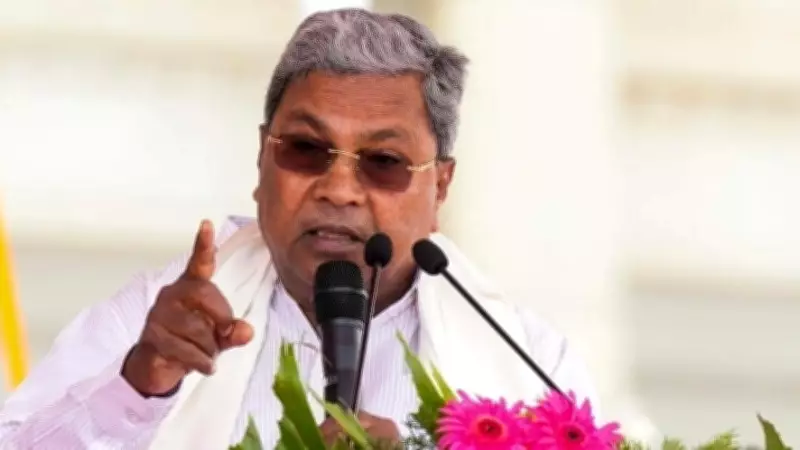
In response, Chief Minister Siddaramaiah, who leads the Congress government in Karnataka, downplayed the significance of Kumaraswamy's words. He asserted that such comments should not be taken seriously, as they were likely made in a light-hearted or sarcastic manner. Siddaramaiah emphasized that governance and development should be the primary focus, rather than engaging in caste-based rhetoric that could polarize society.

Political Reactions and Broader Implications
The incident has sparked a wider discussion on the role of caste in Indian politics, particularly in Karnataka, where caste dynamics have historically influenced electoral outcomes and political alliances. Critics argue that Kumaraswamy's remark, whether intended as a joke or not, highlights a persistent issue in the political system, where caste identity often overshadows merit and capability.
Supporters of Kumaraswamy, however, have defended him, stating that his comment was misinterpreted or taken out of context. They point to his tenure as Chief Minister, during which he implemented various welfare schemes aimed at all sections of society, regardless of caste. Meanwhile, opposition parties have seized the opportunity to criticize both Kumaraswamy and Siddaramaiah, accusing them of trivializing a serious issue that affects millions of citizens.
Analysis of Caste Politics in Karnataka
Karnataka has a complex caste structure, with dominant communities such as Lingayats, Vokkaligas, and Scheduled Castes playing crucial roles in politics. Over the years, political parties, including the Congress, Bharatiya Janata Party (BJP), and Janata Dal (Secular), have often tailored their strategies around caste equations to gain electoral advantage.
This controversy comes at a time when the state is gearing up for future elections, making it a sensitive topic. Experts suggest that while caste cannot be ignored in Indian politics, there is a growing need to shift the narrative towards inclusive development and governance based on performance rather than identity.
Conclusion: Moving Beyond Caste-Based Discourse
As the debate continues, Chief Minister Siddaramaiah's dismissal of Kumaraswamy's remark as a joke underscores a desire to steer political discourse away from divisive issues. However, the incident serves as a reminder of the deep-seated caste influences that still permeate Karnataka's political arena. It calls for a more nuanced approach where political leaders prioritize unity and progress over caste-based polarization, ensuring that the state's development agenda remains inclusive and forward-looking.