Kolkata Shuttle Buses Pivot to Auto Routes to Bridge Last-Mile Connectivity Gap
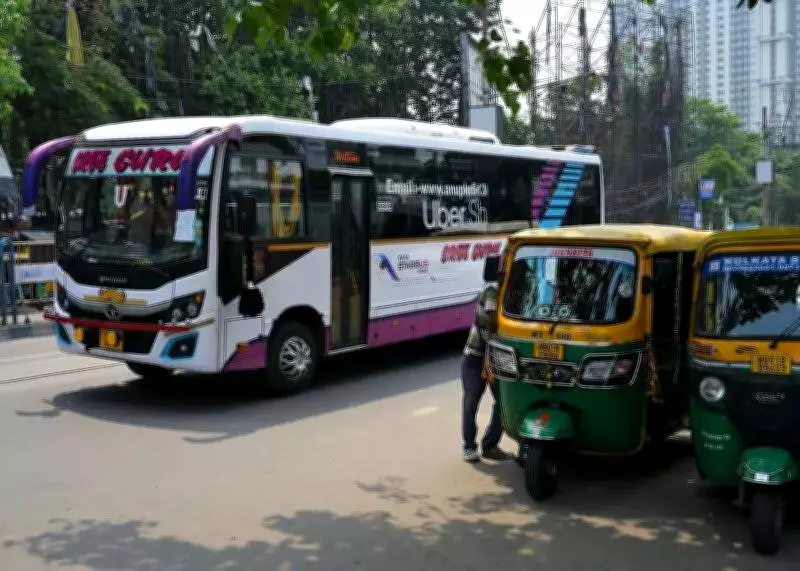
In a strategic move to expand their passenger base, several shuttle and mini-bus services in Kolkata, operated through dedicated apps and private arrangements, are now targeting major auto zones. This shift aims to address a growing deficiency in the city's last-mile transportation network, according to transport experts.
Route Diversions to High-Density Corridors
Over the past two weeks, most shuttle buses originating from areas like Howrah or Behala-Sarsuna have been favoring routes through Park Circus, Gariahat, and Kasba connectors. They are deliberately avoiding the Park Street-Victoria Memorial option suggested by police. Similarly, services on Joka routes are now passing via Tollygunge Metro-Haridevpur.
This decision is calculated, even though these alternative paths add 30 to 45 minutes to travel time compared to the traditional Park Street route. Shuttle bus driver Shankar Dutta explained, "Operational costs have risen significantly. Without access to the Maa and AJC Bose Road flyovers, fuel expenses have increased, and travel times are longer, making it hard to schedule extra trips. As a result, we often don't get full-capacity passengers during morning commutes to Sector V or evening returns. However, bookings from the Gariahat-Kasba belt, where auto services are disrupted, are helping offset these losses."

Police Restrictions and Operational Challenges
For several months, Kolkata Traffic Police had prohibited shuttle vehicles from using the Gariahat and Park Circus connectors, following earlier bans on the Maa and AJC Bose Road flyovers. Traffic experts note that while the police-proposed Park Street-Victoria Memorial route is geographically shorter, it lacks the necessary "passenger density" to ensure trip viability.
In contrast, the Gariahat and Kasba areas, traditionally dominated by autos, offer a steady influx of commuters seeking more comfortable or reliable alternatives. This has created an opportunity for shuttle services to fill the void.
Potential Conflicts and Commuter Impact
However, this encroachment into auto-dominated routes has sparked concerns about possible turf wars between auto unions and private shuttle operators. Kolkata Traffic Police is closely monitoring the situation, as the introduction of larger vehicles into already congested connectors could exacerbate gridlock during peak hours.
For thousands of IT employees and daily commuters traveling to Sector V and New Town, the detour means extended commute times. Yet, many prefer the certainty of a guaranteed seat on a shuttle bus over the unpredictability of shorter, more restricted routes. Commuter Sayantan Banerjee from Behala remarked, "It takes longer, but there's little we can do about it."
This strategic pivot highlights the evolving dynamics of urban mobility in Kolkata, as shuttle services adapt to regulatory constraints and market demands to sustain operations.