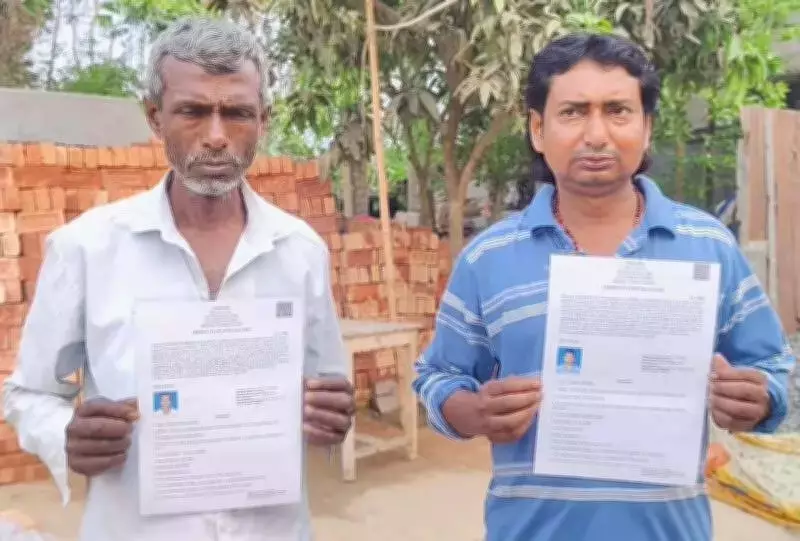
Kolkata Brothers Receive CAA Citizenship While Missing from Voter List
In a development that underscores the complexities of India's citizenship process, two brothers in Kolkata have been granted citizenship under the Citizenship Amendment Act (CAA) despite their names being excluded from the final voter list. This case adds to a growing number of instances where CAA applicants have been struck off electoral rolls only to later receive their citizenship certificates, raising concerns about administrative coordination.
Details of the Case
Brothers Laxman Bhadra and Premchand Bhadra, residents of Nataberia Panchpota under the Bagdah police station in North 24 Parganas district, have lived in India with their families for approximately 40 years after migrating from Comilla, Bangladesh. They applied for citizenship under the CAA at a camp in Thakurnagar last November and subsequently received confirmation messages. Recently, they were issued official citizenship certificates, formalizing their status as Indian citizens.
However, despite submitting enumeration forms during the Summary Revision (SIR) exercise, their names did not appear in the final electoral roll. This omission has sparked confusion and frustration, as it highlights a disconnect between citizenship grants and voter registration processes.

Broader Context and Regional Concerns
The development comes amid widespread concerns across Matua-dominated regions in the Bongaon subdivision, where issues such as omissions in voter rolls and delays in citizenship processing have been prevalent. The Matua community, many of whom are migrants from Bangladesh, has been a significant beneficiary of the CAA, which fast-tracks citizenship for non-Muslim minorities from neighboring countries.
In this recent batch, the Bhadra brothers were among 14 others who received their citizenship certificates. Of these, individuals from Santosh Colony, Gadpukur, and Goalbagi areas also obtained CAA certificates. Notably, Pallab Das and his mother Rebarani Biswas have had their names marked under adjudication, while Biplab Biswas's name was deleted from the list, indicating varying outcomes in the citizenship application process.
Implications and Ongoing Challenges
This case raises important questions about the synchronization between different government departments handling citizenship and electoral matters. The exclusion of CAA beneficiaries from voter lists, even after receiving citizenship, points to potential gaps in data sharing and procedural alignment. Such discrepancies can disenfranchise new citizens and undermine their integration into the democratic process.
Authorities have yet to comment on the specific reasons for the omissions, but the situation has prompted calls for streamlined processes to ensure that citizenship grants are promptly reflected in voter registrations. As the CAA continues to be implemented, similar cases may emerge, necessitating closer scrutiny and corrective measures to uphold the rights of new citizens.
The story of the Bhadra brothers serves as a microcosm of the broader challenges faced by migrant communities in India, balancing hope for citizenship with the practical hurdles of bureaucratic procedures. It remains to be seen how these issues will be addressed to foster a more cohesive and inclusive administrative framework.