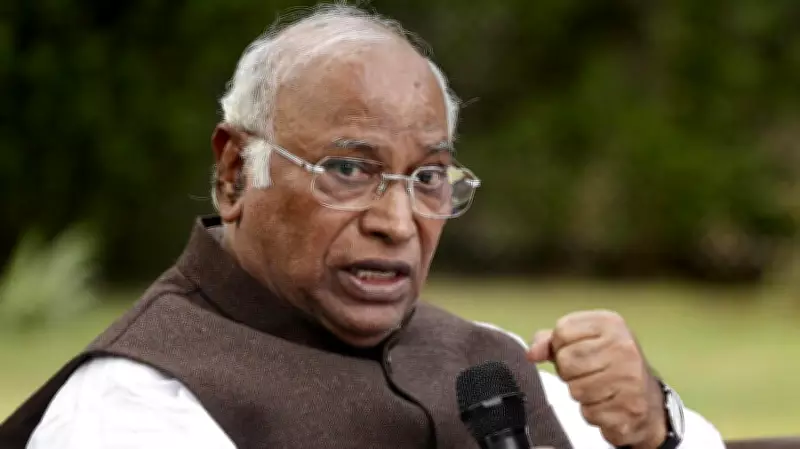
Congress Chief Mallikarjun Kharge Advocates for Peaceful Settlement in Karnataka's Internal Quota Rift
Congress President Mallikarjun Kharge has stepped forward to address the escalating tensions over internal reservation among Scheduled Caste (SC) communities in Karnataka. In a significant move aimed at fostering harmony, Kharge has recommended an amicable settlement to resolve the ongoing dispute, which has sparked divisions within the state's political and social landscape.
Background of the Internal Reservation Dispute
The controversy centers on the allocation of quotas within the broader SC category in Karnataka. Various SC sub-groups have been advocating for a more equitable distribution of reservation benefits, leading to heated debates and protests. This internal rift has not only strained community relations but also posed challenges for the state government in maintaining social cohesion and implementing welfare policies effectively.
Kharge, a seasoned politician with deep roots in Karnataka's political scene, emphasized the importance of dialogue and mutual understanding in his statement. He highlighted that such disputes, if left unresolved, could undermine the collective progress of marginalized communities and hinder the state's development goals.
Kharge's Call for Unity and Dialogue
In his appeal, Kharge urged all stakeholders, including community leaders, political representatives, and civil society organizations, to come together for constructive discussions. He stressed that an amicable settlement, reached through consensus and empathy, is crucial to preserving the unity of SC communities and ensuring that reservation policies serve their intended purpose of social justice and empowerment.
Kharge stated, "It is imperative that we resolve this issue through peaceful means, keeping in mind the larger interests of our society. Division only weakens our fight for equality and rights." His intervention is seen as a timely effort to de-escalate tensions and pave the way for a sustainable solution that addresses the grievances of all parties involved.
Political and Social Implications
The internal quota rift in Karnataka has significant political ramifications, especially with the state being a key battleground in national politics. The Congress party, under Kharge's leadership, is keen to project itself as a unifying force capable of managing complex social issues. By advocating for an amicable settlement, Kharge aims to strengthen the party's credibility among SC voters and demonstrate its commitment to inclusive governance.
Moreover, this dispute underscores broader challenges in India's reservation system, where internal conflicts within reserved categories often arise due to perceived inequalities in benefit distribution. Experts note that such issues require nuanced policy adjustments and continuous engagement to ensure that affirmative action remains effective and fair.
Looking Ahead: Path to Resolution
As the situation unfolds, Kharge's recommendation for an amicable settlement is expected to catalyze renewed efforts toward reconciliation. Key steps may include:
- Forming a committee comprising representatives from all SC sub-groups to facilitate dialogue.
- Reviewing existing reservation policies to identify and address gaps in implementation.
- Promoting awareness campaigns to educate communities about the importance of unity and shared goals.
Ultimately, resolving this internal quota rift will not only benefit Karnataka's SC communities but also set a precedent for handling similar disputes across India. Kharge's call for peace and cooperation serves as a reminder that in a diverse democracy, dialogue and compromise are essential tools for achieving social harmony and progress.