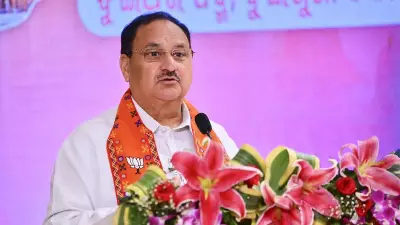
Transport Minister K B Ganesh Kumar announced on Sunday that the Kerala state government has not yet reached a decision regarding the implementation of the newly amended Central Motor Vehicles Rules, 2026. He emphasized that these provisions will be enforced in the state only after comprehensive consultations and a detailed study.
Consultations Before Implementation
The minister revealed that discussions with transport department officials are scheduled for Tuesday. Following these talks, he will meet with the Chief Minister to finalize the state's stance. Ganesh Kumar stressed that any implementation of the amended law would be carefully managed to prevent inconvenience to the public.
Minister's Statement on the Amendments
"The amendments to the Central Motor Vehicles Rules will be implemented in the state only after thorough consultation. Though stricter laws may help reduce road accidents, not all Central provisions will be enforced in their present form," Ganesh Kumar stated. He added that the government is actively examining ways to simplify the amendments to avoid hardship for citizens and maintained that the law should not be implemented hastily.

The state's position, according to the minister, is to act only after a detailed study and discussions. These remarks come in response to the Centre notifying new transport law provisions that came into effect on January 1, 2026.
Key Provisions of the Amended Rules
Under the amended Central Motor Vehicles Rules, several stringent measures have been introduced:
- The motor vehicle department can suspend the driving licences of vehicle owners who commit five consecutive traffic violations within a single 12-month period.
- Violations from previous years will not be counted towards this tally.
- Repeat offenders may face blacklisting, and vehicles with unpaid fines can be seized with court permission.
- Before a licence suspension, the holder must be given an opportunity to present their case.
- A grace period of 45 days is allowed for payment of fines, after which stricter actions will follow.
Consequences for Non-Compliance
Vehicles with unpaid fines can be blacklisted, which prevents ownership transfer, fitness certification, and access to other services. Officials are also authorized to impound vehicles with outstanding fines. The amended law covers 24 categories of traffic offences, including:
- Speeding
- Driving without a helmet or seatbelt
- Signal violations
- Illegal parking
- Overloading
- Vehicle theft
- Aggressive behaviour towards co-passengers
If five or more such violations are recorded within a year, the licence will be suspended for a period determined by the competent authority. Authorities have stated that the objective of these amendments is to curb habitual offenders and enhance road safety across the nation.
Kerala's Cautious Approach
Minister Ganesh Kumar reiterated that while the state acknowledges the potential benefits of stricter laws in reducing road accidents, it will not blindly adopt all Central provisions. The government is committed to ensuring that the implementation process is smooth and does not impose undue burdens on the citizens of Kerala.
This cautious approach reflects the state's dedication to balancing regulatory compliance with public welfare. The upcoming discussions and meetings are expected to shape Kerala's final decision on the matter, potentially setting a precedent for how other states might handle similar Central mandates.