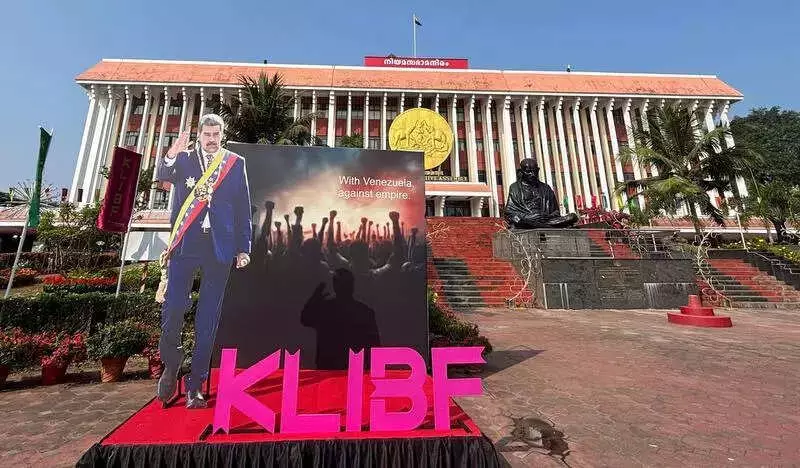
Kerala Chief Minister Pinarayi Vijayan has launched a sharp critique against the central government and the Congress party for maintaining silence on recent actions by the United States concerning Venezuela. The CM accused the US of blatant interference in the sovereign affairs of the Latin American nation.
Vijayan Condemns US Interference in Venezuelan Elections
In a strongly worded statement issued on Saturday, the CPI(M) veteran leader targeted the United States for its recent move to reimpose crushing sanctions on Venezuela's oil and gas sector. He highlighted that this action came shortly after the Venezuelan government, under President Nicolas Maduro, announced a plan for upcoming presidential elections. Vijayan characterised the US sanctions as a direct attempt to influence and undermine the electoral process of a sovereign country.
The Chief Minister pointed out that the US decision was a clear violation of international law and the principles of national sovereignty. He emphasised that such acts of external pressure are detrimental to democratic processes anywhere in the world. His criticism aligns with the long-standing position of the Left parties in India, which have historically opposed American interventionism in the internal matters of other nations.

Silence of Centre and Congress Draws Flak
Pinarayi Vijayan reserved significant criticism for the Government of India and the principal opposition party, the Indian National Congress. He questioned their conspicuous silence on this important international issue. The CM argued that India, as a nation that has consistently championed the values of sovereignty and non-interference since the days of the Non-Aligned Movement, has a moral duty to speak out against such actions.
"The silence of the central government and the Congress party on this serious issue is surprising and regrettable," Vijayan stated. He suggested that their inaction could be interpreted as a tacit endorsement of Washington's aggressive foreign policy, which he claimed seeks to dominate independent nations. This silence, according to him, marks a departure from India's traditional foreign policy stance.
Broader Implications for India's Foreign Policy
The Kerala Chief Minister's remarks bring to the fore the ongoing debate about India's foreign policy direction in a complex global landscape. His statement implies a concern that India may be compromising its strategic autonomy by not vocalising opposition to actions perceived as hegemonic. The critique also serves a domestic political purpose, drawing a clear ideological line between the Left's worldview and that of the national ruling party and the main opposition.
This is not the first time Vijayan has commented on international affairs. He has previously positioned himself on global issues, often reflecting the CPI(M)'s ideological framework. The latest comments reinforce his party's stance against American foreign policy while attempting to hold the major national political players accountable for their positions—or lack thereof.
The incident underscores how state-level political leaders in India are increasingly engaging with international diplomacy and using it to frame national political discourse. It remains to be seen whether this criticism will elicit any response from the Centre or the Congress party, or if it will influence India's diplomatic communications regarding Venezuela.