Karnataka Government Proposes Ending Road Tax Exemption for Electric Cars
In a significant policy shift, the Karnataka government is preparing to withdraw the 100% road tax exemption currently granted for battery-operated cars. This move, if implemented, will make purchasing an electric car in the state more expensive. However, the tax exemption for electric two-wheelers will continue unchanged, providing some relief for smaller electric vehicle (EV) buyers.
Details of the Proposed Tax Structure
The proposal is part of the Karnataka Motor Vehicles Taxation Amendment Bill 2026, which was passed during the recently concluded legislative session. It now awaits the governor's assent to become law. The one-time lifetime tax is paid at the time of purchasing a new vehicle.
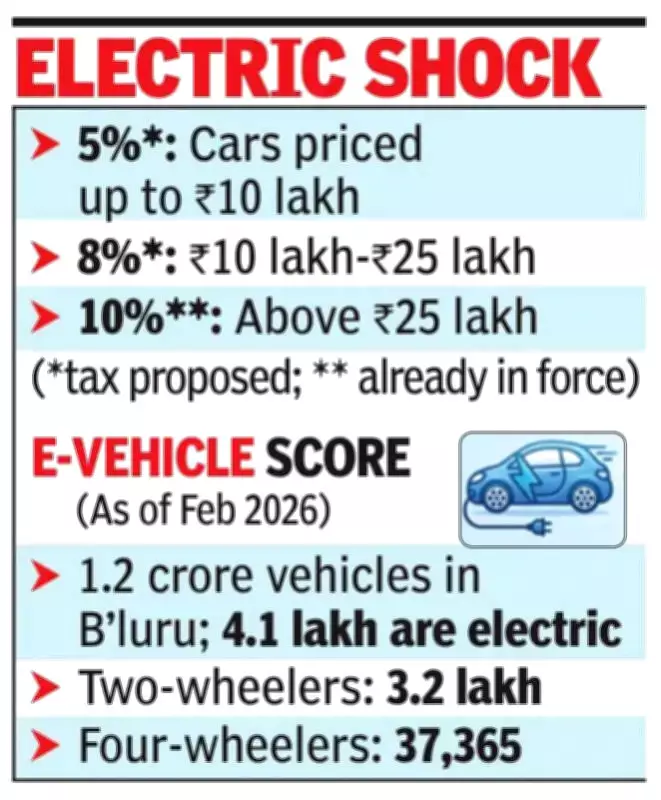
If approved, the new tax structure will link the lifetime tax to the cost of the electric car:

- Electric cars priced up to Rs 10 lakh will attract a 5% tax
- Electric cars in the Rs 10 lakh to Rs 25 lakh bracket will be taxed at 8%
- Vehicles priced above Rs 25 lakh are already subject to a 10% tax, with no changes to this segment
For perspective, a Rs 20-lakh electric car would incur approximately Rs 1.6 lakh in tax under the new proposal.
Government's Rationale and Revenue Implications
Transport Minister Ramalinga Reddy defended the move, clarifying that the tax will apply only to new vehicles and not retrospectively. The policy pivot comes as the government seeks to shore up revenues amid rising expenditures on its flagship guarantee schemes.
For the fiscal year 2026-27, the transport department has been given a target of Rs 15,500 crore—Rs 500 crore higher than the previous fiscal year. Officials estimate that taxing electric cars across segments could generate approximately Rs 259 crore annually for the state.
Historical Context and Policy Evolution
This marks a substantial departure from Karnataka's previous policy on tax exemptions for electric vehicles. To promote green mobility, the government initially announced tax exemptions for EVs in 2016 to accelerate adoption.
In May 2024, the government took the first step toward revising this policy by imposing a 10% lifetime tax on high-end electric cars. The latest proposal extends this levy to all variants of electric cars, representing a complete reversal of the earlier exemption policy.
Market Impact and Industry Response
The timing of this proposal is notable as India continues to ramp up electric mobility initiatives amid concerns about potential fuel price hikes stoked by conflicts in West Asia. Dealers have already begun alerting customers about likely increases in on-road prices, including those who have made advance bookings for electric vehicles.
This policy change reflects the delicate balance governments must strike between promoting environmentally friendly transportation and generating sufficient revenue to fund public services and development programs.