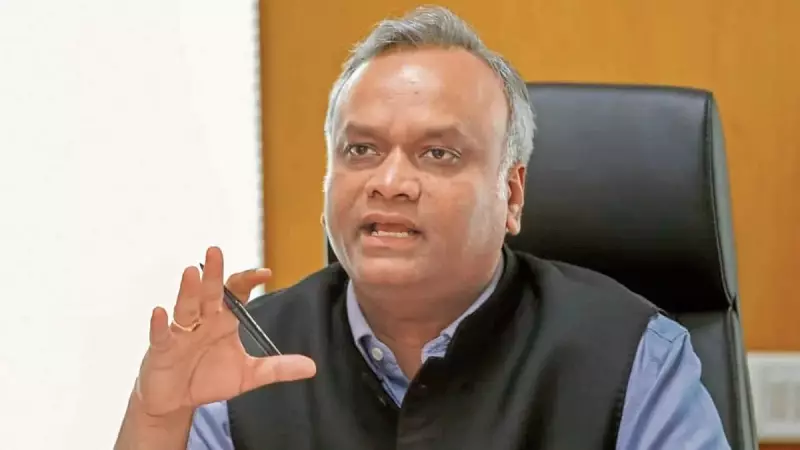
In a candid admission before the Karnataka Legislative Assembly, Rural Development and Panchayat Raj Minister Priyank Kharge stated that there is no immediate or clear solution to revive thousands of defunct drinking water supply units across the state's villages. The revelation came during the ongoing monsoon session, highlighting a persistent crisis in ensuring potable water for rural households.
Assembly Exposes Scale of the Problem
Responding to questions from BJP members, including Basanagouda Patil Yatnal and Dattatreya Patil Revoor, Minister Kharge presented stark data. He confirmed that a staggering 4,889 drinking water supply schemes in rural areas are currently non-functional. The breakdown reveals 2,974 schemes are managed by Panchayats, 1,661 by Karnataka Rural Water Supply and Sanitation Agency (KRWSSA), and 254 by Zilla Panchayats.
The minister elaborated on the multifaceted reasons behind this widespread failure. Chronic power supply issues were cited as a primary culprit, crippling the operation of water pumps. Furthermore, many schemes have fallen into disrepair due to a severe lack of maintenance and the absence of dedicated personnel to manage them. In numerous cases, the infrastructure has become so old and damaged that simple repairs are no longer viable, necessitating complete overhaul or replacement.
Challenges Beyond Simple Repair
Kharge emphasized that the problem is not merely technical but also structural and financial. He pointed out that the responsibility for these schemes is fragmented across different government bodies—Gram Panchayats, KRWSSA, and Zilla Panchayats—leading to accountability gaps. The financial burden of reviving thousands of units is immense, and there is no single, pre-packaged fix.
The government's current strategy involves integrating these defunct units into the larger, centrally-sponsored Jal Jeevan Mission (JJM). The goal is to provide Functional Household Tap Connections (FHTCs) to every rural home. However, this is a massive undertaking and not a swift remedy. Kharge clarified that while the JJM aims for a permanent solution, the process of surveying, planning, and executing the integration for thousands of failed schemes will take considerable time and resources.
Political Reactions and Public Impact
The admission sparked strong reactions from the opposition benches. BJP legislators accused the Congress government of making hollow promises and failing to address a fundamental issue affecting millions of rural citizens. They demanded a concrete timeline and action plan, which the minister could not immediately provide.
For the rural population, this translates to continued dependence on unreliable water sources. Many villages still rely on borewells, which are prone to drying up, or on water tankers, which are an expensive and temporary measure. The non-functioning of these schemes exacerbates water scarcity, particularly in the state's arid regions, impacting health, sanitation, and the daily lives of women and children who often bear the responsibility of water collection.
Minister Kharge assured the House that the government is committed to finding a solution through the JJM framework but reiterated that expecting a quick fix would be unrealistic. The state's challenge now is to bridge the gap between the urgent need for drinking water and the long-term, systemic overhaul required to ensure a sustainable supply, a task that admits no easy answers.