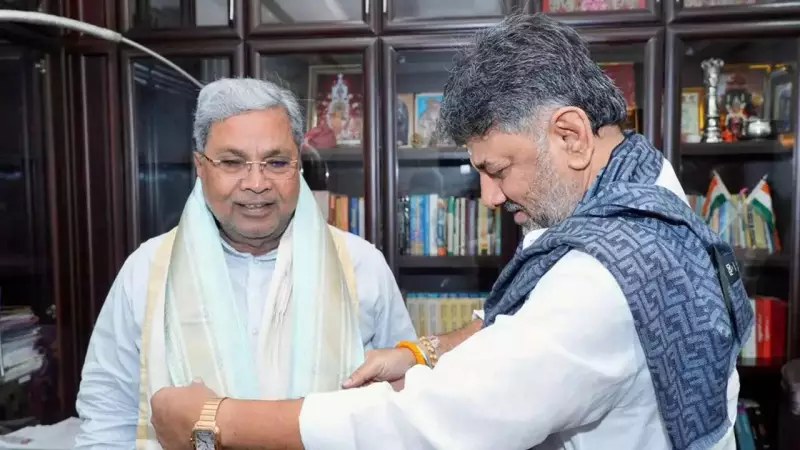
A casual breakfast meeting between Karnataka's top two leaders took an unexpected turn on Tuesday when Chief Minister Siddaramaiah made a personal remark to a female journalist about her dietary choices, sparking widespread attention and debate.
The Breakfast Meeting and the 'Missing Something' Comment
The incident occurred at Deputy Chief Minister DK Shivakumar's residence in Bengaluru's upscale Sadashivanagar area. The breakfast was arranged as a public display of unity within the state Congress leadership, aiming to quell persistent speculation about internal differences between the two powerful figures.
During the informal interaction, Chief Minister Siddaramaiah asked a reporter if she liked chicken. When she clarified that she was a "pure" vegetarian, he probed further, questioning what she meant by "pure" and whether she consumed eggs. Upon her negative reply, Siddaramaiah remarked, "You are missing something in life." The exchange, though delivered in a light-hearted tone, quickly became the talk of the town, overshadowing the intended message of the event.

A Menu Reflecting Contrasts and a Message of Unity
The breakfast menu itself highlighted the contrasting personal preferences of the two leaders. For the vegetarian Shivakumar, a spread of vegetarian dishes was prepared. For Siddaramaiah, the non-vegetarian fare included naati koli (country chicken) cooked in a traditional Mysuru style. The food was reportedly prepared by Shivakumar's wife, Usha, adding a personal touch to the political gathering.
Despite the diversion caused by the CM's comment, both leaders repeatedly emphasized their cordial relationship. They insisted they were like "brothers" and that there were no divisions within the party. The meeting was part of a concerted effort by the Congress leadership to project a solid, unified front to the public and within the party ranks.
Reactions and the Blurring of Personal and Political
The remark has ignited discussions beyond the immediate political context, touching on themes of personal choice, cultural dietary norms, and the boundaries of casual banter in public life. While some viewed it as a harmless, off-the-cuff observation, others interpreted it as an unnecessary commentary on an individual's lifestyle.
The episode underscores how even staged events aimed at controlling a narrative can be hijacked by unscripted moments. It also reflects the intensely personal nature of politics in India, where leaders' tastes and comments are often dissected as much as their policies. The breakfast, intended to showcase unity, ultimately served a dual purpose, also revealing the informal dynamics and the occasional pitfalls of political communication.