Karnataka Assembly Debates Rural Employment Laws as CM Siddaramaiah Moves Resolution Against G RAM G Act
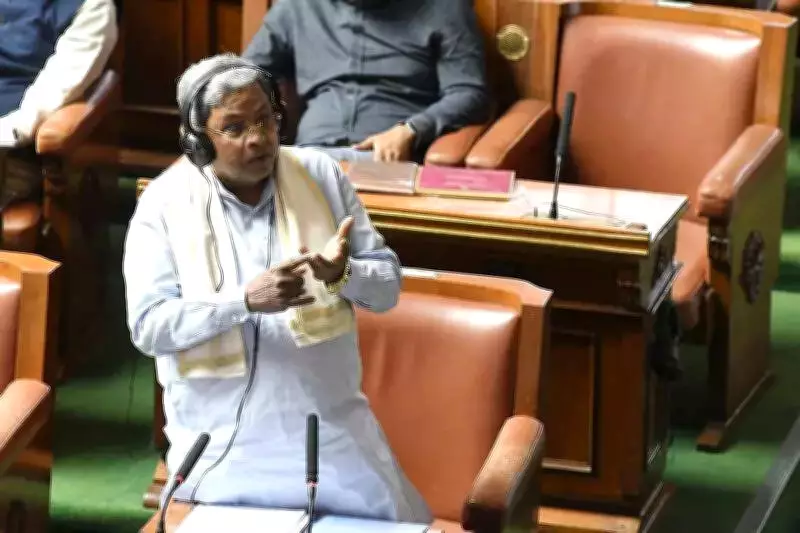
In a significant political development, Karnataka Chief Minister Siddaramaiah on Tuesday tabled a resolution in the state legislative assembly, strongly urging the central government to immediately repeal the Viksit Bharat–Guarantee for Rozgar and Ajeevika Mission (Gramin) Act, commonly known as the G RAM G Act. The resolution calls for the restoration of the Mahatma Gandhi National Rural Employment Guarantee Act (MGNREGA) in its original form, citing profound concerns over federalism, decentralisation, and the protection of rural livelihood rights.
Opposition BJP Challenges the Resolution's Legitimacy
The move was met with immediate opposition from the Bharatiya Janata Party (BJP). BJP legislators argued that the resolution should not be projected as a unanimous demand of the entire House but rather as a stance of the ruling Congress party alone. They demanded amendments to the text to reflect this distinction.
"This resolution does not have the consent of BJP and JD(S) and should be immediately rephrased as a Congress party resolution," stated opposition leader R Ashoka, highlighting the political divide on the issue.

Siddaramaiah's Defense of MGNREGA and Panchayati Raj
While presenting the resolution, Chief Minister Siddaramaiah emphasised the assembly's commitment to the panchayati raj system and decentralisation, which he described as the foundational pillars of India's democracy. He lauded MGNREGA as a "lifeline" for the rural poor and an "inseparable part" of rural life since its inception.
He criticised the G RAM G law, which he claimed was "unilaterally implemented by the Union government," arguing it is "detrimental to the basic spirit of federalism and to the right to livelihood of rural people."
Historical Context and Constitutional Concerns Raised
Reflecting on the launch of MGNREGA in 2005 under the Manmohan Singh-led government, Siddaramaiah highlighted the scheme's "revolutionary change" in rural India. He listed its key achievements:
- Mitigation of unemployment
- Prevention of distress migration
- Payment of wages without gender discrimination
- Strengthening decentralisation through panchayats
- Creation of individual and community assets in rural areas
The Chief Minister raised serious constitutional objections against the new G RAM G Act. He asserted that it "violates the right to life" guaranteed under Article 21 of the Constitution and "goes against the spirit of the 73rd constitutional amendment" by curtailing the powers and autonomy of gram panchayats. He further stated that it undermines the concept of gram swaraj envisioned by Mahatma Gandhi.
Financial Implications and Structural Shifts
A major point of contention highlighted by Siddaramaiah pertains to the altered funding pattern. Under MGNREGA, the central government bore 100% of the wage cost for 100 person-days. However, under the new G RAM G law, states are required to bear 40% of the expenditure.
"Although the new Act says 125 person-days of work will be provided, in reality the state will have to bear the cost for 50 person-days," he explained. He claimed this shift would have a "serious impact on the federal structure" and could amount to a violation of Articles 258 and 280 of the Constitution, which deal with the distribution of financial resources and powers.
Shift from Rights-Based to Conditional Framework
Siddaramaiah contrasted the fundamental philosophies of the two laws. He noted that MGNREGA treated employment as a legal "right" and was "demand-driven," responding directly to the needs of rural workers. In contrast, he alleged the new law makes employment provision subject to standards and frameworks dictated by the Union government, thereby "taking away the people's right."
He also accused the G RAM G Act of stripping powers from gram sabhas and removing the freedom of gram panchayats to choose development works based on local needs and priorities.

Resolution's Core Demand and Expected Outcome
The tabled resolution explicitly states: "MGNREGA, which enabled rural asset creation and self-reliance of the poor, must be restored in its original form as it existed earlier, and this House urges the Union govt to do so."
With the Congress party enjoying a clear majority in the Karnataka Legislative Assembly, the resolution is expected to be passed. Once adopted, it will be formally sent to the Union government and the President of India, marking a formal state-level challenge to the central legislation on grounds of federal overreach and protection of rural welfare.