Political Showdown in West Bengal as Humayun Kabir Levels Serious Allegations Against Mamata Banerjee
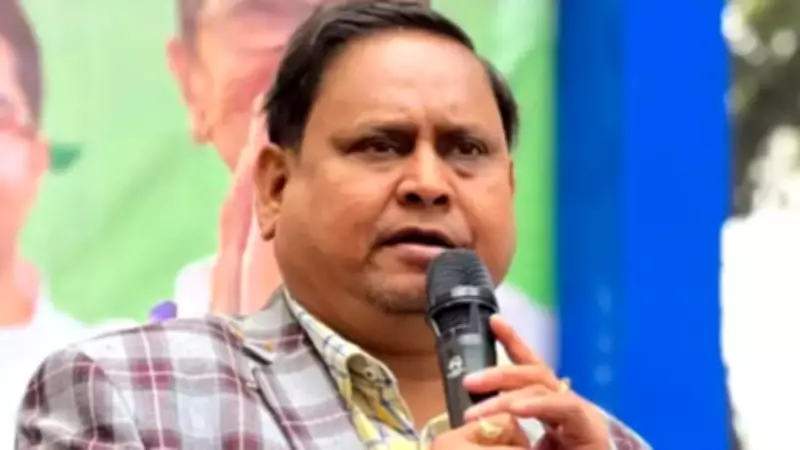
In a significant development in West Bengal's political landscape, Aam Janata Unnayan Party chief Humayun Kabir has launched a scathing attack on Chief Minister Mamata Banerjee, accusing her of systematically ignoring Muslim voters while actively promoting Hindu interests through temple construction projects.
"She Takes Muslim Votes and Builds Temples"
Speaking to ANI, Kabir articulated his central grievance with remarkable clarity. "Mamata Banerjee takes Muslim votes and builds temples after becoming Chief Minister three times," he declared, his words carrying the weight of political betrayal. "She builds Jagannath Dham, and in Rajarhat, she is also building a Durga temple by taking Muslim land. When she does things for Hindus, won't I work for Muslims?"
This rhetorical question forms the ideological foundation of Kabir's newly formed political movement, which seeks to challenge what he perceives as the Trinamool Congress's neglect of its Muslim support base.

From Expulsion to Electoral Challenge
Kabir's political journey has been marked by dramatic turns. Previously a member of the Trinamool Congress, he faced expulsion after proposing the construction of the Babri Masjid in Murshidabad—a move that signaled his growing divergence from the party's mainstream approach. Undeterred, he established the Aam Janata Unnayan Party specifically to contest elections in West Bengal, positioning himself as a champion of Muslim political representation.
The formation of this party represents more than just another political entity; it symbolizes a growing demand for independent Muslim leadership in the state's complex political ecosystem.
Strategic Alliance with AIMIM
In a development that could reshape West Bengal's electoral mathematics, Kabir has joined forces with All India Majlis-e-Ittehadul Muslimeen (AIMIM) chief Asaduddin Owaisi. This alliance represents a coordinated campaign against both the ruling Trinamool Congress and the opposition Bharatiya Janata Party.
"We won't let Mamata Banerjee come back to power," Kabir asserted with determination. He contrasted Banerjee's welfare initiatives with his own promises, stating, "She is distributing Rs 1,500 under the 'Lakshmir Bhandar' scheme; I promise to give women Rs 3,500." This pledge signals a broader outreach strategy targeting Muslim women voters specifically.
Owaisi Outlines the Vision for Independent Muslim Leadership
At a recent press conference, Asaduddin Owaisi elaborated on the strategic objectives driving this political partnership. "Our attempt is that a leadership from the Muslim minority emerges and strengthens in this election in West Bengal," he explained, framing the alliance as part of a larger historical process.
Owaisi emphasized that this collaboration extends beyond immediate electoral calculations. "We have decided the number of seats we will contest. This alliance is not limited to just this election, but it will be taken forward to achieve our political objective," he revealed, suggesting a long-term commitment to building sustainable Muslim political representation.
The Development Argument
Perhaps most compelling was Owaisi's articulation of the connection between political representation and developmental outcomes. "I believe, and government data from West Bengal, the Government of India, and NSSO confirms, that regions where the Muslim minority lacks independent political leadership have very poor social, economic, and human development indicators," he stated, grounding his political argument in empirical evidence.
He concluded with a powerful observation: "There is an organic connection between development and independent leadership." This statement positions the alliance not merely as a vehicle for identity politics, but as a necessary condition for addressing systemic inequalities.

Electoral Roadmap for 2026
Humayun Kabir has announced concrete plans for the upcoming 2026 West Bengal Assembly elections. His party intends to contest an ambitious 182 seats, with approximately eight seats allocated to their alliance partner AIMIM. This represents a significant challenge to established political forces in the state.
The elections themselves are scheduled to unfold in two distinct phases:
- Phase 1: April 23
- Phase 2: April 29
The counting of votes will commence on May 4, setting the stage for what promises to be one of West Bengal's most closely watched electoral battles in recent memory.
As political temperatures rise in the lead-up to these elections, the alliance between Humayun Kabir's Aam Janata Unnayan Party and Asaduddin Owaisi's AIMIM introduces a new dynamic into West Bengal's already complex political equation. Their emphasis on independent Muslim leadership, coupled with specific allegations against the ruling establishment, suggests that identity politics and development concerns will intersect in unprecedented ways during the coming electoral contest.