Himachal Pradesh Announces Austerity Measures Amid Severe Financial Strain
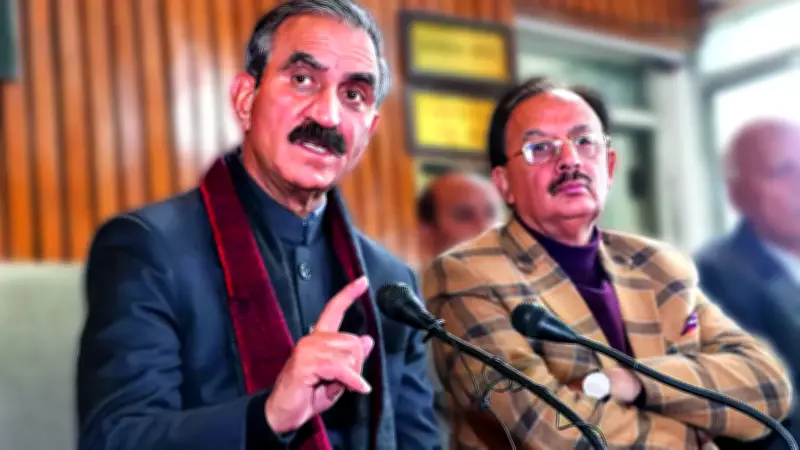
In a significant move reflecting the state's dire fiscal health, the Himachal Pradesh government has mandated a temporary deferment of salaries for its employees and political representatives for a period of six months. Chief Minister Sukhvinder Singh Sukhu made the announcement on Saturday, attributing the decision to a "serious financial situation" that has gripped the state.
Structured Salary Deferments Across Government Ranks
The salary deferment policy has been meticulously structured based on seniority and position. Demonstrating leadership, Chief Minister Sukhu will defer 50% of his own salary. The Deputy Chief Minister and cabinet ministers will see a 30% deferment, while Members of the Legislative Assembly (MLAs), chairpersons, vice-chairpersons, and political appointee advisors will have 20% of their salaries deferred.
This austerity drive extends deep into the state's administrative machinery. Among senior bureaucrats, a 30% deferment applies to top officials including the Chief Secretary, Director General of Police (DGP), Additional Chief Secretaries, Additional DGPs, Principal Secretaries, and senior forest officers. A 20% cut is mandated for Secretaries, Heads of Departments, Inspector Generals of Police (IGPs), Deputy Inspector Generals (DIGs), Senior Superintendents of Police (SSPs), Superintendents of Police (SPs), and other forest officials.

Group A and Group B officers will face a more modest 3% salary deferment for the six-month period. In a relief measure, Group C and Group D employees have been fully exempted from these cuts. Respecting the constitutional independence of the judiciary, the state government has formally urged the Himachal Pradesh High Court to consider a voluntary, similar six-month deferment scheme. This proposed judicial deferment includes 20% for District and Additional District Judges, 3% for Group A and B judicial officers, and up to 30% at the High Court level.
Budget 2025-26: Reduced Outlay and New Revenue Measures
Presenting his fourth budget, Chief Minister Sukhu outlined a total financial outlay of Rs 54,928 crore for the 2025-26 fiscal year. This figure represents a substantial reduction of Rs 3,568 crore from the previous fiscal year's budget. The Chief Minister cited the discontinuation of the Revenue Deficit Grant (RDG) by the Central Government and the state's escalating debt burden as primary reasons for this contraction.
Sukhu strongly criticized the Centre's decision to halt the RDG, stating it has inflicted an average annual loss of approximately Rs 8,105 crore on Himachal Pradesh. This loss has directly contributed to a projected revenue deficit of Rs 6,577 crore for the upcoming financial cycle, forcing the state to adopt stringent fiscal measures.
Introduction of the 'Orphan and Widow Cess' on Fuel
In a bid to generate sustainable revenue for social welfare, the government has introduced the Himachal Pradesh Value Added Tax (Amendment) Bill, 2026. This legislation proposes a new 'Orphan and Widow Cess' to be levied on petrol and high-speed diesel at the point of first sale within the state. The cess is capped at a maximum of Rs 5 per litre.
"The state government has been consistently providing financial aid and welfare support to orphans and widows from economically weaker sections," explained Chief Minister Sukhu. "To ensure a reliable and sustainable source of revenue for these crucial welfare measures, it has been considered necessary to levy this specific cess."
Agricultural Support and Price Hikes
Amid the austerity, the budget also contained positive news for the agricultural sector. The government announced significant increases in the Minimum Support Price (MSP) for key products. The procurement price for cow milk has been raised from Rs 51 to Rs 61 per litre, while buffalo milk will now fetch Rs 71 per litre, up from Rs 61.
In a major boost for spice cultivators, the MSP for turmeric has been dramatically increased from Rs 90 to Rs 150 per kilogram. Furthermore, ginger has been brought under the MSP umbrella for the very first time, with a support price set at Rs 30 per kilogram. These measures are aimed at providing much-needed economic security to the state's farming community.

The combination of salary deferments, a new fuel cess, and targeted agricultural subsidies paints a picture of a state government navigating a complex financial landscape, striving to balance fiscal responsibility with its social welfare commitments.