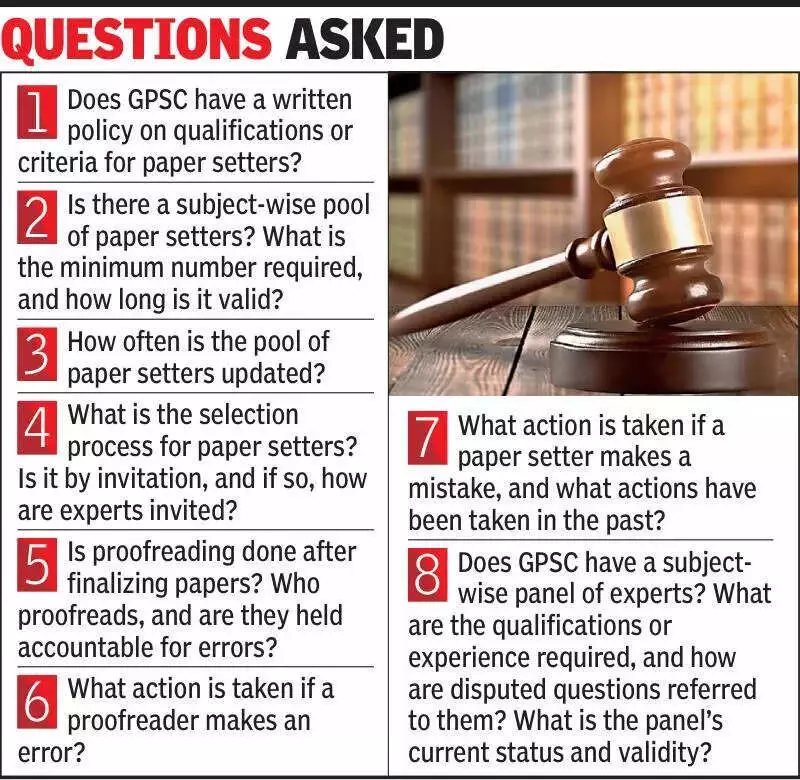
The Gujarat High Court has taken a firm stance against recurring errors in competitive examination papers conducted by the Gujarat Public Service Commission (GPSC). In a significant move, the court has directed the state's premier recruiting body to provide detailed answers to eight specific questions regarding its paper-setting process and the competence of its experts.
Court's Intervention to Protect Aspirants' Futures
Justice Nirzar Desai, presiding over the case, made it clear that the court's intervention stems from a need to safeguard the future of educated yet unemployed youth in the state and nation. While acknowledging the judiciary's limited powers in exam matters, the bench emphasized it was undertaking this exercise to prevent future discrepancies related to paper setters' competence, expert experience, and proofreading lapses.
The court's directive comes in response to multiple petitions filed by candidates who highlighted errors in question papers for the GPSC Class-I and II examinations. Notably, these discrepancies persisted even after the GPSC initiated a re-evaluation process involving subject experts, raising serious concerns about the entire system's integrity.

Eight Pointed Questions for GPSC
The High Court has ordered a Class-I officer of the GPSC to file an affidavit by December 11, responding to the following key queries:
- Does the GPSC have a written policy concerning the qualifications and selection criteria for paper setters and subject experts?
- Is there a subject-wise pool of approved paper setters, and what is the validity period of their empanelment?
- What is the standard procedure for ensuring the quality and standard of question papers?
- Is there a mandatory proofreading process before papers are finalized?
- What specific actions, such as debarment, are taken against paper setters or experts whose negligence leads to errors?
The court specifically noted that if paper setters or experts are found negligent or incompetent, leading to action against them, the GPSC should not withhold their names on grounds of confidentiality, unless they are being considered for future exams.
GPSC's Confidentiality Stance Challenged
Earlier during the proceedings, when the High Court inquired about the selection criteria for paper setters and experts, the GPSC had declined to share information, citing confidentiality protocols. However, the court's latest order challenges this stance, pushing for greater transparency and accountability.
The bench observed that the recurring nature of the errors, even post re-evaluation, compelled it to question the fundamental competence of the paper setters and the qualifications of the so-called experts involved in the process. This judicial scrutiny underscores a growing impatience with administrative lapses that affect the careers of thousands of aspirants.
The outcome of this case, and the GPSC's response, is likely to set a precedent for how recruiting bodies across India manage their examination processes, emphasizing the need for robust systems, qualified personnel, and clear accountability measures to maintain fairness in public service recruitment.