
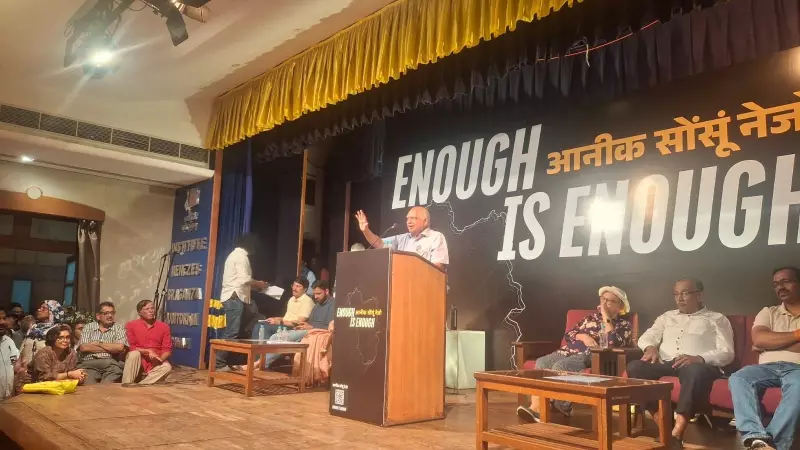
A powerful chorus of 'Enough is enough' resonated across Panaji on Tuesday as a significant gathering of citizens, activists, and former judges united to launch a major pushback against the perceived ecological and cultural erosion of Goa. The assembly culminated in the adoption of a 'People's Charter', a 10-point action plan designed to halt further environmental damage and safeguard the state's unique identity.
A Charter Born from Consensus
The charter, described as reflecting the general consensus and aspirations of Goans, lays down a series of non-negotiable demands for the state administration. A central pillar is the insistence that all development must strictly adhere to the existing Regional Plan 2021 and Outline Development Plans (ODPs). The charter demands that no projects should be permitted outside the framework of these master planning documents.
In a significant move targeting real estate speculation and demographic change, the charter calls for an ordinance or bill to amend the Land Revenue Code. This amendment would prevent the sale of agricultural land to non-agriculturists and non-residents, restricting transfers only for agricultural purposes and to individuals who have resided in Goa for at least 30 years.
Targeting Legal Loopholes and Water Security
The gathering identified specific legal provisions they believe are facilitating unchecked development. The charter demands the repeal of amendments to the Town and Country Planning (TCP) Act, specifically Sections 17(2) and 39(A). These sections are accused of allowing arbitrary changes in land zoning, usage, and Floor Area Ratio (FAR) even where supporting road infrastructure is legally inadequate.
Linking development directly to resource availability, the charter states that until adequate drinking water is secured for all, no permissions should be granted for multi-storied buildings or gated community projects. It also calls for an immediate halt to all hill cutting and development on hills, demanding legal amendments to enforce this ban.
Further environmental protections listed include a prohibition on development near natural water bodies, lakes, rivers, forests, hills, and seashores. It also urges the immediate removal of casinos from the Mandovi river and the sealing and demolition of all illegal structures in the Coastal Regulation Zone (CRZ).
'Regional Plan 2021 is Our Passport to Good Governance'
Renowned environmental lawyer Norma Alvares passionately defended the Regional Plan (RP) 2021, calling it a 'passport to good governance'. She explained that the plan, crafted by eminent architects, designates eco-sensitive zones covering 82% of Goa. Zone-1, which includes steep slopes, forests, and sand dunes, prohibits all development.
"We are here because since 2018, every effort is being made by whosoever is in power to throw this document out of the window," Alvares alleged. She argued that recent TCP Act amendments were designed to dilute the RP 2021, enabling wealthy individuals and real estate companies to encroach upon eco-sensitive areas.
A People's Movement, Not a Political One
The clarion call for this mobilization was given by former Chief Justice of the Allahabad High Court, Justice Ferdino Rebello. Expressing deep distress over the ecological destruction, he stated, "Goa is worth fighting for, and together, we will fight." He pinpointed the controversial TCP Act sections as the root cause needing repeal.
Justice Rebello emphasized the apolitical nature of the movement. "This is not a movement of any particular party. I do not aspire to contest any election," he declared. He urged the formation of village and town-level structures led by activists and NGOs, not political office-bearers, to sustain the campaign for Goa's future.
The gathering in Panaji marks a pivotal moment of organized civil society resistance in Goa, setting the stage for a sustained campaign to influence policy and protect the state's cherished natural and cultural heritage.