Goa Chief Minister Pramod Sawant Directs Immediate Revocation of Controversial Land Conversion
In a significant move addressing growing environmental and public concerns, Goa Chief Minister Pramod Sawant on Wednesday directed Town and Country Planning (TCP) Minister Vishwajit Rane to revoke the land conversion of over 80,000 square meters in Maulinguem, Bicholim taluka. The directive was issued under Section 39A of the TCP Act, with Sawant confirming that the formal order would be issued on Thursday.
Immediate Action and Departmental Response
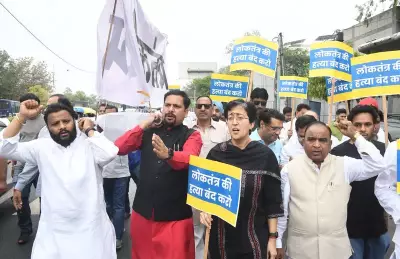
Within hours of Chief Minister Sawant's statement, the TCP department complied by rescinding the decision to convert the large land parcel at Maulinguem. This swift action is expected to boost the confidence of agitators who have been demanding the scrapping of Section 39A, under which extensive land conversion has been occurring across the state.
Sawant strongly criticized the TCP department, emphasizing that the land converted in Maulinguem is a valley area. "With regard to land conversion under Section 39A in Bicholim taluka, I have spoken to the minister and told him that it cannot happen," he stated. The Chief Minister added that he was unaware if the TCP department had properly examined the land before granting permission.

"I have told the minister to withdraw even provisional permission for the conversion of land," Sawant declared, underscoring his firm stance against inappropriate land use changes.
Legal Challenges and Historical Context of Section 39A
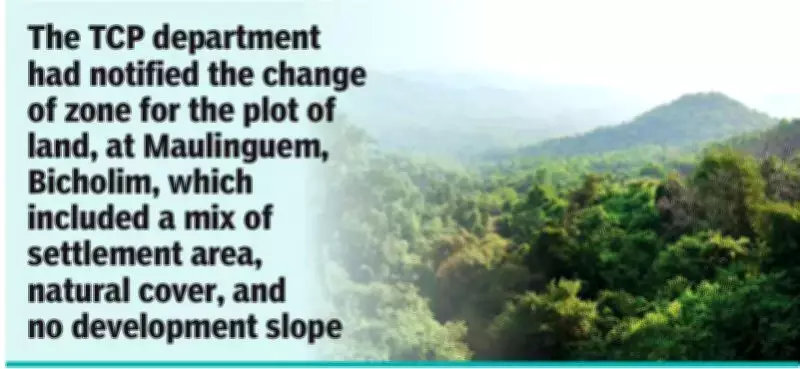
The TCP department had notified the change of zone for the Maulinguem plot on March 20. The land in question includes a mix of settlement area, natural cover, and no development slope (NDS). Retired Allahabad High Court Chief Justice Ferdino Rebello has termed the permissions granted for this zone change as illegal.
Justice Rebello has called upon the Chief Town Planner (Planning) and the Town and Country Planning Board to re-examine all pending applications under Section 39A until the provision is repealed. He revealed that following the insertion of Section 39A, 423 applications were filed seeking conversion of 31,54,258 square meters of land. Of these, final notifications were issued for 163 applications covering over 12.7 lakh square meters.
Broader Political and Environmental Implications
The issue has sparked significant political and public response across Goa. Last month, St Andre MLA Viresh Borkar ended his hunger strike after the state government handed over an order from the TCP department stating that provisional and final land conversions under Section 39A in the St Andre constituency were suspended with immediate effect.
Mandrem MGP MLA Jit Arolkar, a coalition partner of the BJP-led state government, revealed that since 2023, 60 lakh square meters of land were converted to settlement in Pernem taluka alone. His statement—which faced strong objection from Minister Rane—came just one day after Goans gathered in large numbers to protest hill-cutting and forest diversion activities.
Over recent years, Pernem—Goa's northern-most taluka—has become a hotspot for land conversion. In 2023, the TCP department withdrew the zoning plan for the taluka after media reports highlighted how 1.4 crore square meters, representing 21% of green cover, had been converted.
Recent Cancellations and Public Protests
Minister Rane has also cancelled provisional permission granted for a change of zone in Arambol. This decision followed protests by residents of Varchawada, located at the foot of the Bhatwadi hills in Arambol, who opposed the change of zone to settlement for over 3 lakh square meters of land covering the hills. The entire land area comprises valuable green cover that protesters sought to preserve.
The Chief Minister's directive represents a significant shift in addressing the environmental and community concerns surrounding land conversion practices in Goa, particularly under the controversial Section 39A of the TCP Act.