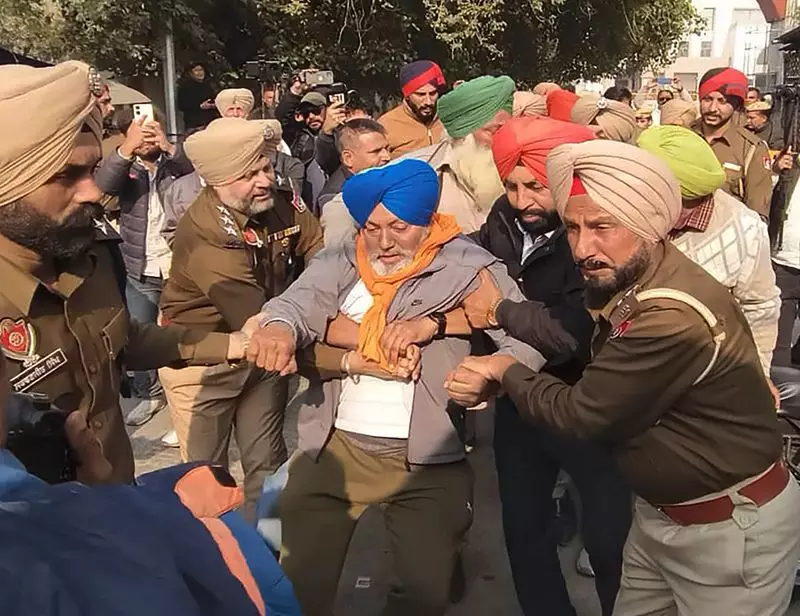
In a significant escalation of their ongoing agitation, farmers in Punjab's Jalandhar district brought train services to a grinding halt on Thursday. The protest, marked by a massive sit-in on railway tracks, unfolded despite the state authorities deploying a substantial police force in a bid to maintain order and prevent such disruptions.
Heavy Police Deployment Fails to Deter Protesting Farmers
The protest action was concentrated at the Jalandhar Cantonment railway station, a crucial node in the region's rail network. Eyewitnesses reported that a large contingent of farmers, representing various unions, gathered on the tracks in the early hours. Their presence was so substantial that it completely blocked the movement of all trains through the station.
Authorities, anticipating possible unrest, had positioned a heavy police contingent in the area. However, the sheer number of protesters and their determination to make their voices heard rendered the police presence largely symbolic in preventing the blockade. The farmers remained resolute, staging a peaceful but firm sit-in demonstration that paralyzed rail operations.
Core Demands: MSP Guarantee and Debt Relief
The farmers' protest was not a spontaneous event but a coordinated action to press the central government for a series of long-pending demands. The primary focus of their agitation revolves around a legal guarantee for Minimum Support Price (MSP) for all crops. This has been a central and contentious issue in previous farmer protests as well.
Beyond MSP, the protestors are demanding a complete waiver of farm loans and the withdrawal of all police cases filed against farmers during earlier rounds of agitation. They also seek justice for the victims of the Lakhimpur Kheri violence, where several farmers lost their lives. The protest at Jalandhar Cantonment is seen as a precursor to a larger planned march towards the national capital, Delhi, to amplify these demands at the central government's doorstep.
Widespread Disruption and Commuter Impact
The consequences of the railway blockade were immediate and severe. Multiple train services were cancelled, while several others were diverted or terminated at stations before reaching Jalandhar. This caused major inconvenience to hundreds of passengers, many of whom were left stranded at the station with no clear information about alternative arrangements.
The disruption wasn't limited to passenger travel. The blockade also severely impacted the movement of freight trains, causing potential economic losses and supply chain delays. The protest highlights the continued volatility of the agrarian situation in Punjab and the willingness of farmer groups to use disruptive methods to draw attention to their grievances. The standoff underscores the deep-seated issues in the agricultural sector that remain unresolved, posing an ongoing challenge for both state and central administrations.