Doctors Leverage Medical Practice for Political Gains in Tamil Nadu Elections
In a unique twist to election campaigning, doctors contesting in Tamil Nadu are transforming years of patient care into robust voter outreach strategies. These medical professionals are building their political campaigns around the families they have treated and the extensive networks formed through their clinical practice.
Political Parties Field Medical Professionals
The Dravida Munnetra Kazhagam (DMK) leads the pack with approximately 15 doctors on its candidate list, followed by the Tamilaga Vettri Kazhagam (TVK) with about 11 and the All India Anna Dravida Munnetra Kazhagam (AIADMK) with five. This trend highlights the strategic value parties place on candidates with deep community ties forged in healthcare settings.
Candidate Profiles and Campaign Strategies
Among the notable doctor-candidates is Kiruthika Devi, a DMK gynaecologist contesting from Tambaram. With over three decades of practice, she notes, "Many of the babies I delivered are now eligible to vote, and their families are coming forward to support me during my campaign." This personal connection underscores how long-term medical relationships translate into political support.

In Krishnagiri, Tamilisai Soundararajan from the Bharatiya Janata Party (BJP) and A Chellakumar from the Congress are also in the fray, leveraging their medical backgrounds. Meanwhile, Avinashi's DMK candidate Kokila Mani resigned from government service to contest, adding to the roster of doctors turning to politics.
Blending Healthcare with Political Work
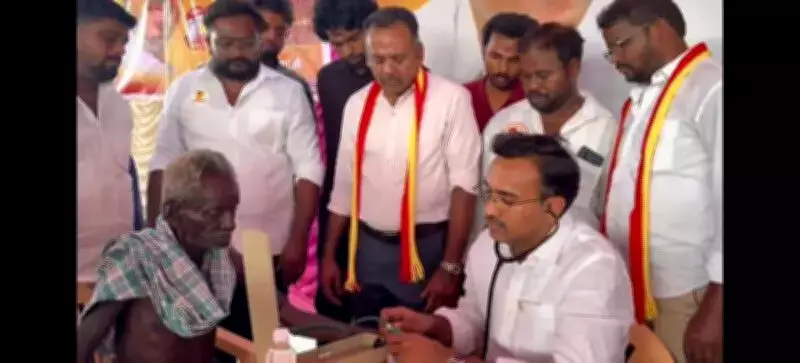
Former health minister C Vijayabaskar of AIADMK exemplifies this blend, as his daughter campaigned on Friday, informing voters that his clinic remains open to patients alongside his political duties. Similarly, TVK candidates like Arun Raj in Tiruchengode and Prem Lawrence in Colachel rely on their medical practice and health camps to engage voters during door-to-door outreach.
Arun Raj shared, "I worked at a primary health centre for five years before joining the IRS, but people in rural areas still remember me. When you treat someone in pain, they don't forget you. I still meet patients who call me by name. I miss my practice, so I continue to do basic checks at health camps to stay connected."
The Unique Bond of Doctor-Patient Relationships
Poll observer D Sathyakumaran explained the electoral advantage, stating, "Unlike other professionals such as advocates or engineers, doctors build a relationship that goes beyond a transaction. They see patients at vulnerable moments, relieve pain, and often follow up over years. That creates a connection at the family level, not just the individual." He added, "In elections, that memory can translate into trust and support because voters associate the candidate with care they have personally experienced."
Networking and Word-of-Mouth Influence
Dr Anand Kumar from Thanjavur, who contested in the 2006 elections, highlighted the broader network effect. He said, "When a doctor enters the fray, it is not just about that individual. There is a network of doctors in the area who know the candidate and often speak about them to patients." He further noted, "Sometimes they canvass directly, but even otherwise, conversations in clinics help carry the message. Patients trust what their doctors say, so word of mouth spreads quickly across neighbourhoods."
This phenomenon showcases how healthcare professionals are uniquely positioned to build political capital through empathy, trust, and sustained community engagement, making them formidable candidates in the electoral arena.