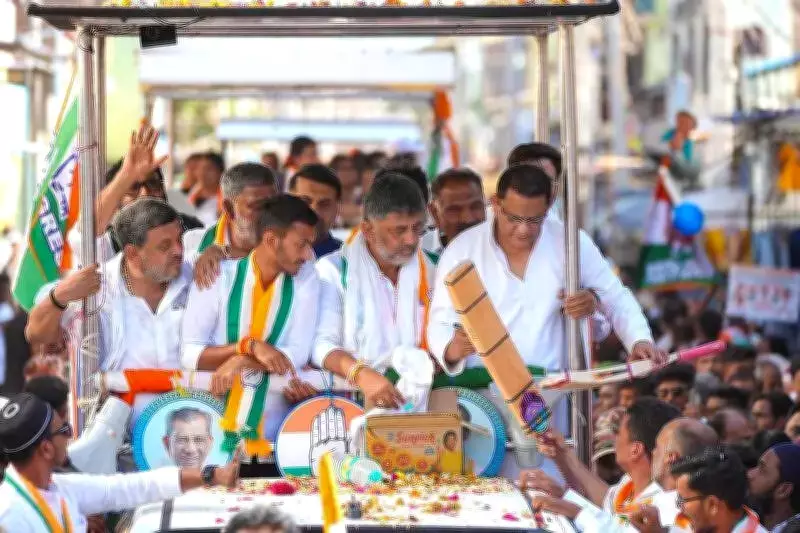
Davanagere South Bypoll: A Crucible of Social Dynamics and Political Strategy
Once celebrated as the Manchester of Karnataka for its thriving cotton mills, Davanagere South today presents a complex social tapestry. This constituency blends rural clusters in the south with several northern municipal wards, home to a significant Muslim and working-class population. The upcoming bypoll, triggered by the death of Congress veteran Shamanur Shivashankarappa, marks the first electoral challenge for the party without its long-time strongman, exposing deep-seated fault lines within its ranks.
The Decisive Muslim Vote Bloc
In this high-stakes contest, the Muslim vote emerges as a pivotal force. The community comprises an estimated 90,000 of the 2.3 lakh voters, making it the single largest voting bloc in Davanagere South. Historically, while Muslim candidates have rarely been frontrunners, their voting patterns have consistently influenced both the winner and the margin of victory. This bypoll is no exception, with internal discord within Congress over the denial of a ticket to a Muslim candidate sparking unrest and potentially fragmenting support.
Congress's Internal Struggles and Legacy Reliance
The Congress party faces a dual challenge: consolidating the minority vote and addressing concerns raised by Scheduled Caste Left groups over internal reservation policies. The nomination of Samarth Mallikarjun, grandson of Shivashankarappa and son of minister SS Mallikarjun and MP Prabha Mallikarjun, underscores the party's reliance on the family's entrenched clout. However, the absence of minister BZ Zameer Ahmed Khan, known as the party's trouble-shooter on minority issues, from initial campaign efforts has hampered outreach. "He is the party's trouble-shooter on minority issues, but his reported differences with SS Mallikarjun have not gone down well with the community," a Congress functionary revealed. "Though party leadership forced him to campaign on the last two days, the message was loud and clear."

Despite these hurdles, senior functionaries remain confident, citing the party's Ahinda base, robust organisational network, and Shamanur's legacy as key assets to retain the seat held since 2008. After Muslims, Lingayats form the major voting bloc, followed by Kurubas, Marathas, Scheduled Castes, and Scheduled Tribes.
BJP's Tactical Shift and Organisational Gaps
Sensing an opportunity amid Muslim discontent, the BJP has adopted a softer tone, eschewing sharp Hindutva rhetoric in favor of outreach under the slogan 'Sabka Saath, Sabka Vikas'. The party has fielded T Srinivas Daskariyappa, a Nayaka Scheduled Tribe figure, and undertaken door-to-door campaigns in minority-dominated areas, marking a significant tactical shift. However, organisational limitations persist, with no presence reported in 62 of the 284 polling booths, potentially undermining these efforts.
Multi-Candidate Fray and Vote Splitting Risks
The electoral landscape is crowded, with 25 candidates in the fray, including 14 Muslims. While rebel candidate Sadiq Pailwan, a popular face who worked closely with Shivashankarappa, withdrew under pressure and backed the Congress nominee, his name will still appear on the EVM. Other Muslim candidates, such as SDPI's Afsar Kodlipete and Khader Adil Basha, backed by former Union minister CM Ibrahim, have campaigned extensively and are expected to attract disaffected voters, risking a split in the community vote.
Historically, Muslim candidates have struggled to secure large vote shares, with the exception of the 2013 election when JD(S) nominee Syed Saifulla Karekatte garnered over 26,000 votes. A senior Congress functionary noted, "Muslims are upset over denial of the ticket, but not to the extent of defeating Congress and helping BJP."

Local Issues and Broader Implications
Local concerns have also surfaced, with NDA partners BJP and JD(S) targeting Congress over alleged inaccessibility of representatives and uneven development compared to other parts of the city. As the bypoll unfolds, the Muslim vote remains the decisive factor, shaping not only the outcome in Davanagere South but also offering insights into broader political realignments in Karnataka. Both Congress and BJP are navigating a delicate balance of legacy, strategy, and social cohesion in this critical electoral test.