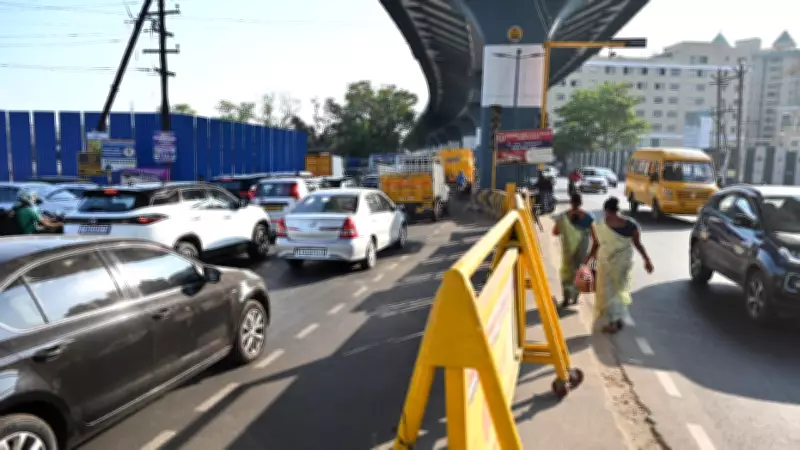
Coimbatore's Nava India Junction Reverts to U-Turn System After Signal Experiment Fails
In a significant reversal of traffic management strategy, the Coimbatore city traffic police have abandoned the recently reinstalled four-way signal system at Nava India Junction. The system, which was implemented on a trial basis, has been deactivated after causing severe logistical problems and creating massive traffic snarls during its brief operation.
The junction has now returned to its previous U-turn system, with barricades being repositioned to facilitate the change. Traffic personnel are being deployed during peak hours to monitor the transition and ensure smoother movement of vehicles through this critical intersection.
Signal System Creates Traffic Nightmare
The four-way signal system was reinstalled at Nava India Junction on Wednesday following numerous requests from local politicians and motorists who had hoped for improved traffic management. However, the experiment quickly turned into a transportation disaster.
During the signal cycle, vehicles from only one direction were allowed to move at a time while traffic from the remaining three directions built up into long, stationary queues. This created a bottleneck effect that rippled through surrounding areas.
A traffic police officer explained the specific problems: "Vehicles descending from the GD Naidu flyover toward the city center piled up dramatically due to the signal timing. When we attempted to extend green light durations for city-bound traffic, this immediately created massive congestion for vehicles heading out of the city."
Multiple Adjustments Fail to Solve Congestion
Traffic authorities made several attempts to optimize the signal system through timing adjustments and tested multiple circulation patterns in an effort to balance the flow. Despite these interventions, none successfully mitigated the growing delays at the junction.
The officer elaborated on the decision-making process: "After observing the ongoing inconvenience to the public and recognizing that the signal system was actually impeding traffic flow rather than improving it, we made the decision to temporarily abandon this approach. The old U-turn practice allows for a more continuous flow of movement, particularly benefiting those using the flyover."
For the immediate future, the traffic signals at Nava India Junction will remain non-operational as the U-turn system is fully reinstated. The transition back to the previous system represents a pragmatic response to a traffic management experiment that failed to deliver its intended benefits.