Chief Minister Rekha Gupta Holds Courtesy Meeting with Lieutenant Governor Tarunjeet Singh Sandhu
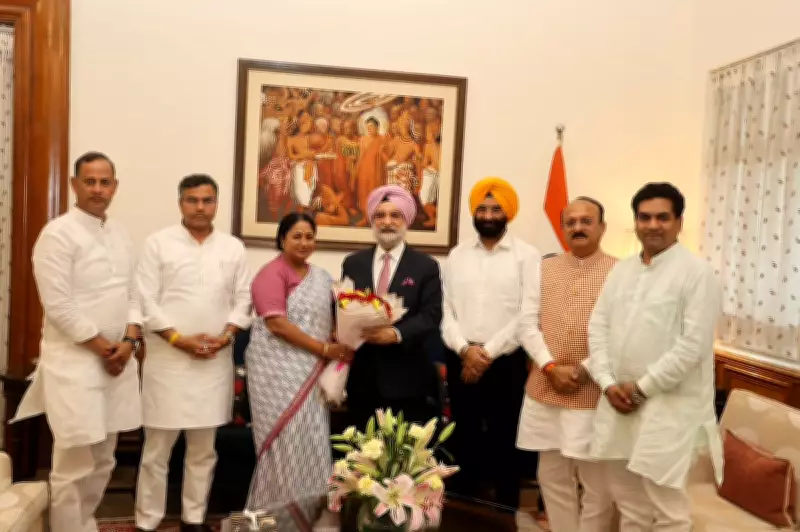
In a significant development for state administration, Chief Minister Rekha Gupta paid a formal courtesy visit to Lieutenant Governor Tarunjeet Singh Sandhu. The meeting, held at the Lieutenant Governor's official residence, underscored the importance of collaborative governance and mutual respect between the state's executive and constitutional authorities.
Focus on Governance and Public Welfare
The discussions during the visit centered on key issues of state governance, with both leaders emphasizing the need for seamless coordination to address public concerns effectively. Chief Minister Gupta highlighted her administration's priorities, including infrastructure development, healthcare improvements, and economic growth initiatives. Lieutenant Governor Sandhu expressed his support for these efforts, reiterating his commitment to upholding constitutional duties while fostering a cooperative environment for the state's progress.
This courtesy visit marks a pivotal step in strengthening the working relationship between the Chief Minister and the Lieutenant Governor. It is expected to pave the way for more efficient policy implementation and enhanced public service delivery across the state. The leaders also explored avenues for joint initiatives aimed at boosting local employment and ensuring social welfare programs reach the most vulnerable populations.
Implications for State Administration
The meeting is seen as a positive gesture towards maintaining harmony in state politics, which is crucial for stable governance. Observers note that such interactions can help mitigate potential conflicts and streamline decision-making processes. By fostering open dialogue, the Chief Minister and Lieutenant Governor aim to create a unified front in tackling challenges such as resource allocation and regulatory compliance.
In summary, the courtesy visit by Chief Minister Rekha Gupta to Lieutenant Governor Tarunjeet Singh Sandhu reinforces the collaborative spirit essential for effective state management. This engagement is likely to influence future administrative actions and contribute to the overall development and welfare of the state's residents.