Kasganj Family's Tragedy: Bonded Laborer's Infant Dies After Being Denied Medical Help
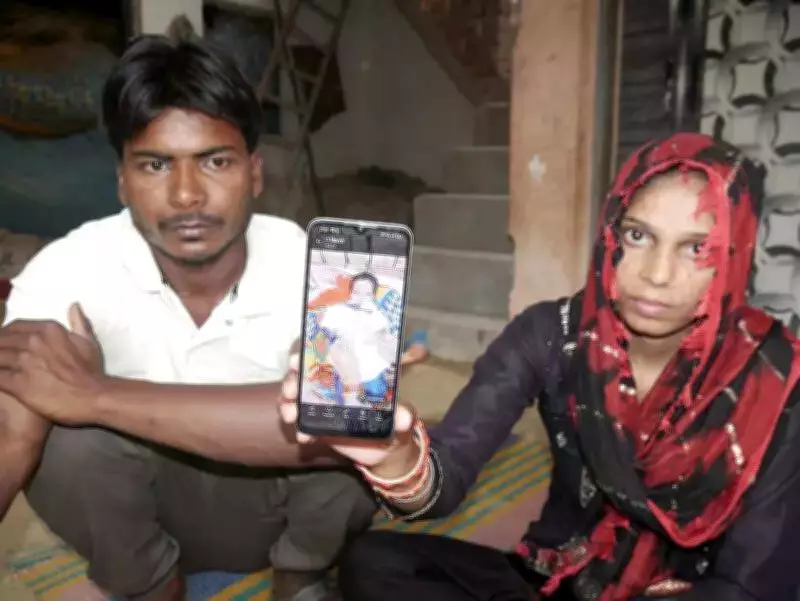
In a heart-wrenching scene at Sahawar tehsil in Uttar Pradesh's Kasganj district, 27-year-old Raj Jatav and his family sit quietly on the steps, waiting to record their statements with local officials. They have not eaten for hours, but their hunger pales in comparison to the overwhelming grief they carry. Raj's 2-month-old daughter, Ananya, has just succumbed to pneumonia, a death he attributes to negligence and apathy from those who employed him as a bonded laborer.
A Journey into Bondage and Despair
Speaking with TOI on Friday, Raj recounted his harrowing experience. In 2025, during Navratri, a contractor took him to Jalore in Rajasthan after providing an advance of Rs 30,000. He worked there for five months alongside his parents, followed by another 45 days at a brick kiln in Udaipur. This migration, he now deeply regrets, has led to unimaginable loss.
On January 6, Raj's third child, Ananya, was born, bringing brief joy to the family. However, from February 18, her health began to deteriorate rapidly. By the next day, she was dead. "I had 24 hours to save her," Raj said, his voice filled with anguish. "My owner at the brick kiln gave me only Rs 2,000 and turned me away. That money was spent on transporting my child from one place to another... I didn't have the hospital fee, and my daughter died right in front of my eyes."
Systemic Neglect and Investigation
Kasganj DSP Shahida Nasrin confirmed that the matter is under investigation. "I've spoken to them and visited their home. Their statements are being recorded. We have also received some claims from the brick kiln owner, who says he paid for the child's treatment. I have sought details of the transaction. The probe is ongoing, and necessary action will be taken based on the findings," she added.
Raj emphasized that there was no one to help him in his time of need. "I had to sell all our utensils and other items, including my wife's belongings, to arrange money for our return to Kasganj. My two-bigha land in Kasganj is also under mortgage," he revealed, highlighting the family's dire financial straits.
Echoes of Injustice from the Community
Seema, Raj's wife, echoed her husband's sentiments, stating, "She did not die of pneumonia but of negligence and apathy from the brick kiln owners and the contractor. We are poor people. Nobody cares about us. It is as if we don't exist." Her words underscore the pervasive sense of invisibility felt by marginalized laborers.
This tragedy is not isolated. Around 50 villagers from Kasganj, including Raj, went to work at the brick kiln, reflecting a broader pattern of exploitation. According to the Ministry of Labour and Employment, over 80% of those rescued from bonded labor belong to Scheduled Caste (SC) and Scheduled Tribe (ST) communities. Similarly, the National Crime Records Bureau's 'Crime in India' report for 2022 states that 86% of bonded labor victims are from these marginalized groups. Raj, belonging to this background, exemplifies the systemic vulnerabilities faced by SC/ST communities.
The Larger Context of Exploitation
The incident sheds light on the harsh realities of bonded labor in India, where vulnerable individuals are often trapped in cycles of debt and exploitation. Despite legal protections, enforcement remains weak, allowing such tragedies to occur. The family's struggle to access medical care and financial support points to deeper issues of social inequality and economic disparity.
As the investigation continues, Raj and his family await justice, hoping that their daughter's death will not be in vain and that it sparks broader awareness and action against bonded labor practices. Their story serves as a stark reminder of the urgent need for stronger safeguards and support systems for India's most marginalized workers.