BJP Leader Demands Legal Action Against Election Commission Over SIR Form Controversy
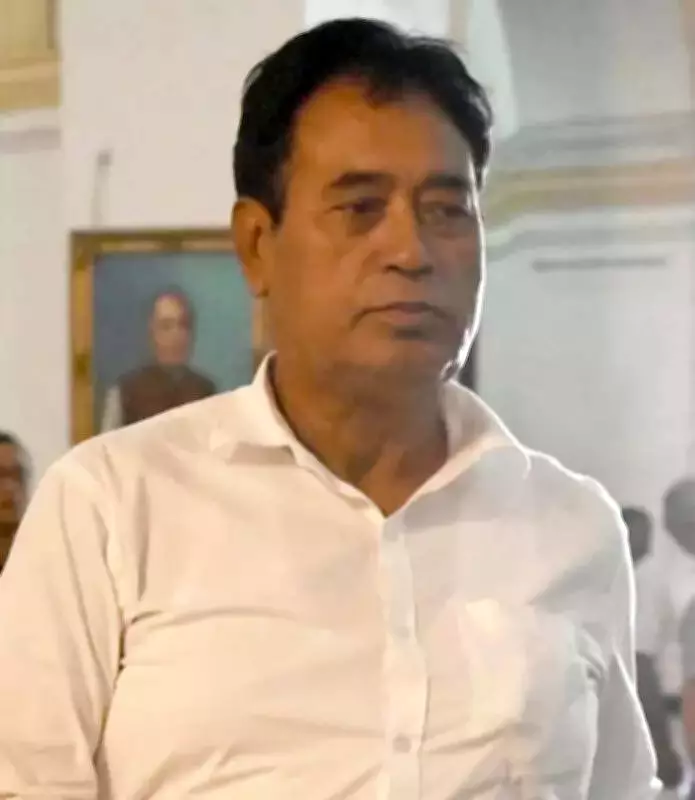
In a strongly worded statement that has stirred political circles in West Bengal, BJP Rajya Sabha member and Cooch Behar leader Ananta Maharaj has called for criminal accountability against Election Commission officials for alleged mistakes in Special Summary Revision (SIR) forms and subsequent harassment of citizens. The BJP parliamentarian made these explosive remarks during a public gathering at Baneswar on Sunday, coinciding with the birth anniversary celebrations of Cooch Behar hero Veer Chila Roy.
Allegations of Systematic Harassment Against Rajbanshi Community
Ananta Maharaj expressed particular outrage over what he described as targeted harassment against members of the Rajbanshi community during SIR hearings. The BJP leader posed a pointed question to election authorities: "When tribal communities are being exempted from producing identity documents, how can the Election Commission demand papers from Rajbanshi people, who are indigenous to this soil?"
The parliamentarian asserted that the entire SIR process has been fundamentally flawed from its inception. "The SIR exercise has been initiated with an incorrect roadmap. In my personal assessment, this entire procedure is erroneous," Maharaj stated unequivocally. He shifted responsibility for various discrepancies directly onto election officials, claiming that citizens were suffering consequences for administrative errors.

Detailed Accusations Against Election Commission Functionaries
Maharaj elaborated on specific problems he identified in the SIR implementation:
- Discrepancies in father-son name records
- Multiple spelling inconsistencies in official documents
- Age mismatches in voter registration data
- Systematic errors attributed to EC officials rather than citizens
"The mistakes burdening ordinary people are actually the Election Commission's administrative failures," the BJP MP declared. He went further to demand legal consequences: "Election Commission authorities responsible for these errors should face imprisonment first. They must undergo proper judicial proceedings."
Addressing the Election Commission directly, Maharaj insisted: "Your former employees who executed this flawed process belong in jail. First incarcerate them, then conduct proper SIR procedures. Citizens did not provide incorrect spellings—EC officers created these errors."
Trinamool Congress Counters With Accusation of Political Opportunism
The ruling Trinamool Congress (TMC) responded swiftly to Maharaj's allegations through social media platform X. The party's statement highlighted what it characterized as BJP's contradictory stance on electoral processes. "Until recently, BJP leaders functioned as unofficial spokespersons for the Election Commission, defending every aspect of the SIR process," the TMC post noted.
The Trinamool communication specifically mentioned several BJP figures including Suvendu Adhikari, Samik Bhattacharya, and Ananta Maharaj himself, suggesting a coordinated shift in position. "Today, these same individuals have suddenly discovered their ethical compass," the statement observed sarcastically.
TMC offered two possible explanations for this apparent reversal:
- The Election Commission failed to deliver expected voter deletions favorable to BJP
- BJP recognizes its voter disenfranchisement strategy has backfired and is attempting damage control
The ruling party's statement concluded with dramatic language: "This political U-turn has limited explanations. Either electoral authorities didn't meet BJP's deletion expectations, or BJP realizes its conspiracy to disenfranchise Bengal's voters has catastrophically failed and now seeks to absolve itself from responsibility for 150 innocent citizens."

Political Context and Regional Implications
The controversy emerges against the backdrop of ongoing political tensions in West Bengal, where electoral processes frequently become battlegrounds between ruling and opposition parties. The Rajbanshi community, concentrated in northern Bengal districts including Cooch Behar and Jalpaiguri, represents a significant demographic bloc that all major parties actively court.
Notably, the Bengal unit of BJP has not issued any formal response to Ananta Maharaj's provocative statements, suggesting possible internal divisions or strategic calculations within the state party apparatus. The Election Commission of India has yet to officially react to these serious allegations from a sitting parliamentarian.
This development adds another layer to the complex electoral dynamics in West Bengal, where voter list revisions and identity documentation have historically been contentious issues with substantial implications for political outcomes across multiple constituencies.