BJP Corporators in Nagpur Seek Nagpur Improvement Trust Trustee Role After Missing Out on Civic Body Posts
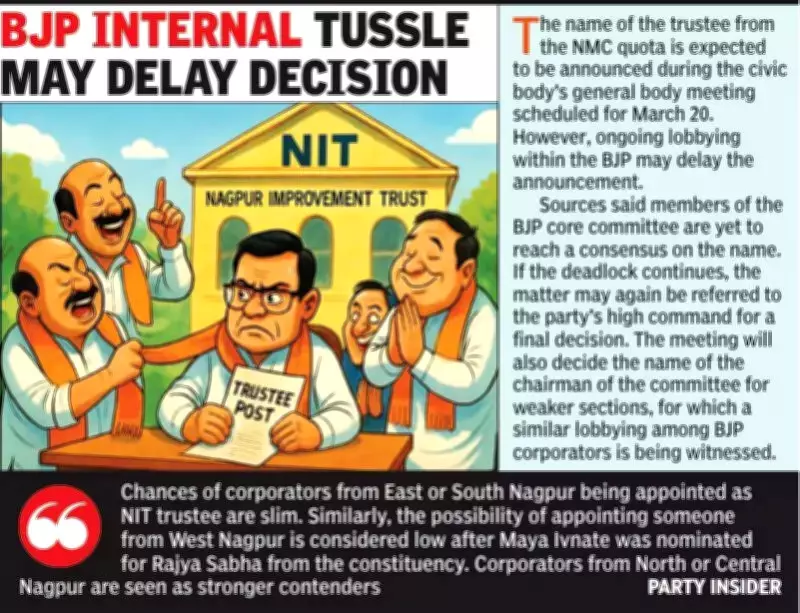
In a significant political development in Nagpur, senior BJP corporators who were unable to secure key positions within the civic body are now actively pursuing an appointment as a trustee in the Nagpur Improvement Trust (NIT). This move comes under the quota allocated to the Nagpur Municipal Corporation (NMC), as these corporators aim to maintain influence and representation in urban governance matters.
Lobbying Intensifies Ahead of Core Committee Meeting
According to insider sources, most of these corporators are engaging in intense lobbying efforts through MLAs and senior party leaders to bolster their chances of selection. The issue is slated for discussion at the upcoming BJP core committee meeting scheduled for Tuesday, where the name of the trustee is likely to be finalized. This strategic maneuvering highlights the competitive nature of local politics within the party ranks.
The legal framework for this appointment is grounded in the NIT Act of 1936, specifically under Sections 4(1)(d) and 4(5), which mandate the inclusion of one member from the NMC as a trustee. This provision ensures municipal representation in the trust's decision-making processes, making the position highly coveted among corporators.
Regional Disparities Fuel Claims for Trustee Post
Recent developments in the NMC have led to allegations of regional bias, with corporators from South-West, South, and East Nagpur securing prominent roles such as mayor, deputy mayor, and memberships in standing and other committees. In contrast, BJP corporators from North and Central Nagpur feel they have been overlooked, prompting them to stake a strong claim to the NIT trustee post.
North Nagpur, in particular, holds a compelling case due to its large number of NIT layouts, which strengthens the argument for representation from this area. However, the ultimate decision rests with the BJP core committee, which will weigh various factors before making a final selection.
Current and Past Trustees Influence Contenders' Chances
At present, Krushna Khopde, the MLA from East Nagpur, serves as a NIT trustee, following a previous tenure by South Nagpur MLA Mohan Mate. Insiders suggest that this history reduces the likelihood of corporators from East or South Nagpur being appointed to the trustee role, as the party may seek to balance regional representation.
Further complicating the scenario, the nomination of Maya Ivnate from West Nagpur to the Rajya Sabha has diminished the prospects for candidates from that constituency. Consequently, corporators from North or Central Nagpur are emerging as stronger contenders in the race for the trustee position.
Speculation and Frontrunners in the Trustee Race
Despite the focus on North and Central Nagpur, there is ongoing speculation that the BJP might opt for a new face from South-West Nagpur. However, this possibility is tempered by the fact that Shivani Dani, who was elected as the standing committee chairperson from that constituency, already holds an ex-officio trustee position in NIT, potentially limiting additional appointments from the area.
The list of frontrunners for the NIT trustee post includes several prominent corporators: second-term corporators Mahendra Dhanvijay from North Nagpur, Vikram Gwalbansi from West Nagpur, Vijay Zalke from South Nagpur, and Jitendra Kukde from East Nagpur, along with first-time corporator Ramesh Bhandari from the South-West assembly constituency. Each brings unique regional and political credentials to the table, making the selection process a closely watched affair in Nagpur's civic circles.
As the BJP core committee meeting approaches, all eyes are on the party's decision, which will not only fill a key position but also reflect broader strategies in municipal governance and intra-party dynamics. The outcome could have lasting implications for urban development and political alignment in Nagpur.