Bihar's Liquor Ban Faces Growing Pressure for Review from Ruling Alliance
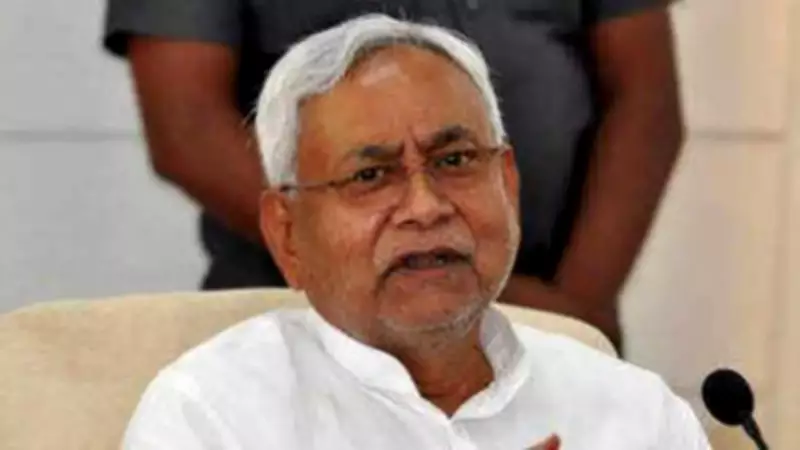
Calls for a comprehensive reassessment of Bihar's decade-old liquor prohibition have resurfaced with renewed vigor within the ruling National Democratic Alliance (NDA). Key allies are now publicly urging Chief Minister Nitish Kumar to initiate a thorough review of the controversial policy, citing significant implementation flaws and mounting financial pressures on the state's economy.
Implementation Flaws and Enforcement Corruption Highlighted
Union Minister Jitan Ram Manjhi, a prominent NDA figure, has articulated the growing discontent within the alliance. "We have consistently maintained that the principle of prohibition is not inherently flawed," Manjhi stated in an interview with ANI. "However, the execution has clearly gone awry. Our enforcement officers frequently target minor offenders while allowing large-scale smugglers to operate with impunity after accepting bribes."
Manjhi emphasized that Chief Minister Nitish Kumar must take decisive action to address this systemic corruption within the prohibition enforcement apparatus. "The current situation demands immediate intervention from the highest levels of leadership," he asserted.

Substantial Financial Losses and Fiscal Concerns
The economic ramifications of Bihar's liquor ban have become increasingly difficult to ignore. Prior to the implementation of prohibition in 2016, the state government generated substantial annual revenue exceeding Rs 3,000 crore from legal liquor sales. This significant income stream has evaporated under the current policy.
Compounding these financial challenges are ambitious new welfare commitments that could cost the state upwards of Rs 28,000 crore. These initiatives include:
- Direct cash transfer programs for women
- Enhanced pension schemes for vulnerable populations
- Expanded electricity subsidies for households
Bihar's fiscal position remains precarious, with the state's fiscal deficit reaching 9.2% of Gross State Domestic Product (GSDP) in the previous financial year. This strained economic context has prompted serious discussions within NDA circles about the long-term sustainability of the prohibition policy.
Statistical Impact and Legislative Calls for Assessment
The enforcement of Bihar's liquor ban has resulted in substantial legal consequences since its inception. According to earlier reports from The Times of India, prohibition has led to:
- More than 8.43 lakh cases registered under the prohibition law
- Nearly 12.8 lakh arrests related to prohibition violations
Despite these extensive enforcement efforts, Rashtriya Lok Morcha MLA Madhav Anand, another NDA ally, has called for a formal legislative review. "A full decade has passed since this prohibition legislation was enacted," Anand noted during Assembly proceedings. "The time has come for a detailed assessment of what Bihar has gained and lost during these ten years."
Anand further highlighted persistent implementation challenges, claiming that illicit liquor remains readily available through home delivery networks while drug consumption among youth has reportedly increased during the prohibition era.
Political Context and Historical Background
The liquor prohibition policy was originally implemented in 2016 when Nitish Kumar led the Mahagathbandhan government. The legislation represented a cornerstone of his administration's social reform agenda. However, the current political landscape has shifted, with Kumar now governing through the NDA alliance.
The growing chorus for policy review reflects evolving political dynamics and practical governance considerations. As Bihar approaches the ten-year anniversary of prohibition, the debate over its effectiveness, implementation, and economic consequences has reached a critical juncture within the state's ruling coalition.