Hindutva Agenda Takes Center Stage as RSS Chief and UP CM Forge Election Blueprint
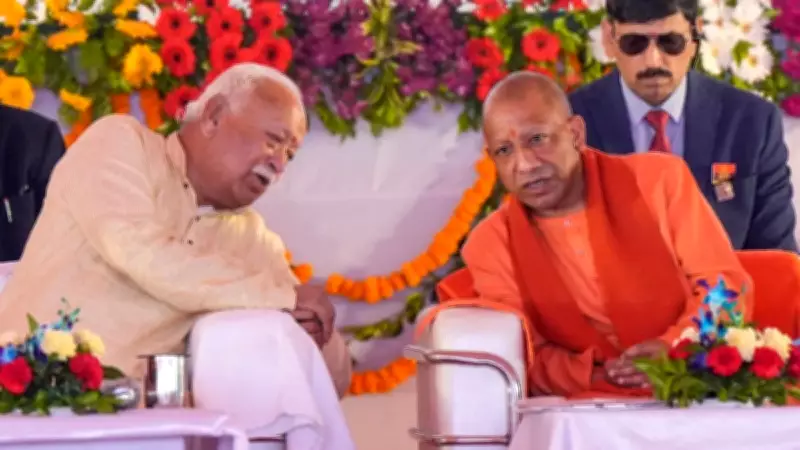
In a high-stakes political maneuver, Rashtriya Swayamsevak Sangh (RSS) chief Mohan Bhagwat and Uttar Pradesh Chief Minister Yogi Adityanath convened a pivotal meeting to meticulously chart the electoral strategy for the upcoming 2026 Uttar Pradesh assembly elections. This crucial discussion, held in Lucknow, underscores the deep-seated collaboration between the ideological parent organization and the state's ruling Bharatiya Janata Party (BJP) government, with the Hindutva agenda firmly positioned at the core of their political roadmap.
Strategic Focus on Core Ideology and Governance
The extensive deliberations between Bhagwat and Adityanath spanned several hours, delving into multifaceted aspects of election preparedness. Sources indicate that the meeting placed significant emphasis on reinforcing the Hindutva narrative, which has been a cornerstone of the BJP's electoral successes in the state. Both leaders analyzed the current political landscape, assessing voter sentiment and identifying key issues that resonate with the electorate, particularly in the context of Uttar Pradesh's diverse demographic fabric.
Governance achievements and future promises formed a critical part of the discourse. Chief Minister Yogi Adityanath reportedly presented a detailed overview of his administration's performance, highlighting initiatives in law and order, infrastructure development, and welfare schemes. The RSS chief, in turn, provided strategic inputs on aligning these governance outcomes with the broader ideological framework, ensuring a cohesive message that appeals to the party's core base while attracting undecided voters.

Grassroots Mobilization and Organizational Strengthening
A substantial portion of the meeting was dedicated to organizational mechanics and grassroots mobilization. The leaders discussed plans to energize the party's cadre, leveraging the extensive network of RSS volunteers to amplify outreach efforts across Uttar Pradesh's 403 assembly constituencies. Special attention was given to booth-level management, voter registration drives, and countering opposition narratives through effective communication strategies.
The strategy session also addressed potential challenges, including anti-incumbency factors and the evolving dynamics of caste-based politics in the state. By integrating Hindutva principles with tangible development outcomes, the aim is to create a robust electoral platform that withstands political headwinds and secures a consecutive term for the BJP in India's most populous state.
Implications for Uttar Pradesh's Political Future
This high-level coordination between the RSS and the state government signals a unified approach ahead of the 2026 polls, which are viewed as a critical battleground that could influence national political trends. The meeting's outcomes are expected to shape campaign themes, candidate selection processes, and policy announcements in the coming months, with a clear focus on consolidating the Hindu vote while addressing socio-economic concerns.
As Uttar Pradesh gears up for another electoral contest, the alliance between ideological guidance and executive leadership, as demonstrated in the Bhagwat-Yogi meeting, is poised to play a decisive role in determining the political trajectory of the state and reinforcing the BJP's dominance in the Hindi heartland.