The Karnataka government is grappling with a significant hurdle in providing free alternative housing to residents affected by recent demolitions in Bengaluru. The core challenge lies in distinguishing long-term, eligible residents from ineligible occupants among the evicted families.
The Aadhaar Conundrum in Yelahanka
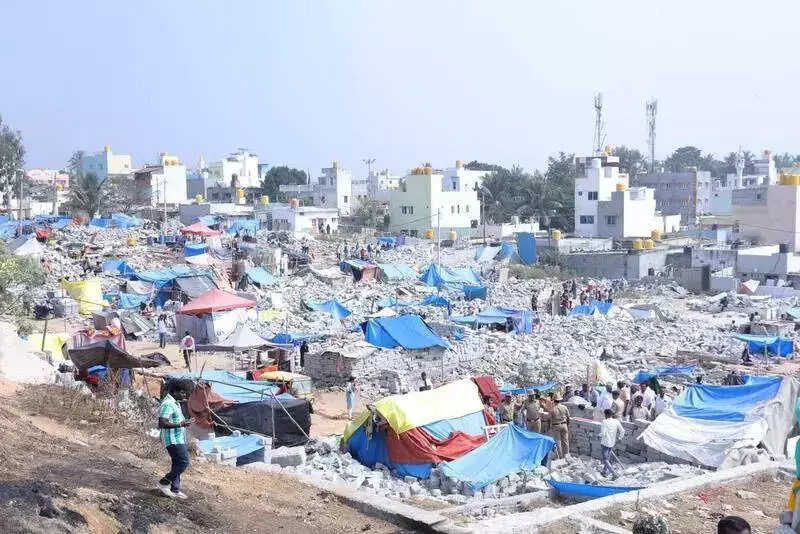
Last month, on December 20, authorities demolished around 117 houses in Waseem Layout and Fakir Colony of Yelahanka's Kogilu village. A subsequent preliminary survey of 165 evicted families revealed a startling fact: 158 families, or nearly 94%, possessed Aadhaar cards. This widespread possession of the national identity document has complicated the screening process, as it alone does not prove local residency or eligibility for state housing schemes.
Officials emphasized that Aadhaar cards are relatively easy to obtain and cannot be the sole basis for allotting government houses. "Getting an Aadhaar today is relatively easy. That alone cannot be the basis for allotting govt houses," stated a senior official involved in the survey. The data showed that while 158 had Aadhaar, only about 92 families had a valid ration card, and approximately 78 were confirmed as residents of Bengaluru.
Multi-Layered Verification Process Initiated
Faced with this dilemma, the state government has instituted a rigorous, multi-departmental verification process. The government has publicly stated that only eligible evictees, not encroachers, will be rehabilitated under existing state and central housing schemes.
The eligibility is now being determined through a combination of documents and checks:
- Cross-verification of ration card data with the food and civil supplies department.
- Scrutiny of voter IDs, income certificates, and domicile proof.
- Police verification to establish identity, residency, and background.
This process prioritizes families whose eligibility is unclear. The survey has also collected data on language, place of origin, and duration of stay. The first step is nationality verification, followed by filtering data to identify residents from Karnataka and, finally, long-term Bengaluru residents.
Minister's Directive on Fair Identification
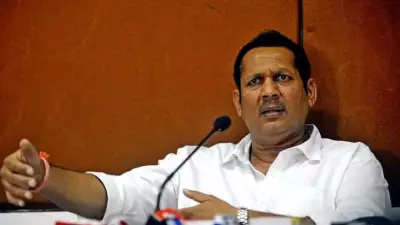
Revenue Minister Krishna Byre Gowda outlined the government's cautious approach. "We gave a clear mandate to the survey teams to identify genuine beneficiaries strictly as per prevailing govt rules and norms," he said. He noted that multiple departments—revenue, GBA (Gram Panchayat?), police, and housing—are involved, and he is avoiding interference to prevent distortion of the process.
The minister added that the teams are working independently and will report any difficulties faced during the verification. This meticulous, multi-layered scrutiny is deemed essential to ensure that only genuine beneficiaries receive rehabilitation support, preventing misuse of welfare schemes meant for long-standing residents of Bengaluru and Karnataka.