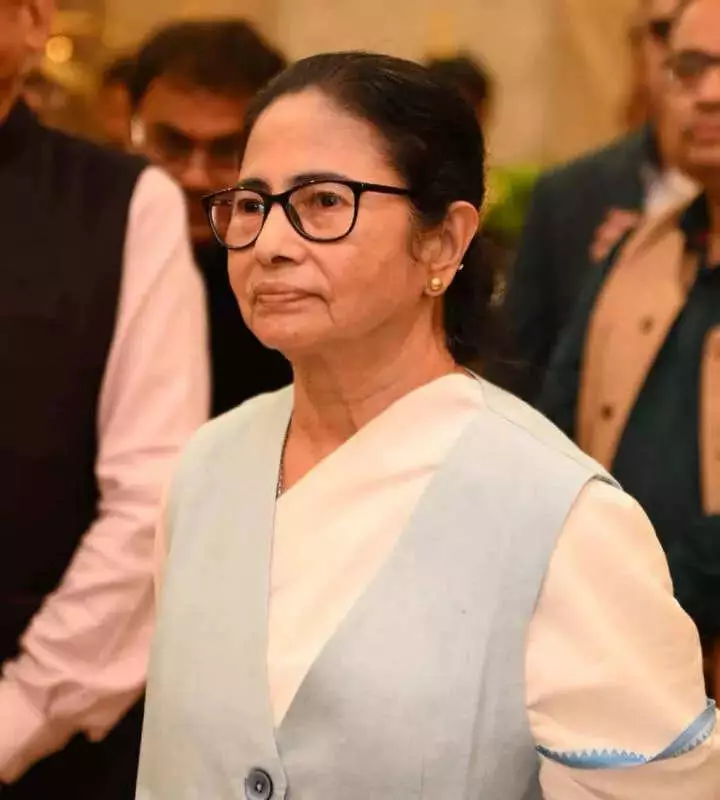
West Bengal Chief Minister Mamata Banerjee on Tuesday presented a comprehensive 'report card' of her administration's performance over the last twelve years, highlighting massive economic growth and expansive welfare delivery. The unveiling comes in the run-up to the state's assembly elections scheduled for next year.
Economic and Employment Milestones Since 2011
Addressing a gathering in Kolkata, Banerjee stated that the state government has provided employment to more than 2 crore (20 million) people since the Trinamool Congress first came to power in 2011. She announced a staggering increase in the state's economic output, revealing that West Bengal's GDP has grown 4.4 times to reach Rs 20.3 lakh crore.
In a significant claim on poverty alleviation, the Chief Minister said that 1.7 crore people have been lifted above the poverty line between 2011 and 2023. She launched the report, titled 'Unnayoner Panchali', through a traditional lyrical recitation, symbolizing a narrative of development.
Flagship Schemes and Financial Health
Banerjee detailed the reach and expenditure of her government's key welfare programs. The Swasthya Sathi health insurance scheme now covers 2.5 crore families, with a cumulative expenditure of Rs 13,156 crore, offering Rs 5 lakh coverage per family.
The Lakshmir Bhandar direct cash transfer scheme for women has benefited 2.2 crore recipients, with over Rs 74,000 crore spent. Women from SC/ST categories receive Rs 1,200 monthly, while others get Rs 1,000.
On food security, she stated that Rs 1 lakh crore has been spent on the Khadya Sathi scheme, providing 5 kg rice at Rs 2 per kg monthly to 9 crore people. The Duare Ration doorstep delivery initiative, with an outlay of Rs 1,717 crore, serves 7 crore beneficiaries.
Detailing the state's fiscal management, Banerjee said, "Even after repaying loans with interest, our tax revenue has increased 5.3 times, capital expenditure 17.7 times, and social sector spending 14.5 times." Expenditure in agriculture and physical infrastructure sectors grew 9.2 and 6.9 times respectively.
Industrial Investments and a Call for Cooperative Federalism
The Chief Minister outlined major industrial projects, stating that work on the Deucha-Pachami coal block in Birbhum—the world's second-largest—has begun and will create 1 lakh jobs. She highlighted investments of Rs 22,000 crore in shale, gas, and oil in Durgapur-Asansol and Rs 35,000 crore in Ashoknagar's ONGC zone.
Banerjee emphasized Bengal's leadership in IT and manufacturing, noting over 2,800 IT companies and 2 lakh professionals in the state's 'Silicon Valley'. In small-scale manufacturing, 93 lakh MSME units employ over 1.3 crore people, with 607 MSME clusters created.
Striking a conciliatory yet firm note towards the central government, Banerjee invoked cooperative federalism. "Despite all the neglect heaped on the state by the Centre... we seek cooperation with you, not non-cooperation," she said, urging the Centre to work "shoulder to shoulder" on a government-to-government basis.
Political Digs and Future Vision
Taking an apparent swipe at the BJP, Banerjee criticized what she called a pattern of offering benefits before elections and using "the bulldozer" afterward. She contrasted this with her government's consistent annual payouts under Lakshmir Bhandar, asserting, "We give Rs 12,000 every year, consistently... SC/ST families receive Rs 70,000 over five years."
She concluded by reaffirming Bengal's resurgence in manufacturing, real estate investment of Rs 45,000 crore in two years, and skill training for 42 lakh youths, positioning the report card as a testament to a decade of transformative governance.