Assam Elections 2026: A Crucial Battle for Power
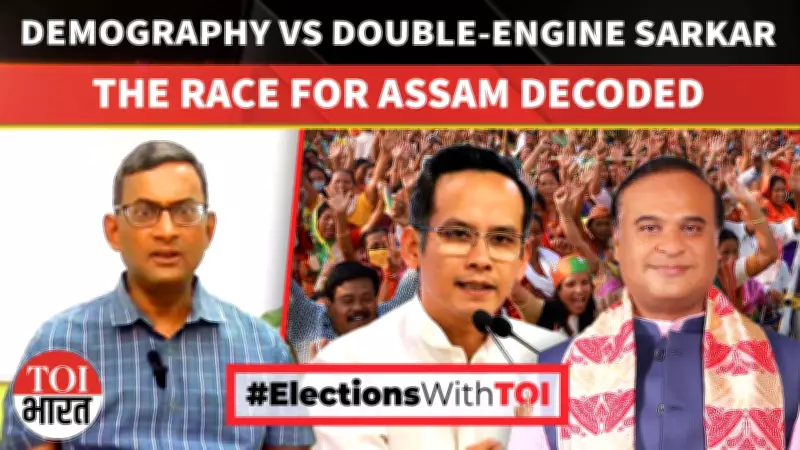
As Assam approaches a pivotal election in 2026, the political landscape is charged with anticipation and uncertainty. The central question dominating discussions is whether Chief Minister Himanta Biswa Sarma will secure a second term or if the state is poised for a surprising shift in leadership. This election is not just a routine political event but a significant test of governance, public trust, and regional dynamics that could reshape Assam's future trajectory.
Data-Driven Insights from Political Analyst K Bharatram
Renowned political analyst K Bharatram has undertaken a comprehensive study to decode the factors influencing this high-stakes race. Using advanced data analytics, Bharatram examines voter sentiment across various demographics, economic trends such as employment rates and infrastructure development, and key performance indicators from the current administration. His analysis, based on findings up to March 2026, offers a nuanced perspective on the electoral climate, highlighting areas of strength and vulnerability for the competing parties.
Key Factors Shaping the Election Outcome
The election outcome hinges on several critical elements that Bharatram has mapped out in detail:

- Voter Sentiment: Public opinion polls and grassroots feedback reveal mixed reactions to recent policies, with issues like immigration, economic growth, and social welfare at the forefront.
- Economic Trends: Assam's economic performance, including job creation and industrial expansion, plays a crucial role in swaying undecided voters.
- Performance Indicators: The incumbent government's track record on governance, law and order, and implementation of schemes is under intense scrutiny.
- Opposition Dynamics: The strategies and unity of opposition parties could significantly impact the final results, potentially leading to unexpected alliances or vote splits.
Projections and Potential Scenarios
Based on current data, Bharatram projects a closely contested race. While Himanta Biswa Sarma's Bharatiya Janata Party (BJP) holds advantages in organizational strength and incumbency, challenges such as anti-incumbency sentiment and regional issues could tilt the balance. The analyst suggests that if economic grievances or local controversies gain traction, the outcome might shift towards opposition parties, leading to a surprise result. However, Sarma's proactive campaign efforts and focus on development narratives might bolster his chances for re-election.
Implications for Assam's Political Future
This election is more than a verdict on individual leaders; it is a reflection of Assam's evolving political identity. A second term for Himanta Biswa Sarma could signal continuity in policies aimed at economic revitalization and cultural preservation. Conversely, a surprise outcome might usher in new governance approaches, potentially altering the state's alignment with national politics. Bharatram emphasizes that voter turnout, last-minute campaign moves, and unforeseen events will be decisive in determining the final result.
As the election date nears, all eyes are on Assam to see whether data-driven predictions hold true or if the electorate delivers an unexpected verdict. The analysis by K Bharatram serves as a vital tool for understanding the complexities of this democratic exercise, offering insights that go beyond mere speculation to ground the discussion in factual trends and empirical evidence.