Akhilesh Yadav Launches Scathing Attack on BJP Over Stalled Women's Quota Amendment Bill
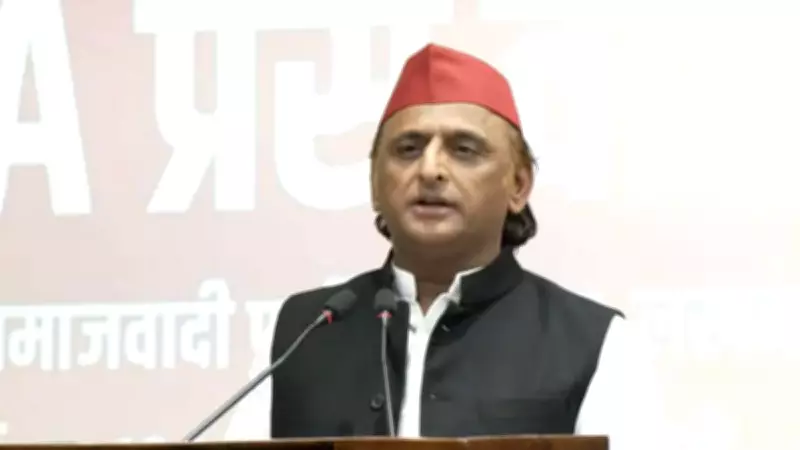
Samajwadi Party (SP) chief Akhilesh Yadav has vehemently criticized the Bharatiya Janata Party (BJP) after a crucial bill seeking amendments to the women's reservation law faltered in Parliament. The proposed legislation, aimed at modifying the existing quota provisions for women in legislative bodies, failed to secure passage, sparking a political firestorm and accusations of insincerity from the opposition.
Bill Falters Amid Parliamentary Proceedings
The bill, which was introduced to amend the women's quota law, encountered significant hurdles during parliamentary discussions. Despite initial expectations, it did not garner the necessary support or consensus to move forward, leading to its effective stalling. This development has reignited debates over gender representation and political will in India's democratic framework.
Akhilesh Yadav accused the BJP of employing delaying tactics and lacking genuine commitment to empowering women through legislative measures. In a strongly worded statement, he highlighted that the failure to pass the bill exposes the ruling party's hollow promises on women's issues. Yadav emphasized that such setbacks undermine efforts to achieve gender parity in politics, a long-standing demand from various social and political groups.

Political Implications in Uttar Pradesh and Beyond
The controversy has significant ramifications, particularly in Uttar Pradesh, where both the SP and BJP are key players in state politics. Akhilesh Yadav's attack is seen as an attempt to corner the BJP ahead of upcoming electoral battles, leveraging the issue to rally support among women voters and progressive segments. The women's quota law, which mandates reservation for women in local bodies and legislative assemblies, has been a contentious topic, with calls for its expansion and implementation at higher levels of governance.
Analysts suggest that the stalling of the amendment bill could impact the BJP's image as a pro-women party, especially in regions where gender equality is a pressing concern. The SP, under Yadav's leadership, has positioned itself as a champion of social justice, and this episode allows it to reinforce that narrative. Meanwhile, the BJP has defended its stance, citing procedural challenges and the need for broader consultations, but opposition parties remain skeptical.
Broader Context of Women's Representation in India
India has a mixed record on women's political representation, with the women's reservation bill pending for decades at the national level. The current law provides quotas in panchayats and municipal bodies, but efforts to extend it to Parliament and state assemblies have faced repeated obstacles. The recent bill aimed to address some of these gaps through amendments, but its failure highlights the persistent political divides on the issue.
- Historical Delays: The women's reservation bill has been introduced multiple times since the 1990s but has never been passed, reflecting deep-seated resistance across party lines.
- Current Stalemate: The latest amendment bill's faltering adds to this legacy, with Akhilesh Yadav blaming the BJP for not prioritizing gender equality.
- Future Prospects: Political observers note that without bipartisan support, such legislation is unlikely to progress, potentially affecting India's global standing on gender parity indices.
In conclusion, Akhilesh Yadav's attack on the BJP over the women's quota amendment bill underscores the ongoing political tussle over gender representation in India. As the bill remains in limbo, it raises questions about the sincerity of political parties in advancing women's rights and could influence voter sentiments in key states like Uttar Pradesh. The episode serves as a reminder of the challenges in translating policy promises into legislative action, with implications for India's democratic evolution.