Ajit Pawar's Unyielding Focus on Baramati and Pimpri-Chinchwad Development
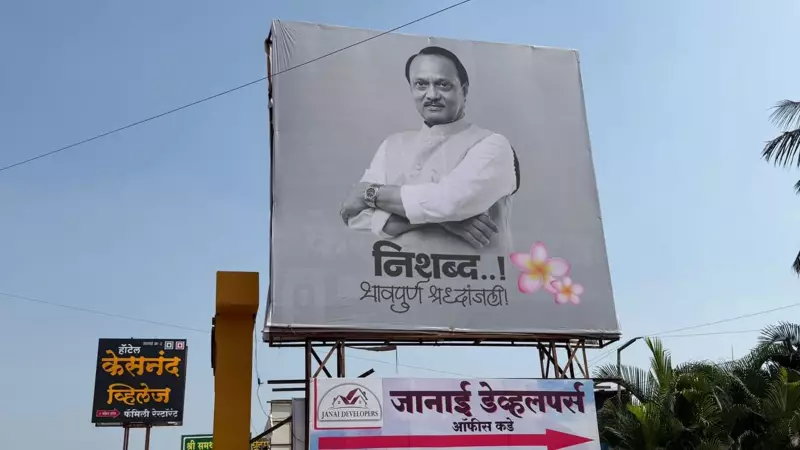
Ajit Pawar, a formidable figure in Maharashtra politics, exercised an iron grip over the constituencies of Baramati and Pimpri-Chinchwad, driving their all-around development with relentless determination. His political journey, which began as a Congress leader and later solidified as a Nationalist Congress Party (NCP) strongman, saw him calling the shots in these regions while his uncle, Sharad Pawar, dedicated more time to national politics. Ajit Pawar maintained a vigilant watch over every development project, ensuring that progress was not just planned but executed with precision.
A Political Journey Marked by Uninterrupted Success
After securing his first Lok Sabha election victory from Baramati with a massive margin, Ajit Pawar never looked back. He went on to win the Baramati Assembly seat consecutively seven times, establishing an unbroken record of electoral success. This consistent performance allowed him to consolidate his influence in his hometown of Baramati and the neighboring industrial hub of Pimpri-Chinchwad, which adjoins Pune city.
As Sharad Pawar's health began to decline, he gradually distanced himself from the day-to-day affairs of these cities, enabling Ajit Pawar to tighten his control further. While the NCP managed to gain a foothold in Pune city from 2007 until its ouster in 2017, it was in Baramati and Pimpri-Chinchwad that the Pawar family's dominance remained unchallenged for years.

Baramati: A Model of Comprehensive Development
Ajit Pawar's approach to governance was not merely political; he focused intensely on ensuring tangible development. According to close aides, his efforts transformed Baramati into a city that saw rapid strides in infrastructure, healthcare, education, and basic amenities. Kiran Gujar, a long-time family friend, highlighted that after Ajit Pawar's election victory in 1991 and subsequent roles as MLA and Minister, Baramati's development accelerated significantly.
Key achievements in Baramati include:
- Infrastructure: Wide roads, footpaths, service roads, and an upgraded drainage system.
- Healthcare: A medical college, an Ayurveda hospital, a women's exclusive hospital, and a cancer care facility under development.
- Water Supply: The city boasts the cleanest 24x7 water supply in Maharashtra.
- Industrial Growth: The Baramati MIDC, which once had only a handful of industries, now hosts nearly 100 big, medium, and small industrial units.
One of the most notable projects was the Rs 750 crore museum dedicated to Chhatrapati Shivaji, a unique initiative in Maharashtra that Ajit Pawar monitored closely from inception to completion.
Pimpri-Chinchwad: From Industrial Hub to Role Model City
In Pimpri-Chinchwad, Ajit Pawar's impact was equally profound. After leading the NCP to victory in 2002, he launched a "demolition mission" to widen roads across the city, paving the way for its expansion. Under his watch, the city witnessed the construction of flyovers, bridges, sub-ways, and improved public transport systems.
Developmental milestones in Pimpri-Chinchwad:
- Enhanced drainage systems and better roads in the Pimpri-Chinchwad-Bhosari MIDC area.
- Establishment of numerous schools, colleges, and engineering institutions.
- A surge in residential and commercial projects, making the city an attractive alternative to Pune.
Former mayor Yogesh Behl credited Ajit Pawar's dedication for elevating Pimpri-Chinchwad to national and global recognition. Dilip Band, the municipal commissioner in 2004, recalled how Ajit Pawar instructed him to demolish structures hindering road widening, despite political opposition, emphasizing that roads were the city's lifeline.
The Electoral Setback and Its Aftermath
Despite his developmental achievements, Ajit Pawar faced a significant political blow in 2017 when the NCP was ousted from power in Pimpri-Chinchwad by the BJP. This loss deeply affected him, and he often lamented the irony of being voted out despite ensuring rapid development. In the subsequent elections, he campaigned aggressively, targeting BJP MLA Mahesh Landge and alleging widespread corruption in the Pimpri-Chinchwad Municipal Corporation (PCMC).

However, his efforts did not yield the desired results, as the NCP suffered defeats in both Pimpri-Chinchwad and Pune city. NCP leader Ajit Gavhane defended Pawar's campaign, stating that he raised critical issues like corruption and criminal backgrounds of candidates, leaving the BJP without adequate responses.
Legacy of a Visionary Leader
Ajit Pawar's legacy in Baramati and Pimpri-Chinchwad is one of transformative development. Political analyst Avinash Chilekar noted that his focus on a development agenda, rather than purely political motives, drove the cities' progress. Activist Manav Kamble echoed this sentiment, describing Ajit Pawar as a leader who prioritized the city's growth over political survival, making Pimpri-Chinchwad a role model for other cities in Maharashtra.
Even as the political landscape shifts, the indelible mark left by Ajit Pawar on these cities continues to shape their trajectory, underscoring his role as a hard-task master and visionary administrator.