Maharashtra Political Crisis Deepens with Ajit Pawar's Tragic Demise
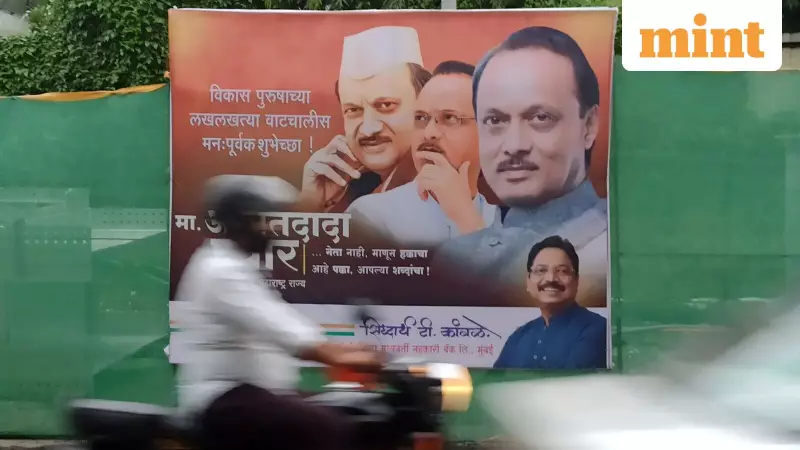
In a shocking development that has sent ripples through Maharashtra's political landscape, Ajit Pawar, the Deputy Chief Minister of Maharashtra, tragically passed away in a plane crash at Baramati on Wednesday, 28 January 2026. This incident comes at a time of heightened political turmoil in the state, reminiscent of the crisis that unfolded almost a year earlier when Eknath Shinde rebelled against then Chief Minister Uddhav Thackeray, leading to a dramatic change in governance.
A Legacy of Rebellion and Political Upheaval
Ajit Pawar's political career was marked by significant rebellions that reshaped Maharashtra's power dynamics. His recent actions had prompted yet another political party crisis, splitting the Sharad Pawar-helmed Nationalist Congress Party (NCP) into two factions: the NCP (Ajit Pawar faction) and the NCP with Sharad Pawar as national president. This division mirrored the split in the Shiv Sena caused by Eknath Shinde's rebellion, highlighting a pattern of internal strife within Maharashtra's major political entities.
Notably, Ajit Pawar had taken charge as the deputy CM of Maharashtra for the fifth time in his political career, a testament to his enduring influence. His rebellion on Sunday came just days after a heated verbal exchange between Sharad Pawar and Maharashtra Deputy CM Devendra Fadnavis of the Bharatiya Janata Party (BJP), which ended with the BJP warning the NCP to be wary of Fadnavis' "bouncers." This backdrop of tension set the stage for the ongoing political drama.

Historical Context and Family Frictions
The friction between uncle and nephew is not a new phenomenon in the Pawar family. Ajit Pawar had previously rebelled within the NCP ranks in 2019, though that attempt fizzled out quickly. He had always harbored a passion to carve out his own political legacy, distinct from his uncle Sharad Pawar's handcrafted political career spanning nearly half a century. This ambition was evident as early as 2004 when he publicly disagreed with the party leadership's decision to concede the chief ministership to the Congress.
In 2012, Ajit suddenly resigned as Deputy CM over accusations of irregularities in irrigation projects during his tenure as water resources minister, threatening the stability of the Congress-led government. At that time, Sharad Pawar intervened to save the government, showcasing the complex dynamics within the family. More recently, weeks before the last Assembly elections, Ajit broke down in public over the Enforcement Directorate naming him and Pawar in a money-laundering case, claiming he was deeply hurt. He subsequently resigned as MLA and went incommunicado, adding to the family's internal conflicts.
Parallels with Past Rebellions
The similitude between the Pawar patriarchs extends to their shared history of rebelling against their mentors. Uncle Sharad Pawar rebelled by going against his mentor Vasantdada Patil to form his own government in 1978. Similarly, Ajit's second, albeit "successful" attempt at rebellion could potentially foil his mentor's NCP's rise in Maharashtra and its governance. However, unlike the confident and widely respected Sharad Pawar, Ajit was known for his brusque style of functioning, short temper, and intolerance of dissent. It had long been his ambition to emerge from the shadow of the NCP chief.
Ajit Pawar, the son of Sharad Pawar's elder brother Anantrao Pawar, had been by his uncle's side since 1991-92. Political pundits have often noted that nephew Pawar fancied himself as the heir apparent after Sharad broke away from the Congress to form the NCP in 1999. This perception was further fueled by Ajit's elevation to the rank of Maharashtra cabinet minister in 1999, nine years after he served as a junior minister as an NCP member.

Factors Fueling the Mutiny
Ajit Pawar's mutiny was reportedly fueled by feelings of being sidelined within the NCP. He had long nurtured dreams of taking over the NCP chief post, but these aspirations were thwarted over time. This came to the forefront when Sharad Pawar recently surprised everyone by resigning as NCP chief in the first week of May, a move intended to quell brewing contention within the party. However, Sharad Pawar retained his national president position and retracted his resignation. Further, Supriya Sule was appointed as the working president, delivering a fresh snub to Ajit.
Notably, Ajit was the only leader in May who suggested that Sharad Pawar's resignation should be accepted to allow newer leadership to take over. In June, he asked Sharad Pawar to relieve him of the post of leader of opposition in the assembly and assign him an organizational task instead. During the same speech, he launched an attack against the NCP's leadership over the party's failure to form a government on its own in Maharashtra, stating that the NCP lagged behind. According to reports, Ajit had set 1 July as the deadline for his appointment as state NCP president. When Sharad Pawar failed to sack Jayant Patil, Ajit implemented his plan to join the Shinde-Fadnavis government.
Allies and the Path Forward
In his latest rebellion, Ajit Pawar walked out of his uncle's shadow with the support of Sharad Pawar's long-time aides, including Dilip Walse Patil, Chhagan Bhujbal, Dhananjay Munde, and Hasan Mushrif. Moreover, he found a comrade in Praful Patel, the oldest aide of Sharad Pawar, further strengthening his faction. This move not only split the NCP but also added to the political instability in Maharashtra, with the Maharashtra Assembly Elections to the 288-member cabinet due to be held in 2024.
Hints of unease within the NCP ranks had been rising for years, particularly when Sharad Pawar's daughter Supriya Sule joined politics in the 2009 parliamentary elections. Another irritant for the Ajit camp was the entry into politics of Pawar's grandnephew Rohit Pawar, who contested and won the last Assembly election. These developments underscored the ongoing power struggles within the family and the party.
As Maharashtra grapples with this latest crisis, the tragic death of Ajit Pawar in a plane crash adds a somber note to an already tumultuous political narrative. His legacy of rebellion and ambition will undoubtedly shape the state's political future in the coming years.