AIMIM Severs Political Alliance in West Bengal, Citing Integrity Concerns
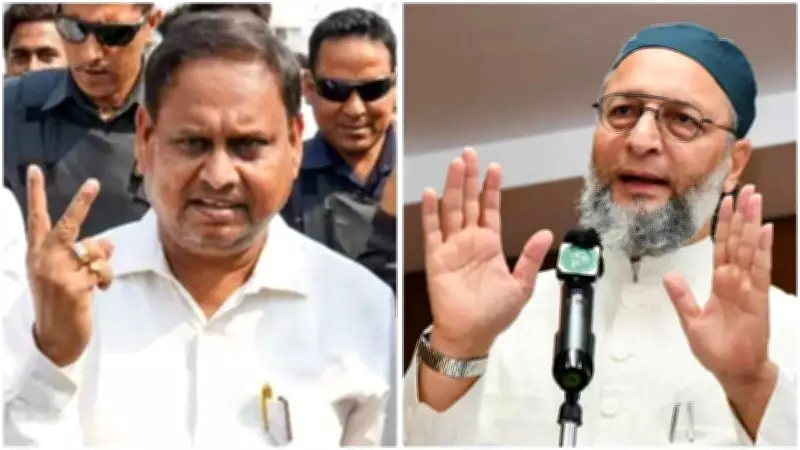
In a significant political maneuver preceding the West Bengal Assembly elections, the All India Majlis-e-Ittehadul Muslimeen (AIMIM), under the leadership of Asaduddin Owaisi, has formally dissolved its alliance with a political party led by Humayun Kabir. The decision was prompted by apprehensions regarding statements attributed to Kabir that allegedly cast doubt on the integrity of the Muslim community.
Immediate Termination Over Contentious Remarks
Issuing a strongly worded declaration early on Friday, AIMIM articulated its position with clarity. The party stated it "cannot associate with any statements where the integrity of Muslims is brought into question," confirming the immediate cessation of the alliance. Furthermore, AIMIM emphasized that Kabir's "revelations have shown how vulnerable Bengal's Muslims are," underscoring the perceived sensitivity of the issue.
Independent Electoral Strategy Reaffirmed
Reiterating its established approach, AIMIM announced it will participate in the forthcoming elections autonomously, refraining from any coalition partnerships. "AIMIM's policy in contesting elections in any state is so that the marginalised communities have an independent political voice," the party communicated in a social media post. This declaration reinforces the party's commitment to providing a distinct platform for underrepresented groups.

The party also drew attention to the socio-economic plight of Muslims in West Bengal, describing them as "one of the poorest, neglected and oppressed communities" despite prolonged governance by parties professing secular ideologies. This critique highlights ongoing concerns about equitable development and representation.
Controversy Surrounding Humayun Kabir Intensifies
The alliance dissolution occurs amidst escalating controversy involving Kabir, who was previously expelled from the All India Trinamool Congress before establishing the Aam Janata Unnayan Party. A video, purportedly featuring an individual resembling Kabir, has circulated, suggesting strategies to sway Muslim voters and discussing financial transactions related to post-election support.
The Trinamool Congress disseminated this video on social platforms, captioning it with allegations of a conspiracy. However, Kabir has vehemently denied these accusations, asserting the video is AI-generated and part of a deliberate scheme to tarnish his reputation. This dispute adds layers of complexity to the pre-election atmosphere.
Political Ramifications and Electoral Dynamics
Kabir had initiated his own political entity following prior controversies, including those linked to proposals concerning the Babri Masjid. According to political analysts, AIMIM's decision could significantly influence electoral outcomes in constituencies with substantial minority populations, potentially fostering multi-cornered contests.
While critics argue this move might fragment votes, AIMIM maintains that independent participation bolsters representation for marginalized communities. The West Bengal Assembly, comprising 294 seats, is scheduled for polls in two phases on April 23 and April 29, with vote counting set for May 4.
This development underscores the volatile and strategic nature of political alignments as election dates approach, with implications for both minority representation and broader electoral patterns in the state.