Ahmedabad's Voter Base Sees Dramatic 8.24 Lakh Decline Ahead of Municipal Elections
In a development poised to significantly reshape the city's political dynamics, Ahmedabad's voter base has contracted by a staggering 8.24 lakh ahead of the highly anticipated civic body elections. This sharp reduction raises critical questions about its potential influence on electoral outcomes and party strategies.
Detailed Analysis of Voter Roll Changes
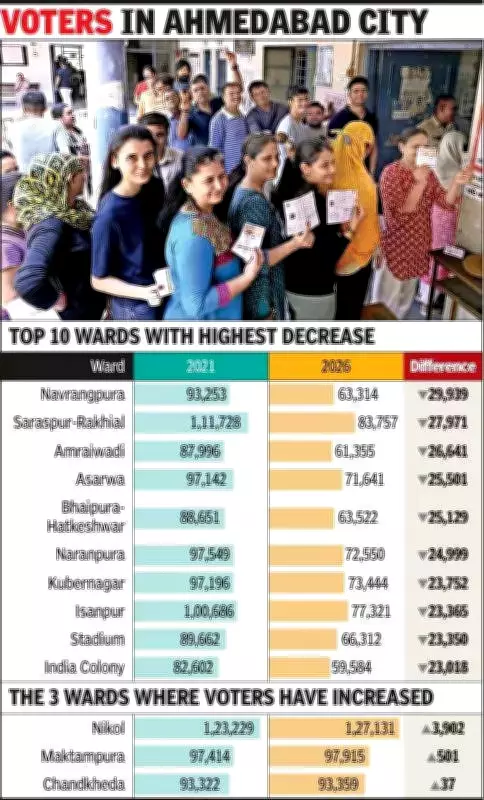
The draft electoral roll for 2026 reveals that Ahmedabad now has 38,00,507 voters, marking a substantial decrease from 46,24,638 in 2021 and even falling below the 2015 figure of 38,79,771. Officials from the Ahmedabad collectorate attribute this decline to a Special Intensive Revision (SIR) exercise and extensive voter verification efforts. As political parties begin recalibrating their approaches, the widespread nature of the contraction is evident, with 45 out of the city's 48 wards reporting drops in voter numbers.
Ward-Level Impact and Notable Exceptions
Navrangpura has emerged as the most affected ward, with 29,939 names removed from the rolls—the steepest decline citywide. In contrast, Nikol stands out with an addition of 3,902 voters, the highest increase recorded. Chandkheda and Maktampura are the only other wards to show growth, highlighting isolated pockets of voter base expansion amidst the broader downturn.

Electoral Implications and Timing Delays
The scale of this revision is particularly significant in Ahmedabad, where municipal elections are often decided by narrow margins of 5,000 to 20,000 votes. A state government official noted that 24 wards have seen deletions exceeding 20,000 voters each, suggesting that the new rolls could decisively alter ward-level electoral equations. The timing of the revision has also delayed the election process; although the Ahmedabad Municipal Corporation's elected wing completed its term on March 9, polls remain unannounced due to the ongoing finalization of the voter list. In the interim, the state government has appointed an administrator to oversee civic affairs.
Zone-Wise Data and Verification Efforts
Zone-wise data underscores the extent of the decline. In the western part of the city, 16 of 18 wards have registered drops, with only Chandkheda and Maktampura bucking the trend. The eastern part presents an even starker picture, where 29 of 30 wards have recorded falls, leaving Nikol as the sole exception. Officials link these fluctuations to the alignment of electoral rolls with Assembly and Lok Sabha constituencies, coupled with rigorous verification drives. They have urged citizens to check their names in the draft roll, available at 58 locations across the city since March 23, and seek corrections or inclusion before the final list is published.
Historical Context and Future Outlook
With Ahmedabad's civic map having evolved from 64 wards in 2010 to 48 after the 2015 delimitation, and later inclusions of areas like Bopal-Ghuma and Kathwada, this latest voter revision marks another pivotal turning point. As parties navigate these changes, the electoral landscape is set for a potential transformation, emphasizing the critical role of accurate voter data in democratic processes.