

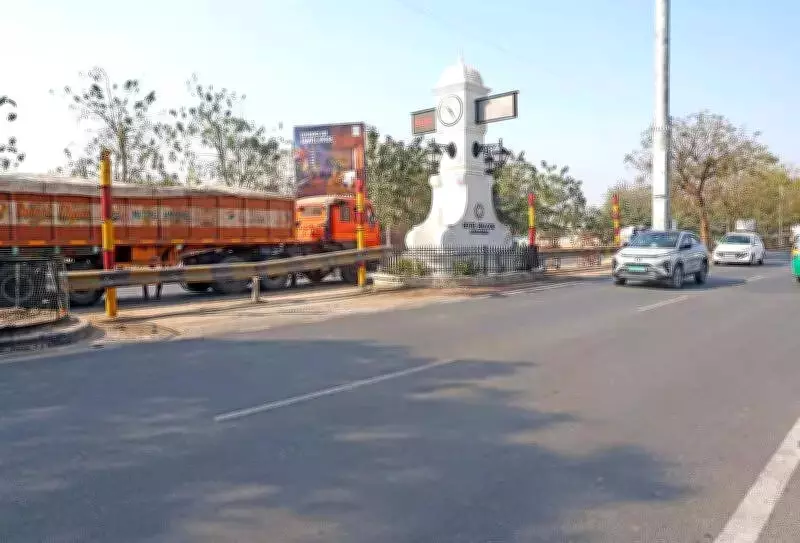
Ahmedabad Ring Road Median Closure Ignites Public Outcry and Traffic Gridlock
The recent barricading of a crucial gap in the median on Sardar Patel Ring Road near Hotel Hillock has erupted into fresh protests in Ahmedabad, with local residents and daily commuters taking to the streets in a dramatic confrontation with police authorities. The controversial move, implemented by city officials, has significantly exacerbated traffic congestion and extended travel times for thousands of motorists in the western part of the city.
Traffic Woes and Extended Commutes Trigger Public Anger
Authorities had recently installed barricades to close the divider gap at the intersection adjacent to Hotel Hillock on the stretch connecting Vaishnodevi Circle to Zundal Road. This decision has forced commuters from residential areas including New Tragad and Chandkheda to undertake an additional detour of nearly 4 kilometers. Local residents have reported that the closure has substantially increased their daily commute duration while creating persistent traffic bottlenecks throughout the day.
Tensions reached a boiling point on Sunday morning when protesters demanding the immediate removal of the barricades blocked the Sardar Patel Ring Road near Hotel Hillock. This demonstration resulted in a massive traffic jam stretching over half a kilometer, with vehicles heading from Vaishnodevi Circle towards Zundal remaining immobilized for several hours.

Police Intervention and Heated Confrontation
A police inspector accompanied by five deputies from the Chandkheda police station rushed to the protest site and attempted to disperse the gathering crowd. Law enforcement officials urged the protesters to submit their grievances through proper official channels and clear the roadway to prevent further inconvenience to other commuters. This police intervention sparked heated arguments and led to a brief physical confrontation between local citizens and the police personnel.
In response to the standoff, citizens initiated a signature campaign demanding that the median gap be reopened immediately. Protesters alleged that repeated representations to their elected representatives had failed to produce any meaningful results or resolution to their transportation concerns.
Political Dimensions and Infrastructure Concerns
Local sources revealed that the median gap was barricaded following a coordination meeting where BJP Rajya Sabha MP Narhari Amin had raised specific concerns about traffic congestion at that particular location. During the protest, a woman demonstrator questioned the logic behind the closure, stating, "If permission was granted for building a circle at this spot, it inherently meant there was supposed to be a gap in the median. Closing it now makes absolutely no sense from a traffic management perspective."
With the primary gap now closed, motorists have resorted to using a narrow culvert located approximately 850 meters from Hotel Hillock to avoid the longer official detour. This alternative passage can accommodate only one car and a two-wheeler at any given time, leading to frequent traffic snarls and additional congestion. Local residents have further alleged that despite the daily chaos and gridlock, traffic police officers are rarely seen regulating movement or managing the flow of vehicles in the affected area.
Political Support and Resolution Efforts
The protest gained political momentum as members of the Aam Aadmi Party, including ward-level office-bearers from Chandkheda, Sabarmati, and Chandlodia, joined the demonstration in solidarity with the affected residents. A protester clearly articulated their demand, stating, "Our only request is that this cut in the median be reopened immediately to restore normal traffic flow and reduce our daily commute burdens."
Police authorities confirmed that the situation was eventually brought under control following negotiations with protest leaders, but issued a stern warning against any future attempts to block public roads and disrupt traffic movement. The incident highlights growing public frustration with urban infrastructure decisions that directly impact daily commute patterns and quality of life for Ahmedabad residents.






