Uttar Pradesh Government Overhauls Postmortem System, Allows Autopsies in Medical Colleges
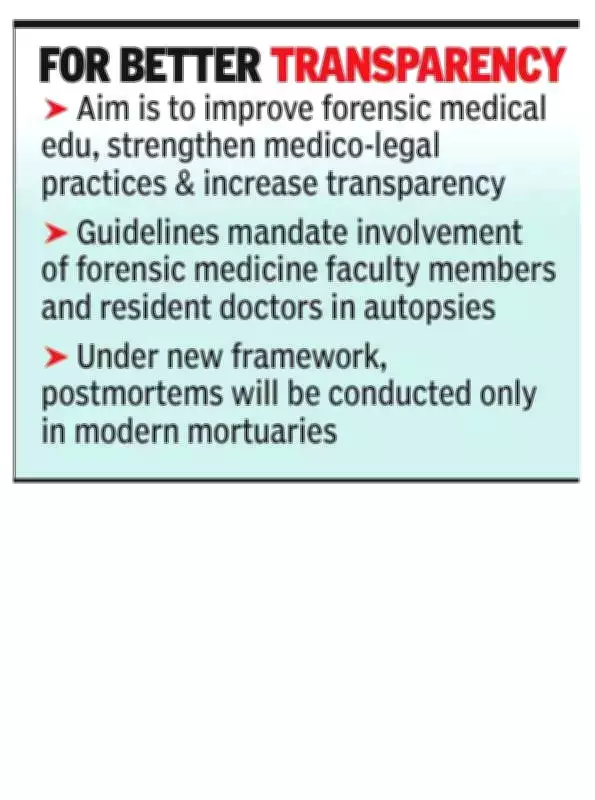
In a significant reform aimed at strengthening forensic medical education and judicial processes, the Uttar Pradesh government has announced a major overhaul of its postmortem system. The state has now permitted autopsies to be conducted in medical colleges, including private institutions, subject to stringent conditions and strict compliance with detailed guidelines.
New Guidelines Mandate Forensic Faculty Involvement
Detailed guidelines issued by Additional Chief Secretary (Medical and Health) Amit Kumar Ghosh mandate the active involvement of forensic medicine faculty members and resident doctors in every autopsy procedure. This move is designed to improve the quality of forensic medical education and enhance transparency in medico-legal practices.
Deputy Chief Minister Brajesh Pathak emphasized that the new norms will significantly improve the credibility and transparency of judicial processes. "The involvement of trained forensic experts in medical colleges will ensure higher standards and reliability in postmortem examinations," he stated.

Strict Conditions for Private Medical Colleges
Under the new framework, postmortems will only be conducted in modern mortuaries that meet specific standards. Private medical colleges will be allowed to conduct autopsies only if they have standardized, high-quality facilities and receive explicit government approval.
Important restrictions include:
- Private institutions will only handle unclaimed bodies, in accordance with the Uttar Pradesh Anatomy Act, 1956
- They are barred from handling postmortems in serious or heinous crime cases
- They cannot conduct examinations requiring medical board involvement
- All procedures must comply with national and international standards
Institutional Framework and Supervision
The guidelines establish a clear institutional framework for postmortem procedures:
- In premier institutions like KGMU, RMLIMS, SGPGI, and UPUMS Saifai, postmortems will be conducted by their respective forensic medicine departments
- Similar arrangements may extend to central institutions in the state including BHU, AMU, AIIMS Gorakhpur, and AIIMS Rae Bareli where forensic departments exist
- All postmortem procedures will be carried out under the supervision of the district's Chief Medical Officer (CMO)
- In medical colleges with regular forensic faculty, responsibility for conducting autopsies and presenting evidence in court rests with the concerned department
Streamlined System with District-Level Committees
To streamline the entire system, district-level committees headed by district magistrates will be formed in areas where medical colleges or designated postmortem houses exist. These panels will assign police station jurisdictions to specific institutions, ensuring bodies are sent directly to designated facilities without unnecessary delays.
Key implementation measures include:
- All medical institutions must build proper postmortem facilities and procure necessary equipment
- Before any private medical college begins postmortem work, a high-level committee headed by the Director General of Medical Education and Training will inspect facilities and submit recommendations for government approval
- In serious cases requiring medical board examination, forensic experts will be included in the board, with the district medico-legal expert serving as chairperson where available
Enhanced Accountability and Record-Keeping
While the CMO retains overall responsibility for reporting and record-keeping of postmortems, institutions conducting autopsies internally will have their forensic department heads oversee the process. This dual oversight mechanism aims to ensure both institutional accountability and governmental supervision.
The comprehensive guidelines represent a significant shift from the previous system where autopsies were conducted only at designated postmortem houses. By integrating medical colleges into the forensic examination process, the Uttar Pradesh government aims to create a more robust, transparent, and educationally valuable system for postmortem examinations across the state.