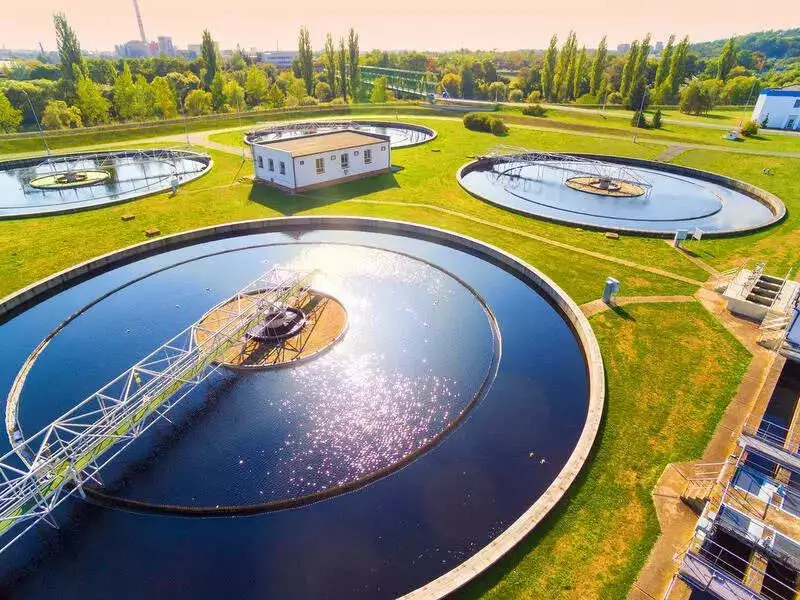
A recent review by the Parliamentary Standing Committee on Housing and Urban Affairs has revealed significant shortcomings in the implementation of water and wastewater treatment projects under the Atal Mission for Rejuvenation and Urban Transformation (AMRUT). The report highlights a worrying disparity between planned targets and actual achievements, with the state of Punjab emerging as a notable example of underperformance despite relatively high utilization of existing facilities.
Punjab's Water Treatment Capacity Falls Drastically Short
The committee's assessment of both AMRUT and its successor, AMRUT 2.0, found that progress in augmenting and rehabilitating water treatment plants (WTPs) has been especially slow in the mission's second phase. In Punjab, three specific WTP projects with a combined approved capacity of nearly 14.8 million liters per day (MLD) were sanctioned, but none have been completed so far. This contrasts with neighboring Haryana, which has completed one of its three approved projects totalling 9.5 MLD. Himachal Pradesh also lags, with two approved projects of around 2 MLD capacity yet to be commissioned.
The data presented to the panel paints a stark picture of Punjab's overall performance. The state had planned five new water treatment plants with a total capacity of 518.9 MLD under the AMRUT scheme. However, only two plants with a combined capacity of 113 MLD were actually commissioned. This leaves a massive gap of 405.9 MLD in new water treatment capacity. While states like Haryana, Gujarat, Madhya Pradesh, Jharkhand, Karnataka, Assam, and West Bengal have fully met their targets for new WTPs, Punjab joins Maharashtra (238 MLD shortfall), Tamil Nadu (125 MLD), and Kerala (100 MLD) as states with substantial deficits.

Substantial Sewage Treatment Gap in Urban Areas
The committee's report also shed light on the critical issue of sewage treatment in urban centers. Punjab generates approximately 2,111 MLD of sewage. Against this, the existing network of 116 sewage treatment plants (STPs) has an installed capacity of about 1,628.5 MLD, operating at roughly 80% utilization. This results in a current treatment gap of around 482.5 MLD of untreated sewage.
Interestingly, the analysis shows varied challenges across states. Haryana reports a treatment capacity that exceeds its sewage generation, but suffers from lower utilization rates of its plants. Himachal Pradesh faces a treatment gap of about 43 MLD. Punjab is listed among states like Andhra Pradesh, Gujarat, Jharkhand, Meghalaya, Telangana, and Delhi that have relatively higher STP utilization rates. However, the committee emphasized that Punjab's absolute treatment gap remains large primarily due to its very high volume of sewage generation. In contrast, states such as Goa, Karnataka, Tamil Nadu, and West Bengal were flagged for poor efficiency in their sewage treatment operations.
Looking Ahead: AMRUT 2.0 and Network Replacement
The committee further examined plans under AMRUT 2.0, which includes a nationwide project to replace 22,147 kilometers of aging water distribution network. Within this ambitious plan, Punjab has proposed to replace 363.7 km of pipeline. This compares with a proposed replacement of around 884 km in Haryana and 211 km in Himachal Pradesh. The success of this infrastructure renewal will be crucial for reducing water loss and improving service delivery.
The findings of the Parliamentary Standing Committee serve as a critical reminder of the work that remains to be done in securing sustainable urban water and sanitation infrastructure across India, with a particular spotlight on the gaps in Punjab's execution of central government schemes.