

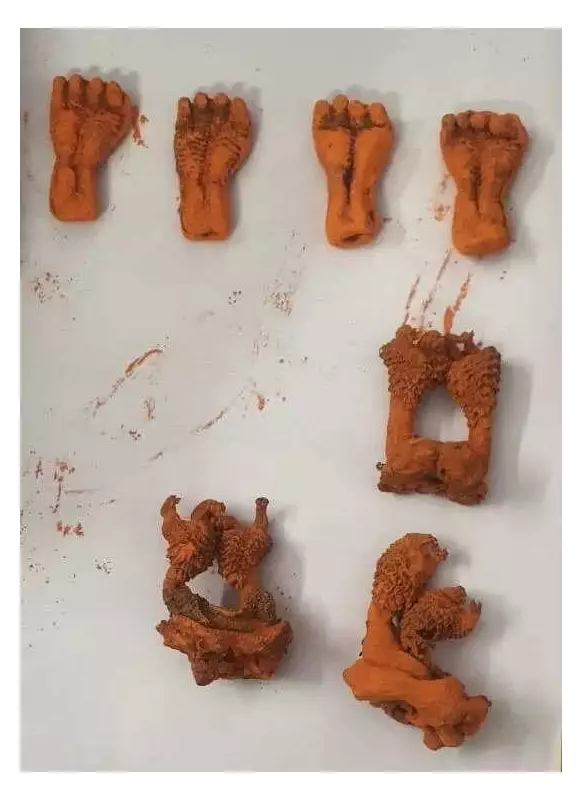
In a significant crackdown on the illegal wildlife trade, Punjab's forest department has uncovered a shocking racket where body parts of protected animals, including Bengal monitor lizard genitals, are being peddled as rare magical herbs. The operation led to the arrest of three individuals in Nakodar, Jalandhar district.
Sting Operation Unearths Trafficking Chain
The Phillaur wildlife division, under Divisional Forest Officer Vikram Singh Kundra, formed a special team led by Range Officer Jaswant Singh. According to a statement issued on Monday from Jalandhar by the Punjab forests and wildlife preservation department, an officer posed as a decoy buyer to infiltrate the network. This undercover operation successfully led them to the traffickers' lair in Nakodar on Saturday.
The chain began to unravel when Bony Arora, son of Bharat Bhushan, arrived to deliver the illicit goods and was arrested on the spot. Officials seized two pieces of sambar deer antlers, six pieces of hathajodi (monitor lizard genitals), and parts of a wild cat from his possession.

From Shop to Supplier: The Network Exposed
Interrogation of Arora revealed his supplier was Shivam Gupta, son of Gulshan Rai, who runs the Durga Dass Pansari shop. A subsequent raid on Gupta's store led to his confession and the naming of his own supplier, Deepak alias Kala, son of Vijay Kumar Gupta, operator of the Valaiti Ram Pansari and Grocery Store.
A raid on Deepak's shop yielded two more antler pieces and another piece of hathajodi. All three arrested individuals admitted to their roles in the illegal trade. The suspects and the seized contraband were handed over to the Nakodar police station, where an FIR under the Wildlife Protection Act, 1972 was registered. Punjab Chief Wildlife Warden Basanta Rajkumar confirmed the details of the operation.
Superstition Fuels Demand for Protected Species
Both the sambar deer and the Bengal monitor lizard are listed under Schedule I of the Wildlife Protection Act, granting them the highest level of protection alongside tigers and lions. Despite this, their body parts are illegally marketed in pansari shops as "magical herbs" for luck, faith healing, and traditional medicine.
Jose Louies, CEO of the Wildlife Trust of India, explained that these parts are extracted by killing the animals. He has collaborated with the federal Wildlife Crime Control Bureau to dismantle similar networks across Punjab and other states. The demand is driven by superstition, with traders exploiting the scarcity of a rare plant.
A wildlife forensics research paper notes that sellers deceitfully pass off Varanus (lizard) genitals as rare "hathajodi" musk pod plant roots. The actual plant root is said to resemble human arms with clenched fists and is believed to bring financial prosperity, earning it the name 'Heart of India'. The paper states that the animal parts are "morphologically similar and hard to distinguish" from the real plant, fueling a widespread trade through local markets and websites.
Traditional hunting tribes often kill the lizards to extract the 'hathajodi' and sell it cheaply to these shops, creating a supply chain that threatens India's biodiversity for the sake of baseless superstitions.






