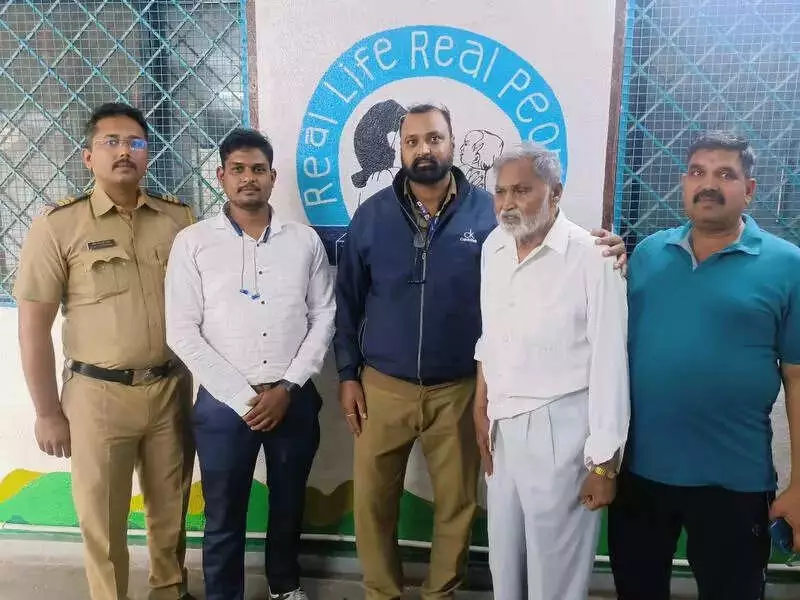
In a heartening tale of hope and dedication, a Pune-based NGO has become a beacon for families searching for their missing loved ones, successfully reuniting over 700 individuals. The stories of Haseeb Ali from Bihar and Sharada from Karnataka highlight the critical work of Mohammad Hussain and his team at 'Real Men Real People'.
Four-Year Wait Ends With a Photograph
The desperate search for 30-year-old Haseeb Ali from Bihar's Gaya district ended in an unexpected way nearly four years after he went missing. His family had scoured railway stations, filed police complaints, and lost hope. Their breakthrough came when a relative spotted Haseeb's photograph in a national daily, published by Hussain's NGO. "It was almost two years, but we could not find him," recounted Haseeb's nephew, Sarafraj. The family revealed Haseeb had been unwell since his mother's death and were shocked to learn he had travelled all the way to Pune and was found roadside.
A Constable's Daughter Found Safe
In a parallel case from Karnataka's Raichur, 20-year-old Sharada left home after a quarrel with her mother and boarded a train to Pune. After falling ill, she approached the Pimpri Chinchwad police and was referred to a shelter home. Her father, Siddhappa, a head constable with Karnataka Police, had exhausted all official channels, registering a missing complaint and alerting railway police. "Almost two months after she left home, we received a call from Savali Shelter home... informing us our daughter was safe," Siddhappa said. After two weeks of counselling at the shelter, Sharada shared her father's contact details, enabling the reunion. Siddhappa credits Hussain directly: "If it was not for Hussain and his team, I would not have got my daughter back."

The Man Behind the Mission: Mohammad Hussain
The driving force behind these reunions is Mohammad Hussain, a resident of Pimpri who founded 'Real Men Real People'. Having arrived in Pune from Bihar in 1997 in search of work, Hussain sold pens on trains and outside hospitals, often sleeping at railway stations. These experiences exposed him to the harsh realities of the homeless. "I was moved by incidents I experienced while selling pens on hospital premises which made me realise how people struggle for survival. I swore to help such people," Hussain explained. He sold his house and farmland in his hometown to fund his mission when community help was scarce.
After working independently, he formally established his trust in 2010. His team now works closely with police and uses counselling to trace families, often with support from local district administrations. "We often stumble upon cases where people left their homes after quarrels or mental illness," Hussain noted. Today, the Savali shelter home, run by the municipal corporation, provides shelter and food to 70 homeless and mentally unstable individuals, serving as a crucial hub for Hussain's rehabilitation work.
Through relentless effort and compassion, Hussain's initiative continues to mend broken families, offering a second chance to those who had lost all hope.