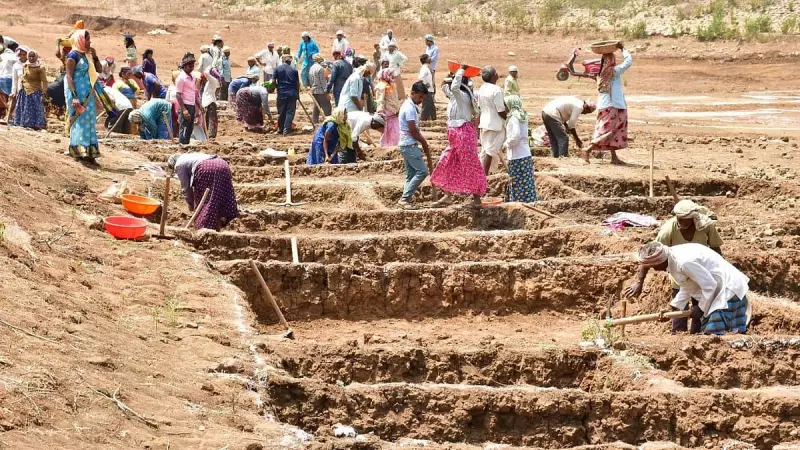
The proposed replacement of the Mahatma Gandhi National Rural Employment Guarantee Act (MGNREGA) has ignited a significant debate on governance and workers' rights. Critics argue that the move, undertaken without sufficient consultation with the very workers it impacts, represents a troubling precedent where state discretion overrides established due process.
An Arbitrary Exercise of Power
At the heart of the controversy is the manner in which the change is being executed. According to the opinion piece by Maansi Verma, last updated on 01 January 2026, the process lacks the necessary democratic engagement. Replacing a landmark social security scheme like MGNREGA is not merely an administrative decision; it is a policy shift with profound implications for millions of rural households. The core allegation is that this shift is an arbitrary exercise of power, sidelining the voices of the beneficiaries in favor of top-down decision-making.
The Centrality of Worker Consultation
The MGNREGA scheme was built on principles of empowerment and guaranteed work. Its potential replacement without adequate consultation involving the workers strikes at the foundation of these principles. Due process in policy formulation demands stakeholder analysis, public discourse, and a transparent evaluation of alternatives. When the state bypasses these steps, it risks implementing a solution that may be misaligned with ground realities and the actual needs of the rural workforce. This approach raises fundamental questions about accountability and the protection of rights in the face of administrative discretion.

Implications for Governance and Social Justice
The implications of this move extend beyond the scheme itself. It sets a concerning precedent for how other welfare policies might be altered in the future. If state discretion trumps due process in one arena, it can normalize the practice in others, eroding institutional checks and balances. For the workers dependent on MGNREGA, the uncertainty creates anxiety and potential economic vulnerability. The debate underscores a critical tension in modern governance: the need for efficient policy action versus the imperative of inclusive, participatory democracy that respects procedural safeguards.
In conclusion, the controversy surrounding the MGNREGA replacement highlights a pivotal moment for India's policy framework. It serves as a reminder that the legitimacy of any major reform is deeply tied to the process through which it is achieved. Ensuring that worker consultation is not an afterthought but a central pillar of decision-making is essential for upholding both due process and the spirit of social justice that schemes like MGNREGA are meant to embody.